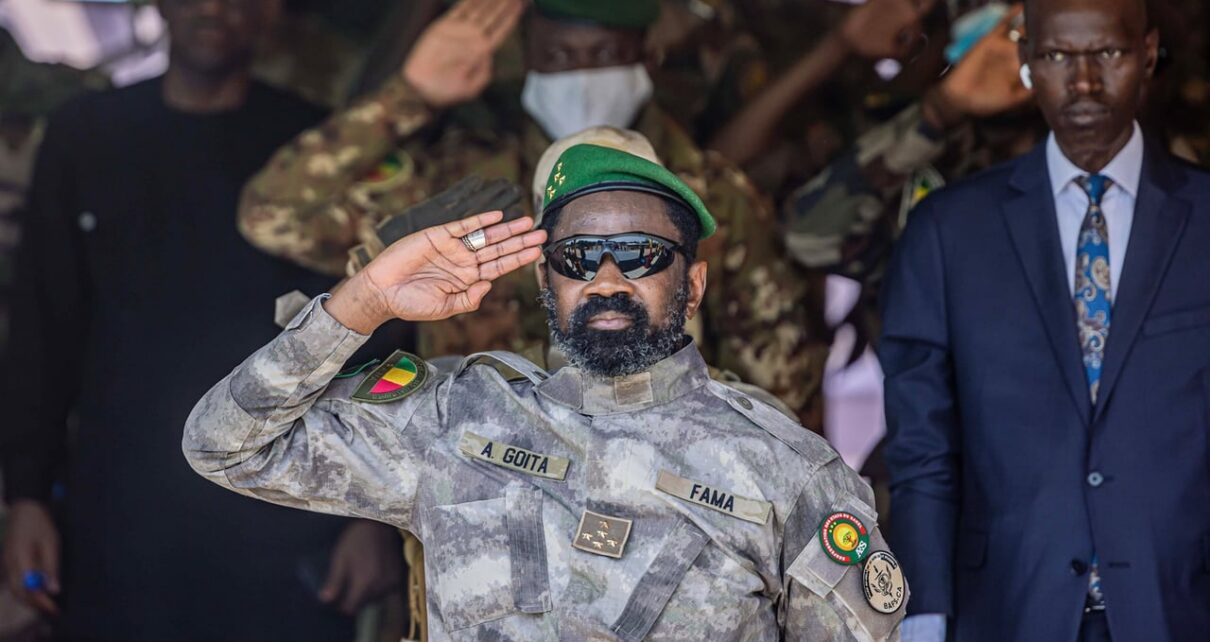

In the heart of Bamako, the capital of Mali, transitional leader Assimi Goïta stands at the crossroads of a nation struggling to regain its footing. Since seizing power in 2020, his leadership has been marked by a delicate balance between maintaining control and addressing the deepening challenges facing the country.
Mali’s political landscape remains as fragile as ever, with security threats and socio-economic pressures continuing to test the resilience of its institutions. The loss of Defence Minister Sadio Camara in late April 2026 has only intensified the scrutiny on Goïta’s administration, raising questions about the stability of his transitional government.
Transitional governance under scrutiny
The National Committee for the Salvation of the People (CNSP), which Goïta leads, was initially tasked with steering Mali toward democratic elections. However, the prolonged transition period has fueled public scepticism, with many questioning whether the promised return to civilian rule remains a viable goal. The military’s influence over governance has also drawn criticism from regional and international partners, complicating Mali’s efforts to reintegrate into the global community.
The transitional government faces mounting pressure to address the Group for the Support of Islam and Muslims (JNIM), one of the most formidable insurgent groups operating in the Sahel. Despite military campaigns and counterterrorism efforts, JNIM’s insurgency persists, destabilising vast regions of the country and displacing thousands of civilians. The recent funeral of Sadio Camara, a key figure in Mali’s security apparatus, underscored the high stakes of this ongoing conflict.
Security challenges and regional dynamics
The death of Sadio Camara, a prominent military figure and close ally of Goïta, has left a leadership void at a critical time. His funeral in Bamako became a symbolic event, highlighting the personal and political stakes for Mali’s transitional leader. With regional instability showing no signs of abating, Goïta’s government must navigate a complex web of alliances and adversaries.
Mali’s relationship with its neighbours, particularly Burkina Faso and Niger, remains a cornerstone of its security strategy. The three nations have formed a joint task force to combat insurgent groups, but coordination challenges persist. Meanwhile, international partners, including former colonial power France, have recalibrated their engagement, adding another layer of complexity to Mali’s transitional challenges.
Economic hardships and public discontent
Beyond security concerns, Mali grapples with severe economic hardships. Inflation, currency devaluation, and a decline in foreign investment have heightened public frustration. The transitional government’s ability to deliver tangible improvements in living standards will be a decisive factor in its legitimacy. However, with global supply chain disruptions and declining aid flows, the road to recovery is fraught with obstacles.
The legacy of former President Ibrahim Boubacar Keïta, ousted in 2020, looms large over the current administration. His tenure was marked by allegations of corruption and weak governance, issues that Goïta’s government has struggled to distance itself from. Restoring public trust will require more than rhetoric—concrete actions and transparent reforms are essential.
What lies ahead for Mali?
As Mali’s transitional leader, Assimi Goïta shoulders the weight of a nation at a crossroads. His decisions in the coming months will shape the country’s trajectory, determining whether it can emerge from instability or succumb to deeper crises. With security threats escalating and economic pressures mounting, the path forward demands bold leadership and strategic foresight.
The funeral of Sadio Camara served as a stark reminder of the challenges ahead. For Goïta, the stakes could not be higher—his legacy will be defined by his ability to steer Mali through one of its most turbulent periods in modern history.