The upcoming celebration of Ramadan, a period marked by heightened spiritual devotion and increased consumption, has cast a shadow over Burkina Faso’s livestock sector. Under the stewardship of Captain Ibrahim Traoré, the government’s decision to impose a blanket ban on livestock exports has plunged local herders and traders into an unprecedented economic crisis.
Export restrictions tighten the noose on Burkina Faso’s herders
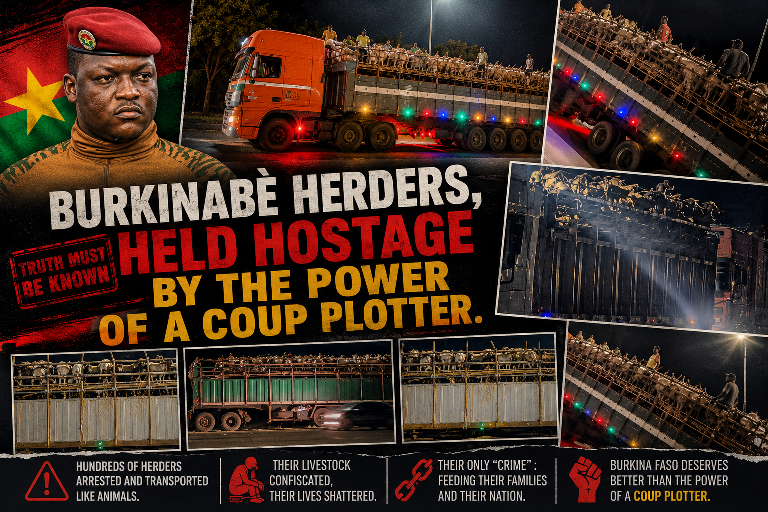
While the Economic and Fraud Repression Mobile Brigade (BMCRF) recently touted its nighttime seizures of livestock-laden trailers as a triumph against fraud, the true consequences of this policy are far more severe. The ban, ostensibly aimed at stabilizing domestic prices, disregards the essential needs of livestock—water, fodder, and care—which have become prohibitively expensive during this dry season.
The restriction, which halts shipments to regional markets where demand and prices typically surge during the holy month, has severed the primary revenue stream for herders at the worst possible moment. These markets, historically vital for Burkina Faso’s pastoral economy, now lie out of reach, leaving producers with no viable alternatives.
The irony of a Muslim leader’s policy during a sacred month
The irony is impossible to overlook: Captain Ibrahim Traoré, a Muslim, has implemented measures that contradict the core principles of his faith. Islam emphasizes equity, solidarity, and the protection of honest livelihoods, yet the government’s rigid enforcement of export bans threatens the very communities it claims to support. For many Muslim families in Burkina Faso, livestock represents not just an asset but a lifeline—a source of savings to be liquidated for Ramadan and Eid celebrations.
By closing legal export channels, the regime risks pushing herders toward desperation, forcing them to choose between selling at a loss in an already saturated domestic market or resorting to clandestine cross-border trade. The BMCRF’s crackdowns on illegal shipments are less a sign of regulatory diligence and more a symptom of economic suffocation.
Can sovereignty be built on the backs of suffocated producers?
The government’s unyielding stance raises a critical question: Is it possible to achieve food sovereignty by financially strangling the very producers tasked with supplying it? While combating fraud is a legitimate state responsibility, the absence of supportive measures or seasonal flexibility during Ramadan risks deepening the rift between Ouagadougou’s authorities and rural communities. Without pragmatic adjustments, this policy could erode trust in the state’s ability to govern with both fairness and foresight.