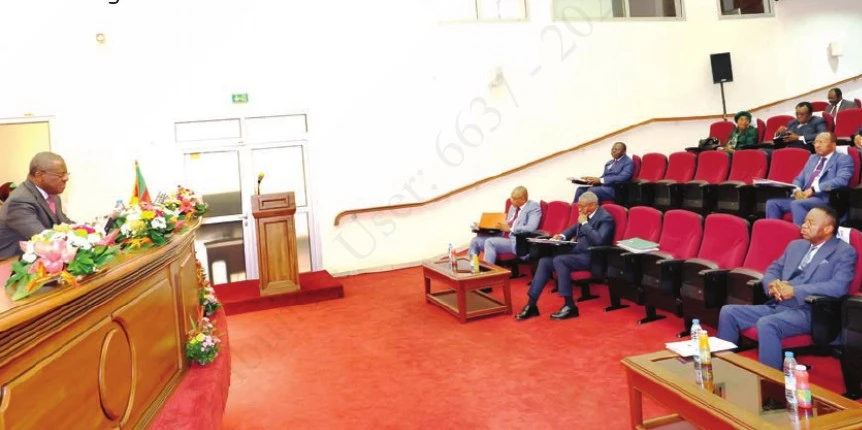
In a landmark session, the Prime Minister Joseph Dion Ngute led a Cabinet meeting on June 26, 2026, to finalize the national budgets for 2027, 2028, and 2029. With projected growth of 3.5% for 2026 and a commitment to keep public debt below 50% of GDP, the decisions made this day set the course for Cameroon’s economic trajectory over the next four years.
Key economic directions approved
The Deputy Minister of Finance outlined the macroeconomic landscape, highlighting global uncertainties that continue to weigh on recovery. While global growth is expected to dip from 3.4% in 2025 to 3.1% in 2026 before stabilizing at 3.2% in 2027, Cameroon is projected to maintain a steady growth rate of 3.5% in 2026 and 3.7% in 2027, alongside a continued decline in inflation.
The push for fiscal discipline appears closely aligned with ongoing negotiations for a new Economic and Financial Programme with the International Monetary Fund (IMF). Central to this agenda is the strict oversight of public debt, ensuring it remains under the 50% GDP threshold. Key strategies include boosting non-oil revenue streams and optimizing public expenditure to enhance efficiency.
The Minister of Economy, Planning, and Territorial Development presented the Priority Investment Programme for 2027–2029, targeting critical sectors such as digital infrastructure, transport networks, energy, water resources, agriculture, and industrial development. Digital infrastructure deployment and electricity supply enhancement rank among the top priorities.
What these decisions mean for Cameroonians
On the social front, the government is prioritizing the expansion of the national health insurance system to reach the most vulnerable populations. Additionally, the Special Fund for the Economic Empowerment of Women and Youth Employment will be accelerated, reinforcing long-standing commitments to inclusive growth.
The Cabinet adopted the Economic and Budgetary Programming Document for 2027–2029, which will be submitted to Parliament as part of the Budget Orientation Debate. While this step is procedural, it establishes a binding framework for all ministries to follow.
Prime Minister Ngute directed the Minister of Finance to finalize the document promptly, in close coordination with the Minister of Economy. The directive also calls for the widespread adoption of performance contracts for public projects to ensure accountability and measurable outcomes.