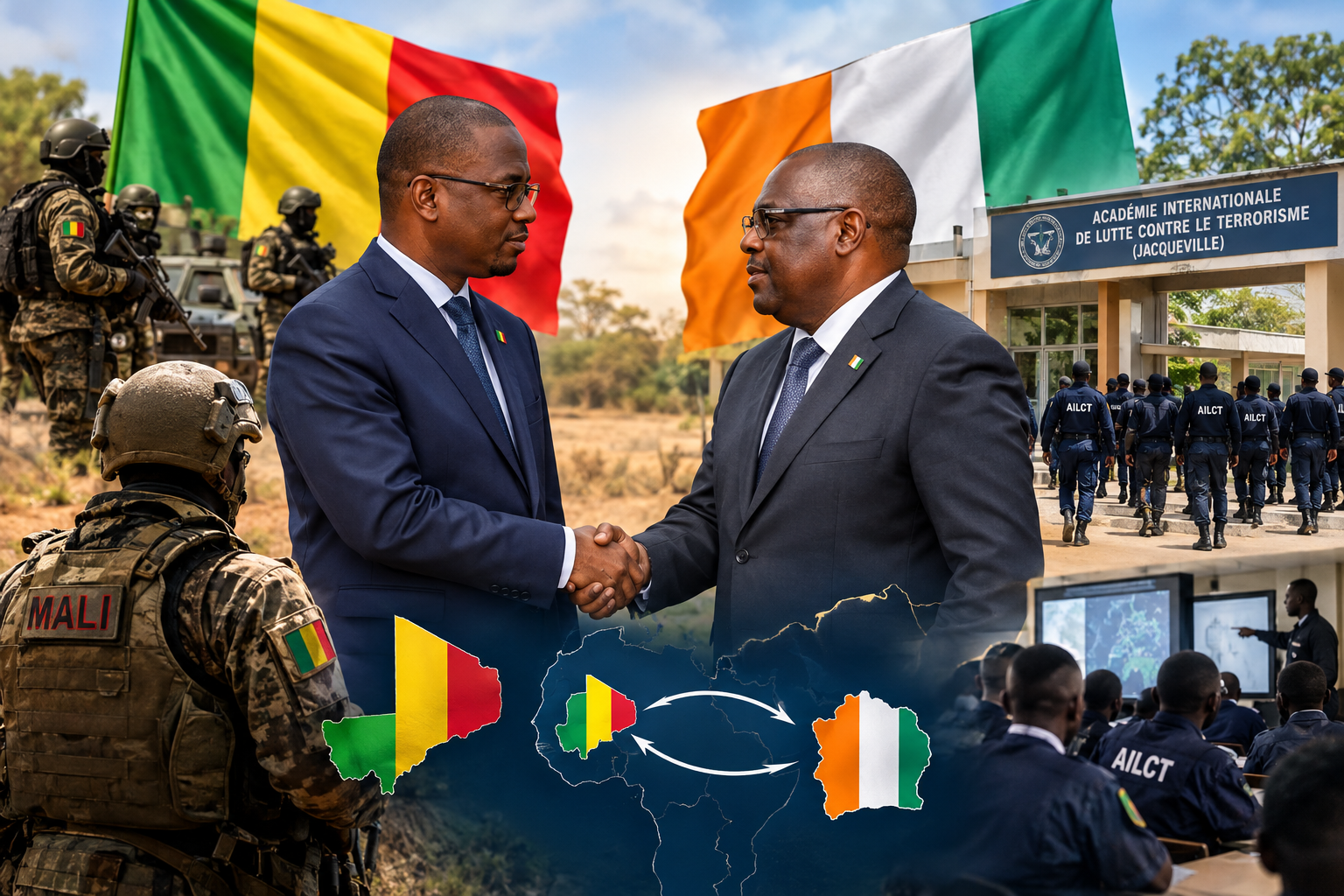
As security threats intensify across the Sahel, Mali faces a critical question: how can it strengthen its fight against terrorism by learning from Côte d’Ivoire’s proven strategies? On October 15, 2026, Vassiriki Traoré, director of Côte d’Ivoire’s intelligence services, arrives in Bamako for a high-level meeting with his Malian counterpart, Modibo Koné, head of Mali’s National Security Agency. This summit isn’t just another diplomatic exchange it’s a chance to assess whether Bamako can integrate Ivory Coast’s tactical and operational lessons to curb insurgent violence ravaging its borders.
Why Mali is looking to Côte d’Ivoire for security solutions
For years, Mali has struggled with persistent terrorist attacks despite military operations. The country’s security forces face challenges in intelligence gathering, threat anticipation, and coordination between defense, police, and judicial bodies. Meanwhile, Côte d’Ivoire has become a regional model in counterterrorism through targeted training, inter-agency collaboration, and robust intelligence networks. Mali’s leaders now face a pivotal decision: embrace Ivory Coast’s methodologies to bolster resilience against extremist groups.
Key areas where Bamako could benefit include:
Specialized training programs: Côte d’Ivoire’s elite counterterrorism academy in
Jacqueville offers multi-level programs for African security personnel.Cross-agency coordination: Unified command structures prevent gaps in intelligence and operations.
Preventive intelligence: Early warning systems and threat assessment protocols reduce attack risks.
Inside Côte d’Ivoire’s counterterrorism playbook
The heart of Abidjan’s strategy lies in the International Counterterrorism Academy (AILCT), launched in June 2021. This facility trains African militaries and security units in:
Operational planning and execution
Tactical counter-insurgency drills
Judicial frameworks for prosecuting terrorists
For Mali, partnering with Côte d’Ivoire could mean accessing these resources to upgrade its own units without sacrificing sovereignty. The question is whether Bamako will commit to long-term implementation rather than short-term exchanges.
Can sovereignty and shared expertise coexist?
Mali’s history of regional tensions complicates security partnerships. Yet the urgency of the terror threat demands pragmatic solutions. The October meeting must move beyond promises to deliver measurable outcomes: tighter intelligence sharing, joint training exercises, and rapid-response protocols. Success hinges on action, not just dialogue.
Ultimately, Mali’s choice isn’t about copying Côte d’Ivoire’s model wholesale, but selectively adopting practices that fit its terrain. The Sahel’s interconnected insurgencies recognize no borders nor should Mali’s response.
By AMINA SALEY — Journalist