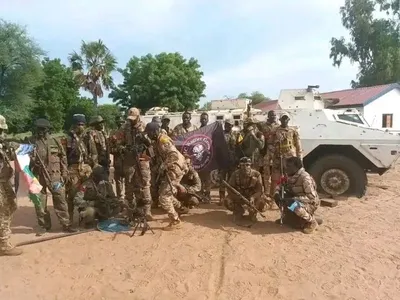
Amdafock recaptured by Russian mercenaries, Central African Armed Forces, and ex-rebels in joint operation
The strategic town of Amdafock has been retaken by a unified coalition comprising Russian private military contractors, the Central African Armed Forces (FACA), and former rebel fighters from factions like the 3R, UPC, and MPC.
This large-scale offensive marked a turning point in the regional security landscape, as government-aligned forces executed a meticulously coordinated campaign to dismantle rebel control over key infrastructure and supply routes.
Unprecedented military alliance reshapes local power dynamics
The operation highlighted the growing influence of foreign security contractors in the Central African Republic (CAR), with the Wagner Group-affiliated units playing a decisive role in the recapture. Alongside them, FACA troops spearheaded ground operations, while defectors from rebel factions provided critical intelligence and logistical support.
The involvement of former combatants from the 3R, UPC, and MPC—groups previously engaged in hostilities against the government—signaled a fragile yet strategic realignment in the conflict’s dynamics. Their participation underscored the regime’s efforts to weaken rebel networks by integrating former adversaries into state-backed security structures.
Implications for regional stability and counterinsurgency efforts
The successful recapture of Amdafock is expected to have far-reaching consequences for Central African security. Analysts suggest that this collaboration between foreign mercenaries, national forces, and ex-rebels could set a precedent for future military strategies in the Sahel and beyond.
However, questions linger about the long-term sustainability of such alliances, particularly regarding the reintegration of former fighters and the potential for renewed tensions once immediate objectives are achieved.
The operation also underscores the CAR’s evolving security architecture, where external actors now play an integral role in shaping the nation’s military and political future.