Gabon’s kobe-kobe pivot: a new economic era for central Africa
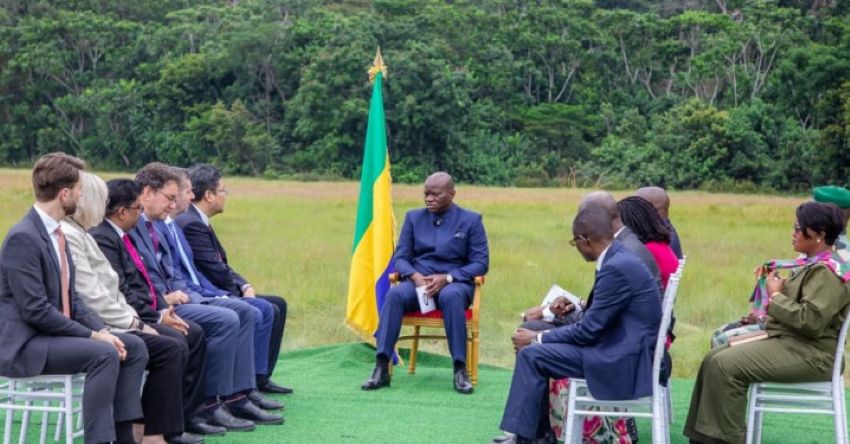
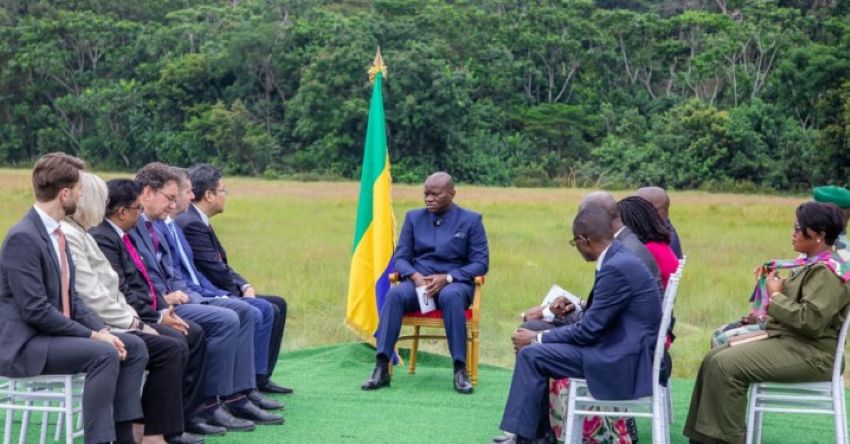
Libreville, June 9, 2026 – Hours after officiating the groundbreaking ceremony for the deep-water port of Kobe-Kobe on Gabon’s Atlantic coast, President Brice Clotaire Oligui Nguema convened a high-level meeting with ambassadors and representatives from key global powers involved in the project.
The gathering was far more than a routine diplomatic engagement. It marked the launch of a bold new vision: transforming Gabon into Central Africa’s premier industrial, logistics, and mining hub.
The President made it clear to international partners that Kobe-Kobe is more than just a port. It represents the foundation of a forward-thinking economic model designed to move Gabon beyond oil dependency, strengthen its economic sovereignty, and redefine its role in global value chains.
Rethinking Gabon’s economic future
At the heart of the Kobe-Kobe initiative lies one of Africa’s most strategic mineral assets: the Belinga iron ore deposit. With an estimated 7.5 billion tons of ore grading around 65%, it ranks among the world’s largest untapped reserves.
The true innovation, however, lies in the project’s integrated approach. For decades, African extractive economies followed a familiar pattern: extract raw materials and ship them abroad for processing. Gabon’s new strategy breaks decisively from this model.
The future complex will unite four essential components: the Belinga mine, a 500-kilometer electric railway, a deep-water port capable of accommodating mega-vessels, and dedicated energy infrastructure to power the entire industrial ecosystem.
This vertical integration strategy aims to achieve two critical goals. First, to retain greater value-added processing within Gabon’s borders. Second, to foster the emergence of a robust national steel industry capable of transforming a portion of its own mineral output locally.
Building bridges with global partners
Addressing the assembled diplomats, President Oligui Nguema underscored what has become a cornerstone of his international strategy: diversifying partnerships.
The President emphasized that Gabon’s future development cannot hinge on a single ally or geopolitical bloc. Instead, it must be built on an open, multi-vectored cooperation framework involving multiple economic and industrial powerhouses.
This principle is already reflected in the international consortium assembled for the Kobe-Kobe project. China is contributing expertise in rail and mining infrastructure. France is engaged through multiple logistics operators. Italy, India, the United States, and Australia are providing industrial, financial, energy, and commercial capabilities.
This multi-partner architecture serves a dual purpose. It secures the financing and technologies essential for large-scale projects while preserving Gabon’s decision-making autonomy.
The French Ambassador to Gabon, Fabrice Mauriès, and China’s Ambassador, Zhou Ping, both praised this balanced approach, highlighting its potential to unlock new cooperation opportunities. Their public endorsements reflect the growing investor confidence in Gabon since the establishment of the Fifth Republic.
A transformative economic catalyst
Beyond its physical infrastructure, the Kobe-Kobe project represents a monumental economic wager. Government projections anticipate over 100,000 direct and indirect jobs in the long term, the emergence of a vibrant national subcontracting ecosystem, and a powerful multiplier effect across the economy.
Sectors expected to benefit include transportation, energy, logistics, metallurgy, services, engineering, vocational training, construction, and industrial maintenance. The project could position Gabon as a central logistics gateway for Central Africa at a time when regional competition among maritime hubs is intensifying.
By urging diplomats to champion this vision with their governments, financial institutions, and business communities, President Oligui Nguema is seeking to expand the project’s investor base even further.
Kobe-Kobe is no longer just a construction site—it symbolizes a national strategy that seeks to convert natural resources into engines of industrialization, attract international capital, and consolidate economic sovereignty. If targets are met, Gabon could transition within the next decade from a raw material exporter to a major industrial player in Central Africa. The post-ceremony meeting with international partners underscores that, for Libreville, the development battle is now a global one.