
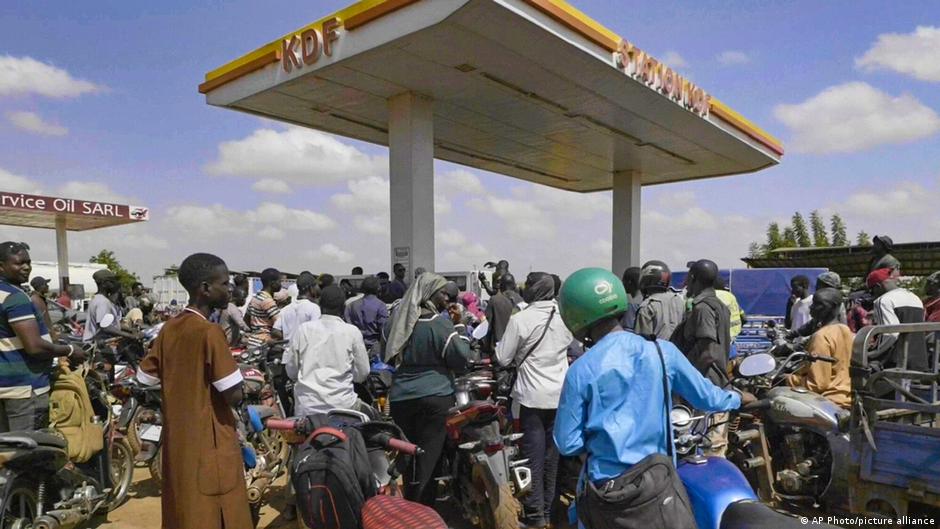
The Malian government has imposed a one-year suspension on the circulation of high-capacity motorcycles outside major urban centers. The decision, announced via an interministerial decree broadcast on national television, also includes a ban on the import, transit, sale, and distribution of these vehicles nationwide. Authorities justify the measure as a strategy to curb the mobility of armed terrorist groups operating across the country.
The restriction applies to motorcycles with engine displacements of 125 cubic centimeters and above. Exceptions are made for the Bamako district and regional, cercle, and arrondissement capitals, which are classified as large agglomerations.
Local challenges in enforcement
While regional governors retain the authority to adapt or further restrict motorcycle circulation in cercle capitals based on local security conditions, critics question the feasibility of enforcement, particularly in rural zones. A resident of Bandiagara cercle in central Mali, who requested anonymity, highlighted the indispensable role of high-capacity motorcycles in the region.
“These bikes are essential for navigating our mountainous terrain with steep inclines. They’re used by everyone—our armed forces, humanitarian workers, farmers, and even as makeshift ambulances to transport patients to health centers. Without them, daily life and emergency responses become nearly impossible.”
Economic and social ripple effects
In Mopti, another central city, motorcycle owners express growing concern over the measure’s potential impact. Many rely on these vehicles to travel between villages for agricultural, livestock, or fishing activities. One resident who previously delivered bread to remote villages near Mopti admitted to halting operations since the announcement, fearing financial losses.
The ban comes amid heightened security threats, including a coordinated jihadist offensive in late April 2026 involving the Jama’a Nusrat ul-Islam wa al-Muslimin (JNIM) and the Azawad Liberation Front (FLA). While the government frames the policy as a necessary security measure, analysts warn of its disproportionate social and economic consequences for vulnerable communities.