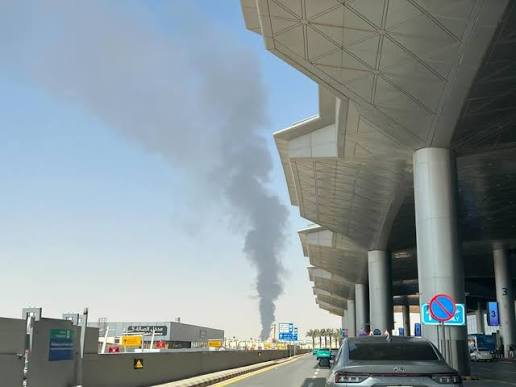
When Houthi missiles and drones struck Riyadh’s King Khalid International Airport on Saturday, October 10, the assault claimed 13 lives and left 308 wounded. But beyond the immediate carnage, it ignited a pressing question: can Saudi Arabia truly defend its airports against an adversary determined to keep launching attacks?
What unfolded at King Khalid International Airport
The assault on Riyadh’s primary aviation hub marked the deadliest of its kind. Saudi officials confirmed the casualty figures, and emergency teams worked for hours to secure the site. Then came another strike: a projectile hit Terminal 4 the following day, igniting a fire that killed one person and injured 11 others.
Air defenses managed to intercept some of the incoming projectiles, but not all. One breached the defenses and slammed into a passenger hall, starting a blaze that forced a complete shutdown of airport operations. Flights were grounded while inspectors evaluated the damage and searched for unexploded ordnance.
The Houthi claim and the subsequent warning
Yahya Saree, the Houthis’ military spokesman, was blunt. He stated that the group had targeted Riyadh’s airport with missiles and drones, and asserted similar attacks on Dammam airport and Saudi oil facilities. Then came the warning that alarmed airlines: Houthi leaders advised carriers to steer clear of the kingdom’s airports and airspace entirely.
Riyadh’s reaction was swift yet restrained. Officials reported that their air defenses had intercepted several projectiles, but conceded that one had reached a passenger terminal. The airport halted all operations to allow for damage assessment and security checks.
Why the Houthis say they are targeting Saudi Arabia
The Houthis present their attacks as retaliation. They cite Riyadh’s support for Yemen’s government forces and Saudi airstrikes within Yemen. In recent months, fighting has escalated following an offensive by Saudi-backed forces and a renewal of strikes on Houthi positions. The group maintains that its operations against the kingdom are a direct response to that intervention.
Saudi Arabia views the situation differently. Officials characterize the attacks on their territory as a direct threat to civilians and infrastructure. The spokesman for the Saudi-led coalition condemned the strikes, and authorities bolstered security around the targeted sites.
The fallout for travelers and the region
The temporary closure and inspections disrupted air traffic, leading to delays and cancellations. Authorities and several diplomatic missions urged travelers to follow security guidance and verify their flight status before heading to the airport.
Beyond the human toll, these attacks highlight the risk that Yemen’s war could spill further into Saudi territory. They also stoke fears of additional strikes on airports and strategic infrastructure, even as calls for de-escalation grow louder.
- 13 dead and 308 wounded in the first strike on Riyadh’s airport
- Terminal 4 hit the next day, leaving one dead and 11 injured
- Houthis claim attacks on Riyadh, Dammam and oil facilities
- Airport operations suspended; flights delayed and canceled
- Saudi air defenses intercepted some, but not all, projectiles