Understanding Russia’s security involvement in Mali and the Sahel
Russia’s expanding military partnerships in West Africa’s Sahel zone are drawing increasing attention as regional security challenges intensify.
Mali’s security crisis and Russia’s shifting military support
Following a coordinated assault by armed groups in multiple Malian cities including Bamako, military leader Assimi Goïta declared the situation “under control.” Russian security forces reportedly provided critical air support to prevent rebel groups from seizing key locations, including the presidential palace. However, the country’s security landscape remains highly unstable as government forces struggle to reclaim territory from Tuareg separatists and al-Qaeda-linked militants.
On April 26th, coordinated offensives in Bamako, Gao, Sevare, and Kati—home to major military installations—caught authorities off guard. Among the casualties was Defense Minister Sadio Camara, and the northern city of Kidal fell temporarily under rebel control. Malian authorities claimed to have neutralized over 200 attackers.
From Wagner to Africa Corps: a strategic rebranding
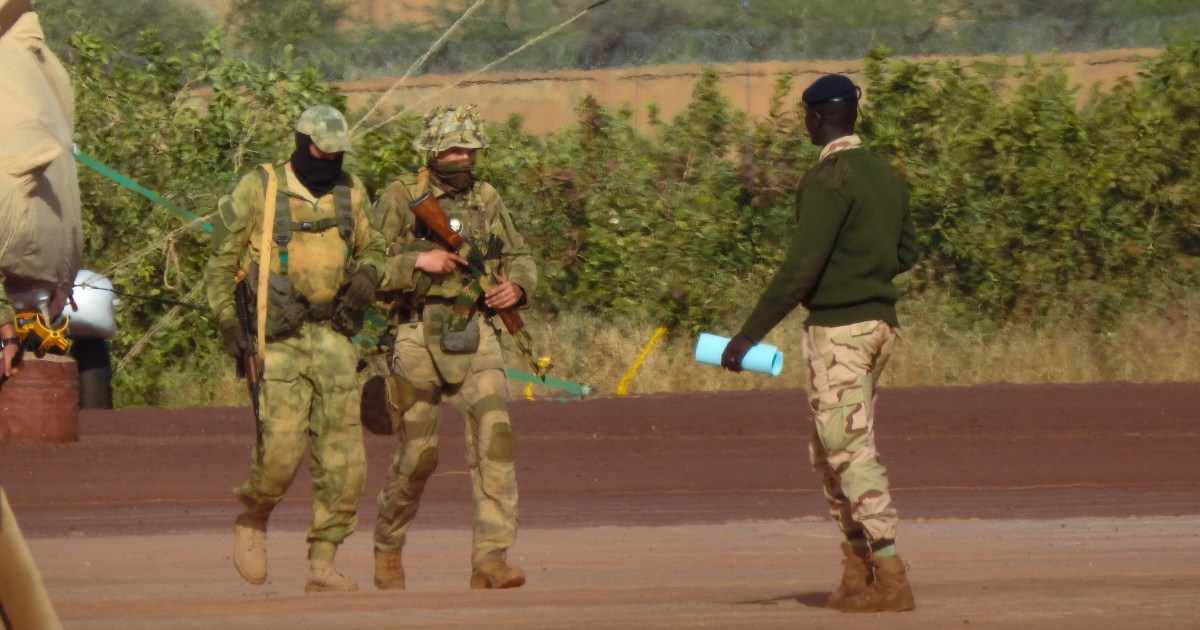
Russia’s military presence in Mali began in 2021, initially under the Wagner Group, a private paramilitary organization. After the death of Wagner’s founder Yevgeny Prigozhin in 2023, Russian authorities rebranded the force as the Africa Corps, integrating it directly under the Russian Ministry of Defense. Despite this transition, analysts note a shift in operational tactics—where Wagner was known for aggressive engagements, Africa Corps has adopted a more defensive posture.
Reports indicate that Africa Corps fighters were deployed in Kidal until their withdrawal during the recent attacks. Witnesses reported Russian troops retreating in trucks, reportedly after negotiating terms through Algeria. The withdrawal has raised questions about the effectiveness of Russia’s military partnership with Mali.
Civilian targeting and war crime allegations
All parties—Russian forces, Malian troops, and rebel groups—have been accused of targeting civilians. Human rights organizations warn these actions may constitute war crimes. The withdrawal from Kidal, a symbolic Tuareg stronghold, has left behind significant military equipment, including a drone station, fueling perceptions of strategic abandonment.
Russia’s strategic goals in the Sahel
Russia has positioned itself as an alternative to Western military influence in the Sahel, particularly after France began withdrawing its troops in 2021. Moscow has leveraged Wagner Group (now Africa Corps) to bolster alliances with regional governments, including in the Central African Republic, Libya, and Sudan. In Mali’s neighbors—Niger and Burkina Faso—Russian presence remains limited, primarily in advisory roles.
While Wagner’s earlier interventions in Mali were credited with helping restore government control in Kidal in 2023, recent events have exposed vulnerabilities in Russia’s Sahel strategy. The loss of Kidal, the death of Defense Minister Camara—a key architect of the Russia-Mali partnership—and the coordinated attacks have dealt a reputational blow to Moscow’s regional influence.
Regional response and shifting alliances
Mali, Burkina Faso, and Niger formed the Alliance of Sahel States (AES) in 2023 in response to growing instability and their withdrawal from ECOWAS. This bloc seeks to address security challenges independently, reducing reliance on external partners.
Despite Africa Corps’ claims of providing air support and disrupting attacks on Bamako, skepticism about Russia’s commitment persists. The surprise offensive and the seizure of Kidal have left many questioning the viability of Russia’s military engagements in the region.
What lies ahead for Russia in the Sahel?
Analysts suggest Russia’s credibility in the Sahel has been significantly damaged. Ulf Laessing, head of the West Africa program at the Konrad-Adenauer Stiftung, stated, “Africa Corps has really lost credibility… They didn’t put up a fight on Saturday and have left Kidal… This gives the impression that they don’t really care—though they were probably outnumbered.”
With JNIM declaring a siege on Bamako and doubts lingering over Russia’s military effectiveness, the future role of Africa Corps in Mali remains uncertain. While Russia’s Defense Ministry continues to release videos claiming ongoing operations against armed groups, the broader question remains: Can Moscow regain trust in a region increasingly skeptical of external military interventions?
Key takeaways on Russia’s role in Mali and the Sahel
- Military transition: Wagner Group’s rebranding as Africa Corps under Russia’s Defense Ministry marked a shift in operational strategy.
- Strategic setback: The loss of Kidal and the death of Defense Minister Camara have undermined Russia’s influence in the region.
- Civilian impact: Accusations of targeting civilians by all parties raise concerns about potential war crimes.
- Regional skepticism: Recent events have eroded trust in Russia’s military commitments across the Sahel.
- Future uncertainty: With ongoing sieges and strategic withdrawals, Russia’s long-term role in Mali remains unclear.