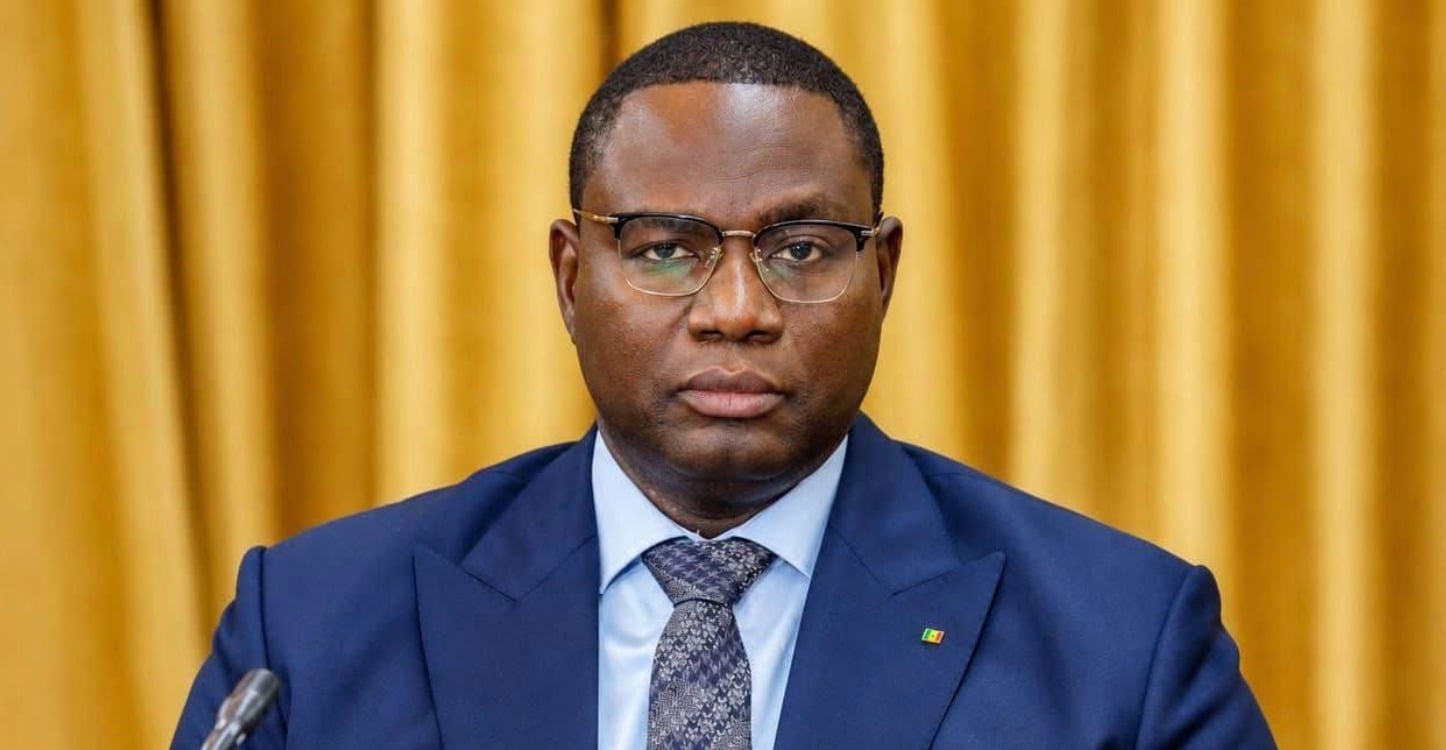
Senegal politics: minister Moussa Bala Fofana addresses Sonko’s criticism
In a period of heightened political tensions within PASTEF, Minister Moussa Bala Fofana has publicly addressed recent criticism from party leader Ousmane Sonko. He reaffirms his unwavering commitment to President Bassirou Diomaye Faye while emphasizing the critical importance of state continuity amid internal party disagreements.
Government continuity under scrutiny
The remarks from the Minister of Urban Planning, Local Authorities, and Territorial Development come at a pivotal moment for PASTEF, as internal debates intensify regarding the loyalty of government officials retained in their positions following the 2024 campaign.
Minister Fofana’s statement directly responds to comments made by Ousmane Sonko, who had publicly questioned the alignment of certain executive members with the party’s political vision. The minister, serving in his third consecutive term, opens by stressing his dedication to national continuity and expresses his deep gratitude to President Bassirou Diomaye Faye for the renewed confidence placed in him.
Personal conviction over party loyalty
Moussa Bala Fofana clarifies that while he had no prior relationship with President Faye before the party’s rise to power, he has since observed a governance approach firmly rooted in public policy implementation. He also highlights his past collaboration with Ousmane Sonko—now President of the National Assembly—whom he describes as a cornerstone of the party’s foundational political project. Despite current divergences, the minister affirms that the personal and political bonds forged during this period remain unbroken.
Addressing Sonko’s recent statements from June 2, 2026, Fofana firmly distances himself from any interpretation suggesting a breach of commitment or partisan disobedience. He declares, « I acted with complete freedom and in my personal capacity ». The minister emphasizes that his decision to remain in government was driven neither by career ambitions nor defiance, but by an independent assessment of his public responsibilities. He underscores that no political pressure influenced his choice.
National duty versus partisan discipline
Elaborating further, the minister frames his decision as a deliberate balance between party discipline and national responsibility. He explains that he chose to prioritize what he views as the continuity of commitments made to citizens during the 2024 campaign. In his words, this represents a choice guided by conscience and duty: « Between partisan logic and my duty to the Nation, I chose to continue the mission entrusted to me ». Such a stance, he argues, aligns with a public service ethos where the general interest must supersede immediate political considerations.
Fofana also highlights the personal and political weight of his commitment, acknowledging the potential fallout his position may provoke within his former party circles. He embraces the likelihood of criticism and misunderstanding, rejecting any pursuit of popularity in favor of administrative continuity and the implementation of public policies—priorities he deems essential in the current context. The minister concludes with a broader reflection on Senegal’s political landscape, asserting that « Senegal is greater than any one of us » and reaffirming his loyalty to what he terms a « loyalty to conscience and public service ».