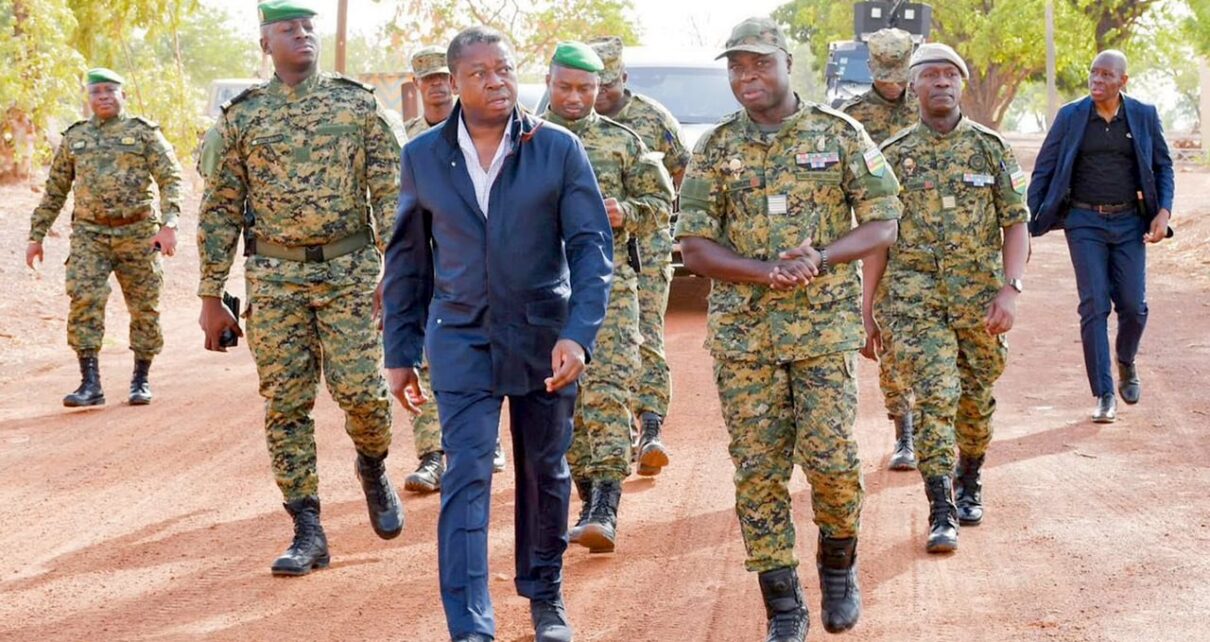

In a striking display of national unity, crowds gathered to honor the armed forces as soldiers, gendarmes, and police marched in formation. Behind them, students proudly carried banners bearing their school names, while local dignitaries watched from the front rows. Leading the procession was Affoh Atcha-Dédji, governor of the Savanes region and former Minister of Transport, inspecting the troops. This scene underscores the heightened security measures being implemented along the border with Burkina Faso, where jihadist groups have intensified their activities.
border reinforcement strategies
Facing growing threats from armed factions operating near its northern frontier, Togo has launched a comprehensive border security initiative. The measures include the deployment of additional military units, enhanced surveillance systems, and infrastructure upgrades to prevent cross-border incursions. The Savanes region, bordering Burkina Faso, has become a focal point for these efforts, given its proximity to conflict zones.
The government’s strategy involves coordinated patrols, intelligence-sharing with neighboring countries, and the construction of fortified posts. Local communities are also being sensitized on security protocols to ensure rapid response to any threats. These actions reflect a broader regional commitment to counter terrorism and stabilize the area.
regional collaboration against terrorism
The escalating violence in the Sahel has prompted Togo to strengthen its alliances with neighboring nations. Joint operations with Benin, Niger, and Ghana aim to disrupt militant networks and secure porous borders. Regional organizations like the Economic Community of West African States (ECOWAS) are also playing a pivotal role in coordinating defense strategies.
These collaborative efforts are critical in addressing the rise of extremist groups such as the Group for the Support of Islam and Muslims (JNIM), which has been linked to attacks in the Burkina Faso—Togo border area. By reinforcing security frameworks and fostering regional cooperation, governments are working to curb the spread of violence and protect civilian populations.
community resilience and long-term security
Beyond military actions, Togo is investing in community-based initiatives to build resilience. Local leaders are engaging with residents to raise awareness about early warning signs of extremism and promote social cohesion. Economic development projects in border towns aim to reduce vulnerability to recruitment by militant groups.
The government’s approach balances immediate security needs with long-term stability, ensuring that border communities remain safe and prosperous. As the situation evolves, ongoing assessments will guide further adjustments to the defense strategy.
key takeaways
- Togo is reinforcing its northern border with Burkina Faso to counter jihadist threats.
- Enhanced military presence, surveillance, and infrastructure upgrades are part of the security plan.
- Regional collaboration with Benin, Niger, and Ghana strengthens counter-terrorism efforts.
- Community engagement and economic development aim to reduce extremism’s appeal.
- The Group for the Support of Islam and Muslims (JNIM) remains a key focus for security operations.