Washington raises alarm over Burkina Faso, Mali and Niger as level 4 danger zones
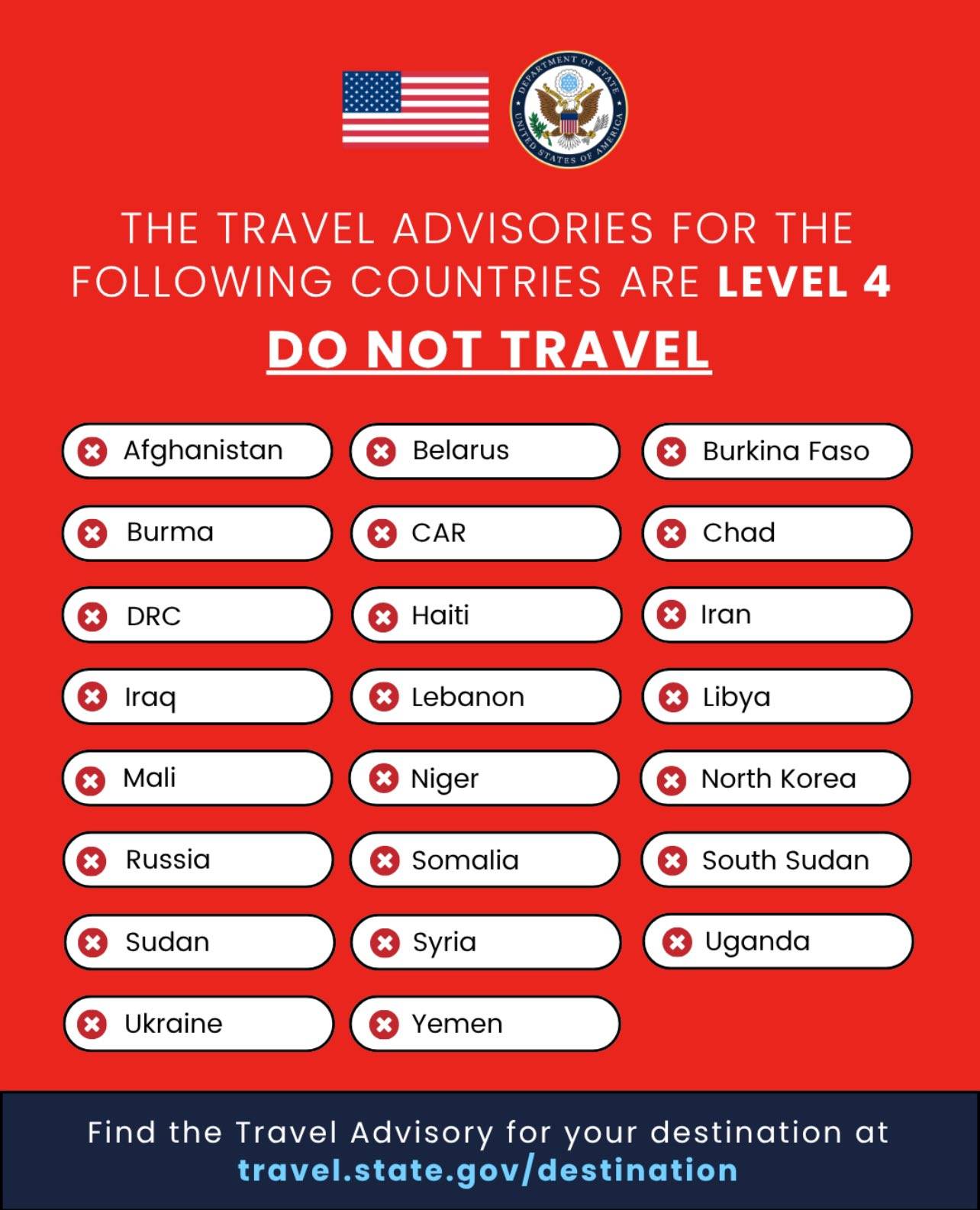
The U.S. State Department has updated its global travel advisory, designating 23 nations as Level 4: Do Not Travel—the highest warning level possible. Among the countries listed are Burkina Faso, Mali, and Niger, all members of the Alliance of Sahel States (AES). The move underscores a worsening security crisis in the region, where terrorist groups have expanded their reach and state authority continues to erode.
At this extreme alert level, the U.S. government strongly advises against all travel to these countries. Officials warn that emergency consular or medical assistance for Americans may be severely limited or unavailable due to the withdrawal of non-essential diplomatic staff. The classification reflects a harsh geopolitical reality: vast areas of these nations are now effectively lawless, exposing foreign nationals to grave risks including kidnapping, armed attacks, and hostage-taking.
Why the Sahel’s instability demands urgent attention
The inclusion of the AES trio—Burkina Faso, Mali, and Niger—highlights a deepening crisis rooted in multiple overlapping challenges. After years of military rule and strategic realignments away from Western partners like France and the European Union, these countries face a perfect storm of insecurity:
- Weak state presence: Governments have struggled to maintain control over remote and border regions, leaving vast territories vulnerable to armed factions.
- Economic despair: Systemic poverty fuels recruitment by militant groups, offering desperate youth a semblance of purpose or income.
- Military reorientation: The departure of Western forces has left a transitional security gap, while new alliances—particularly with Russia—are still proving their effectiveness on the ground.
But the most pressing concern is the unrelenting advance of terrorism. Groups like the Support Group for Islam and Muslims (JNIM) and the Islamic State in the Greater Sahara (EIGS) are no longer confined to remote desert sanctuaries. They now launch coordinated offensives, seize strategic zones, and push deeper into civilian areas.
How each Sahel nation is affected
Burkina Faso: The country bears the brunt of this conflict, with large portions of its territory under de facto blockade by armed groups. Entire towns are cut off from supply routes, while military outposts and humanitarian convoys face near-daily ambushes. The result is a growing humanitarian catastrophe, with mass internal displacement and collapsing access to food and medical care.
Mali: The situation has deteriorated further since the withdrawal of the UN peacekeeping mission (MINUSMA). Rebel factions and terrorist cells now operate with greater impunity, especially in the north, while violence spreads southward toward Bamako. Once considered relatively safe, the capital now faces rising threats from armed incursions and improvised explosive devices.
Niger: The nation is squeezed between two major insurgencies. In the west, the volatile “tri-border” zone with Mali and Burkina Faso remains a hotbed of extremist activity. In the southeast, the Lake Chad basin faces ongoing attacks from Boko Haram and the Islamic State’s West Africa Province (ISWAP). Despite military reforms, Niger’s security forces struggle to contain the threat, compounded by strained regional relations that hinder cross-border cooperation.
A global snapshot of danger
The U.S. travel warning isn’t limited to Africa. Other countries at Level 4 include Russia, where the war in Ukraine and arbitrary detentions of foreigners pose extreme risks, and the eastern Democratic Republic of the Congo, where dozens of armed groups—including the M23—perpetrate widespread violence against civilians. Neighboring Chad, already reeling from regional spillover, remains under threat from terrorism and potential civil unrest.
Economic and humanitarian fallout of the red alert
A Level 4 designation isn’t just about travel—it reshapes economies and humanitarian operations. For the Sahel trio, the warning has already triggered:
- Investment freeze: Multinational corporations are halting or delaying projects due to prohibitive insurance costs and security risks for expatriate staff.
- NGO restrictions: Humanitarian organizations face tightened access protocols, limiting their ability to deliver food, medical supplies, and education to vulnerable populations.
- Trade disruptions: Cross-border commerce and logistics are increasingly disrupted, deepening food and fuel shortages in already fragile economies.
The warning also signals a broader failure of past stabilization efforts. Despite shifts in leadership and realigned international partnerships, insecurity has continued to spread. Without addressing governance deficits, social inequality, and access to basic services, the Sahel’s crisis will persist—and the map of global risk may remain painted in red for years to come.