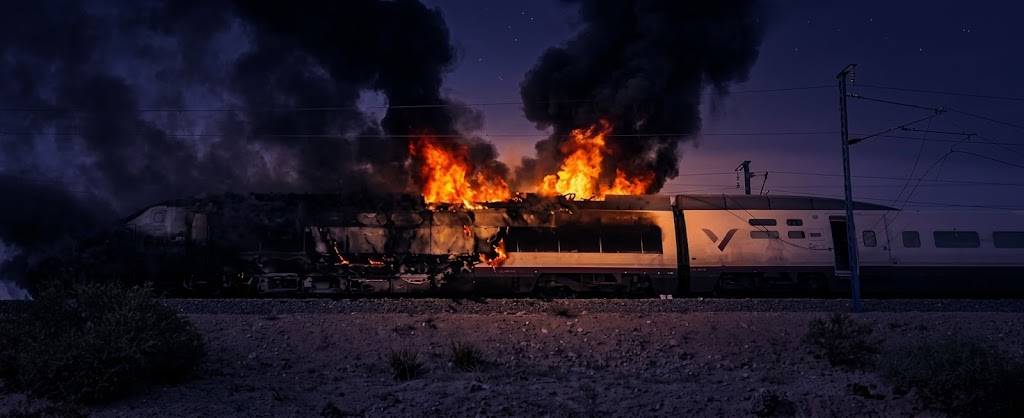
A routine journey turned emergency at 16:05 near Ricla
What happens when a fire ignites on one of Europe’s busiest high-speed rail corridors, with hundreds of passengers on board? That question became urgently real on Monday, October 12, when flames were detected aboard a Renfe AVE train traveling from Madrid to Figueres in Catalonia. The 283 passengers on board were evacuated, and no injuries were initially reported. But the disruption that followed raised serious questions about how a single localized incident can paralyze a key transport artery.
The sequence of events
The train had departed Madrid’s Puerta de Atocha station at 14:27 and was heading northeast toward Figueres. At approximately 16:05, near Ricla in the province of Zaragoza, Aragon, the fire was detected in the rear cab of the train. Emergency protocols were immediately activated. The 283 travelers were brought off the train in a controlled evacuation, while emergency services moved in to extinguish the flames.
Why the evacuation mattered most
In a high-speed rail emergency, smoke inhalation and rapid fire spread are the primary threats to passengers. The decision to evacuate immediately — rather than attempt to move the train to a station — reflected standard safety procedures designed to prioritize human life. The initial assessment confirmed no casualties, a result that underscored the effectiveness of the onboard emergency response and the coordination between Renfe staff and local rescue teams.
Madrid–Barcelona high-speed traffic halted for hours
The fire’s impact extended far beyond the single train. As a precaution and to allow rescue operations to proceed, high-speed rail traffic between Madrid and Barcelona was suspended for several hours. This is one of Spain’s most heavily used rail links, and the shutdown sent ripples across the network.
Thousands of travelers affected
Trains were held at various stations, and multiple afternoon departures were canceled. Thousands of passengers faced delays, rerouting, or uncertainty about whether they could complete their journeys. The timing could hardly have been worse: October 12 is Spain’s national holiday, marking the end of a long weekend when transport demand traditionally peaks. Many travelers were returning home or heading to onward destinations after the festivities, and the line closure compounded an already busy travel day.
Renfe’s response to passengers
Renfe moved quickly to announce measures aimed at reducing inconvenience. The operator offered free ticket changes and refunds for affected journeys. Meanwhile, technical teams and relevant services carried out post-fire checks, including safety inspections of the rail infrastructure. Resuming service depended on confirming that safe operating conditions could be guaranteed on the affected section.
In a statement issued the day of the incident, Renfe said it could not immediately determine how long disruptions would last. The company later announced a gradual restoration of service following the firefighting effort and initial line inspections.
What caused the fire — and what comes next?
While the evacuation of all 283 passengers without injury was reassuring, the incident raised pressing questions about the technical circumstances behind the blaze and the vulnerability of a heavily used line to a single train’s immobilization.
Investigation underway
At this stage, no definitive cause could be identified. An investigation was launched to clarify how the fire started in the rear cab and to determine whether any technical failures played a role. The findings will also inform potential corrective measures to prevent similar incidents.
The broader stakes for high-speed rail safety
This event serves as a reminder of how critical emergency protocols are in high-speed rail operations. Rapid reaction and seamless coordination among onboard crews, the operator, and rescue services are essential. The initial human toll remains reassuring: all 283 travelers were evacuated, and no injuries were reported. Yet the ripple effects on traffic demonstrated how quickly a localized incident can disrupt a major rail link and affect the travel plans of thousands. The question now is whether the investigation will lead to changes that make an already safe system even more resilient.