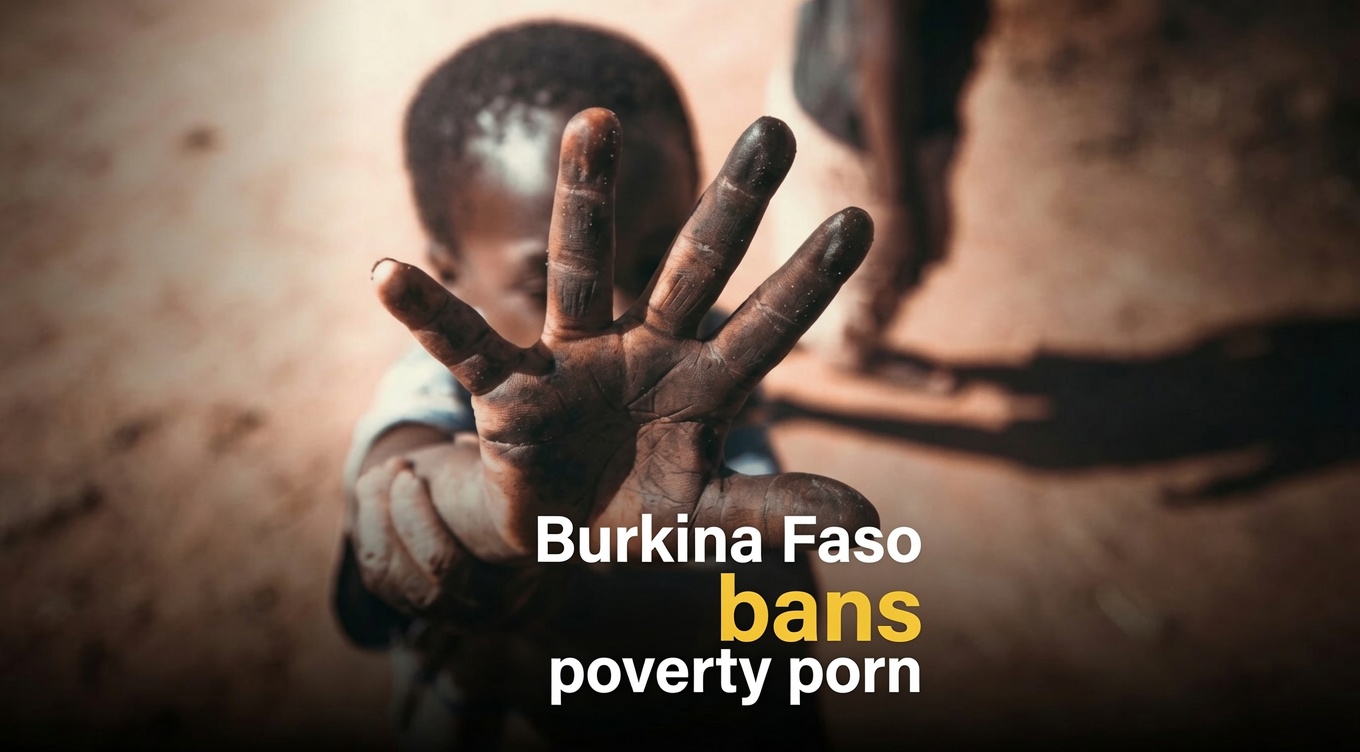
Ouagadougou — Burkina Faso has taken a decisive stance against the exploitation of human suffering for digital engagement and fundraising. The transitional government has officially prohibited the production and dissemination of what sociologists term poverty porn, a practice that reduces individuals facing hardship to mere objects of voyeuristic pity.
Ethical concerns drive legislative action
The proliferation of digital platforms has turned human distress into a commodity, with creators and organizations often prioritizing emotional impact over ethical considerations. Typical scenarios involve close-up depictions of malnourished children, internally displaced persons, or families in dire circumstances—scenes designed to evoke immediate, albeit calculated, reactions. While the intent may be to raise awareness or mobilize resources, the method strips individuals of their dignity, transforming their suffering into digital spectacle.
In response, Burkina Faso’s authorities have enacted legislation to halt this practice, emphasizing the fundamental right to dignity over exploitative narratives.
Balancing perception and sovereignty
Beyond ethical concerns, this ban aligns with broader political and security objectives. Burkina Faso is navigating a multifaceted crisis, and the unchecked spread of images portraying the country solely through a lens of hardship risks undermining national sovereignty. By regulating such content, the government aims to reclaim control over its narrative, ensuring that the nation is not reduced to a stereotype of helplessness.
The stated goal is not to obscure reality but to reject a one-dimensional portrayal that misrepresents the country’s resilience and ongoing efforts to address its challenges.
Criticism and concerns over transparency
Opponents of the transitional leadership argue that the ban serves a dual purpose: while purporting to protect dignity, it may also function as a tool to suppress critical reporting. Critics contend that by restricting footage of hardship, the government could mask the true extent of the humanitarian crisis gripping the nation. Internally displaced populations, communities under siege, and families struggling with food and medical shortages remain realities that cannot be erased by legislation.
For detractors, the move is seen as an attempt to maintain a façade of control, silencing the very signals that could prompt urgent international action.
Redefining humanitarian communication
Despite the controversy, the new law compels humanitarian organizations and content creators to adopt more ethical and effective communication strategies. The challenge lies in balancing the need to highlight urgent crises with the imperative to avoid sensationalism and censorship.
The solution, experts suggest, lies in shifting the narrative. Rather than focusing solely on vulnerability, storytelling must emphasize resilience, local initiatives, and the agency of affected communities. This approach not only preserves dignity but also fosters a more accurate and empowering representation of Burkina Faso’s struggles and triumphs.
In doing so, the country can continue to draw global attention to its challenges without resorting to exploitative practices—ensuring that the voices of its people are heard, not merely as subjects of pity, but as active participants in their own recovery.