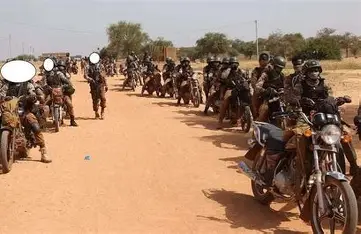
The human cost remains staggering. Recent assaults have left at least fifty soldiers and members of the Volunteers for the Defense of the Homeland (VDP) dead. While such losses demand attention, they should not overshadow the deeper realities unfolding on the ground. These attacks, though devastating, reflect a critical phase of transition rather than an unrelenting downward spiral for Burkina Faso’s armed forces.
Beyond the death toll: understanding the enemy’s evolving tactics
In asymmetric warfare, casualty counts alone cannot capture the full picture. Terrorist groups, stripped of their ability to hold territory amid sustained military pressure from Ouagadougou, have abandoned conventional warfare in favor of a new strategy. They now rely on opportunistic strikes, prioritizing psychological warfare over territorial gains.
To frame the conflict solely through the lens of losses is to mistake the convulsions of a cornered enemy for its actual strength. These brutal attacks—often targeting isolated outposts or supply convoys—serve a dual purpose: they inflict pain while aiming to erode public trust in the military’s mission. The Burkina Faso armed forces, in their offensive posture, have exposed themselves to greater risk. To root out insurgents hiding in remote terrain, soldiers must venture beyond fortified bases, leaving them vulnerable. The current toll is the grim consequence of this necessary gamble to reclaim control over contested land.
VDP: the backbone of a new defense doctrine
The Volunteers for the Defense of the Homeland (VDP) have become a primary target. While some external analysts have dismissed them as poorly trained cannon fodder, their integration into the security framework marks a strategic turning point—one that insurgents are desperate to disrupt.
This civilian-military partnership rests on three pillars:
- Deep-rooted territorial awareness: The VDP’s intimate knowledge of local landscapes and communities provides an intelligence advantage that regular troops often lack.
- Rejection of foreign intermediaries: Burkina Faso’s security strategy now emphasizes self-reliance, rejecting past dependence on external forces.
- A force in transformation: Early struggles with logistics and training have given way to tighter military oversight, turning volunteers into vital local deterrents.
The repeated strikes against VDP positions underscore a harsh truth: insurgents view them as an existential threat—a mobilized populace refusing to surrender its land.
Cutting off the enemy’s lifelines: the next phase of the fight
Burkina Faso’s military leadership is no longer content with reactive measures alone. The focus has shifted toward dismantling the logistical networks that sustain terrorist groups. Recent losses highlight the urgency of securing supply routes and refining tactical intelligence.
The path to total strategic autonomy is fraught with challenges. Victory will demand patience, resilience, and an acceptance of tactical setbacks as the enemy deploys its last remaining supply channels. Amid the justified grief over these fallen fighters, Burkina Faso is rewriting the rules of its own survival—a battle waged not just with weapons, but with strategy and resolve.