
Gabon’s agro-industrial leap with SONOCO’s ambitious investment
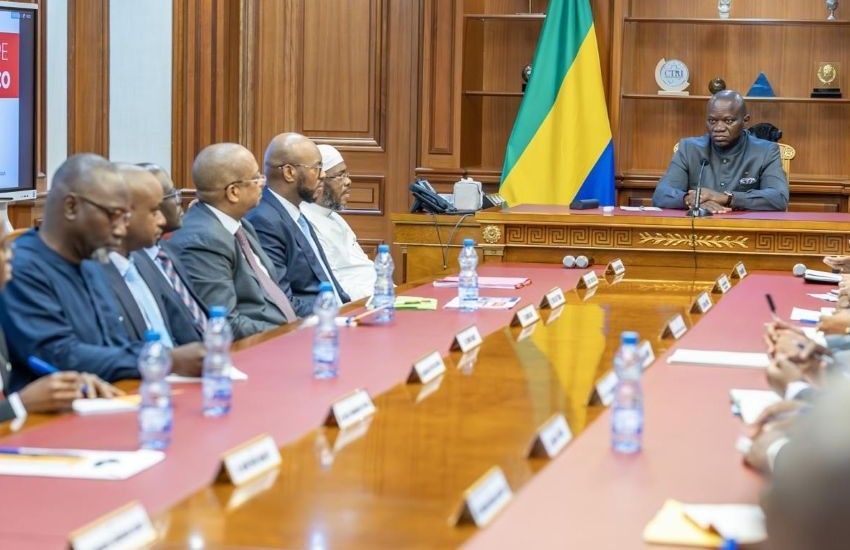
Libreville, June 10, 2026 — Gabon may have just turned a new page in its economic transformation journey. During a high-level meeting with a SONOCO delegation led by CEO Abdoul Karim Diallo, President Brice Clotaire Oligui Nguema set the stage for what could become a landmark partnership in African economic cooperation.
This wasn’t merely a diplomatic gesture. It represented the concrete follow-through on commitments made weeks earlier at the Kigali Economic Forum, where Gabon called for increased African investment to support its economic repositioning strategy.
SONOCO, one of West Africa’s leading private conglomerates, responded with a decisive move. The company’s decision to enter Gabon’s agro-industrial sector signals growing confidence in Gabon’s economic potential, particularly as the country accelerates efforts to diversify its economy.
Boosting food sovereignty through local production
The strategic focus on agro-industry is no coincidence. Food security remains one of Africa’s most pressing challenges, with many nations still heavily reliant on food imports despite vast agricultural potential. Gabon is no exception—its poultry sector remains dependent on imported products, straining the national trade balance.
SONOCO’s initiative aims to address this vulnerability head-on. Far beyond setting up production facilities, the Guinean group plans to replicate a proven integrated model already successful in multiple African markets. The goal is full control over the entire value chain—from raw material production to final processing.
The project spans multiple critical components: local cultivation of plant-based animal feed ingredients, construction of a state-of-the-art poultry feed mill, establishment of hatcheries, broiler farms, layer farms, and commercial poultry farms, along with an industrial slaughterhouse meeting international standards.
A vertically integrated industrial ecosystem
This comprehensive approach tackles a persistent issue in African agriculture: fragmentation. By consolidating every production stage under one structure, SONOCO aims to enhance economic efficiency and strengthen the entire industry’s resilience.
The projected scale is unprecedented for Gabon. Annual production is expected to exceed 15 million broiler chickens, positioning the country toward self-sufficiency in poultry and significantly reducing import dependency. For a nation still importing a substantial portion of its food needs, the implications are transformative.
Yet the impact extends beyond food security. Like in Guinea, where SONOCO’s operations already support nearly 4,000 jobs, the Gabon project is expected to generate thousands of direct and indirect positions across agriculture, livestock, industrial processing, logistics, and auxiliary services.
This aligns perfectly with Gabon’s broader economic vision: moving beyond raw resource extraction to local value addition, fostering sustainable industrial growth, and reducing reliance on external markets.
A new era of African-to-African investment
The partnership embodies a deeper geopolitical shift. As African nations intensify intra-continental trade, the Gabon-Guinea collaboration reflects a growing trend: African enterprises investing in Africa, sharing expertise, and building homegrown value chains.
Administrative and land allocation processes are already underway with relevant ministries, with construction expected to begin in the coming months. If timelines are met, the SONOCO project could soon stand as a flagship example of Gabon’s new economic policy—and a model for South-South cooperation.
In a world grappling with food supply disruptions and rising import costs, the initiative carries global significance. It reinforces a shared conviction across Africa: economic sovereignty depends not only on natural resources and infrastructure but on the continent’s ability to feed itself sustainably.
The Gabon-SONOCO partnership is a step toward that vision—one that could redefine regional cooperation and set a new standard for agricultural transformation in Central Africa.