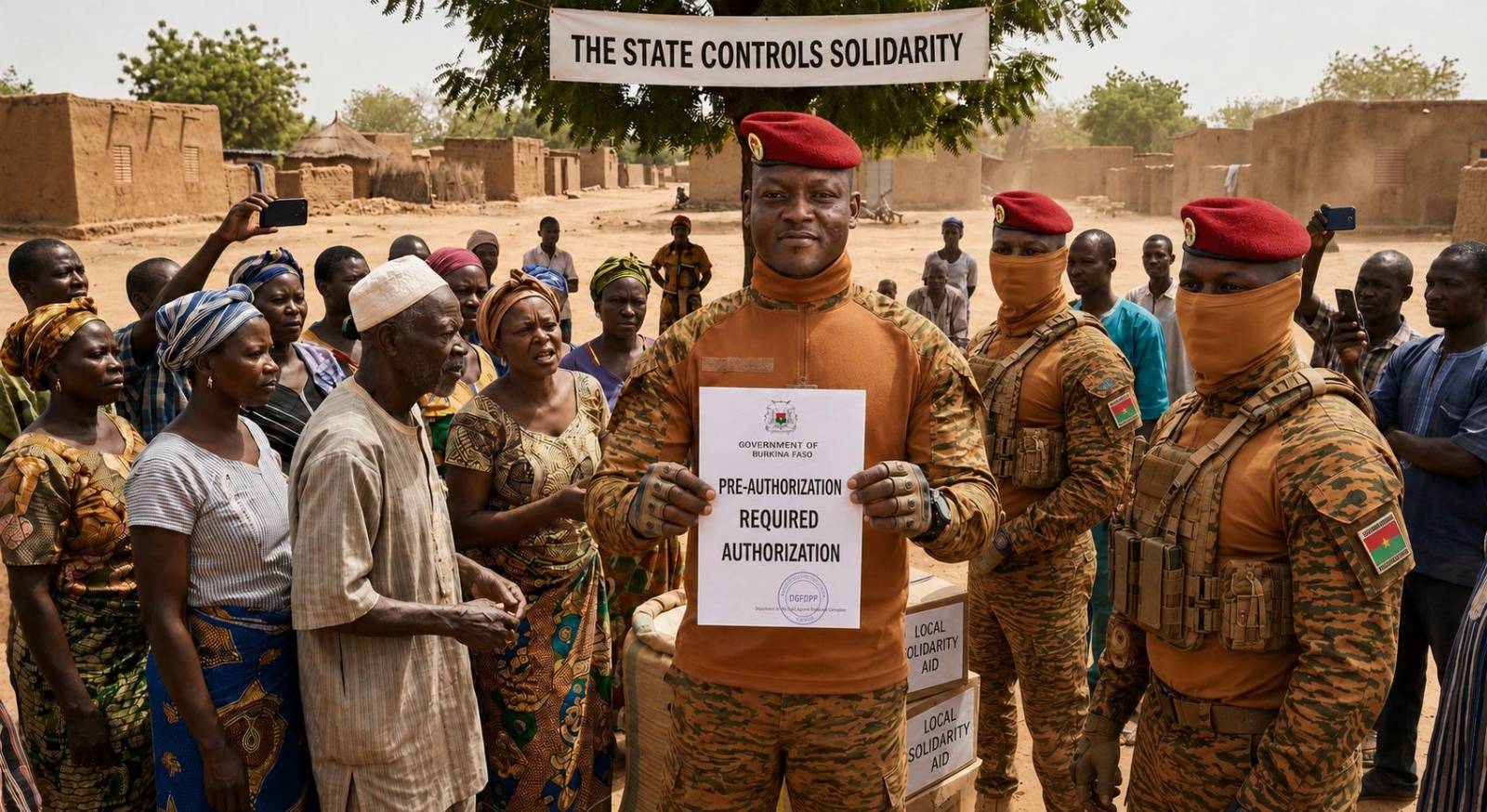
State control over solidarity: a shift in Burkina Faso’s humanitarian landscape
Burkina Faso has entered a new phase in its approach to charitable initiatives, as the Ministry of Solidarity and National Cohesion now requires formal authorization for all aid-related activities. This regulatory shift, introduced under the transitional government led by Captain Ibrahim Traoré, marks the end of spontaneous community-driven assistance and raises critical questions about the future of social solidarity in the country.
From grassroots generosity to state-regulated compassion
The decision to mandate prior approval for humanitarian actions stems from concerns over the exploitation of vulnerable populations on social media platforms. While the stated goal is to protect human dignity and prevent exploitation, the policy effectively transforms acts of kindness into potential criminal offenses. The government argues that unregulated charitable efforts may compromise individual dignity, yet the practical implications suggest a broader agenda: the systematic subordination of civil society to state control.
This development represents a fundamental departure from Burkina Faso’s traditional model of crisis response, where communities, religious organizations, and diaspora groups have historically served as first responders in times of need. Their ability to mobilize rapidly has been a cornerstone of the country’s resilience, particularly amid ongoing security challenges and humanitarian crises. By imposing administrative hurdles, the authorities risk undermining these organic networks of support that have proven far more effective than state-led interventions.
The erosion of civil society autonomy
The new regulations reflect a broader trend of state centralization, where even the most altruistic acts are scrutinized as potential threats to authority. This approach fosters an environment of suspicion between citizens and institutions, transforming social solidarity into a state-controlled commodity. The government’s insistence on being the sole arbiter of compassion raises concerns about its long-term vision for civic engagement and public welfare.
Historical evidence suggests that societies thrive when state action and citizen initiatives operate in complementary rather than competitive frameworks. Burkina Faso’s current trajectory risks discouraging grassroots efforts, weakening community bonds, and creating an over-reliance on an administration that remains ill-equipped to address the scale of humanitarian needs. The consequences of this policy extend beyond bureaucratic inconvenience; they threaten to dismantle the very networks that have sustained communities through years of crisis.
Consequences for humanitarian response: a disconnect from reality
The decree’s punitive measures fail to account for the urgency of humanitarian crises. While state approval processes grind forward, vulnerable populations continue to face displacement, economic hardship, and food insecurity. The government’s inability to match the agility of grassroots organizations—both in speed and resource allocation—exposes a critical flaw in this regulatory approach. Spontaneous assistance, which once filled gaps left by public institutions, now faces legal jeopardy, leaving those in need without recourse.
This policy also risks creating a chilling effect, where fear of administrative penalties discourages individuals from offering aid. A society where generosity is stifled by fear of state retribution is one where social cohesion begins to unravel. The concept of “bush solidarity”—the direct link between urban centers, villages, and diaspora communities—has long been a lifeline for Burkina Faso. By disrupting this organic system, the government risks leaving thousands without support in moments when every second counts.
The paradox of dignity: visibility vs. invisibility
Proponents of the new regulations argue that they protect the dignity of vulnerable individuals by preventing the public display of suffering. However, this perspective raises troubling questions: Is dignity preserved when those in need are rendered invisible by bureaucratic processes? True dignity lies not in hiding distress but in ensuring timely access to assistance. There exists a middle ground—one that balances ethical fundraising practices, transparency, and the protection of human dignity without resorting to blanket restrictions that stifle generosity.
The government’s current approach prioritizes control over urgency, transforming a universal act of humanity into a bureaucratic procedure. This not only undermines the principle of solidarity but also places an untenable burden on an administration already struggling to meet the demands of a complex humanitarian landscape. The result is a policy that risks deepening vulnerabilities rather than alleviating them, all while claiming to uphold moral and ethical standards.
As Burkina Faso grapples with ongoing challenges, the question remains: Can a government truly claim to serve its people when it obstructs the very mechanisms that sustain them?