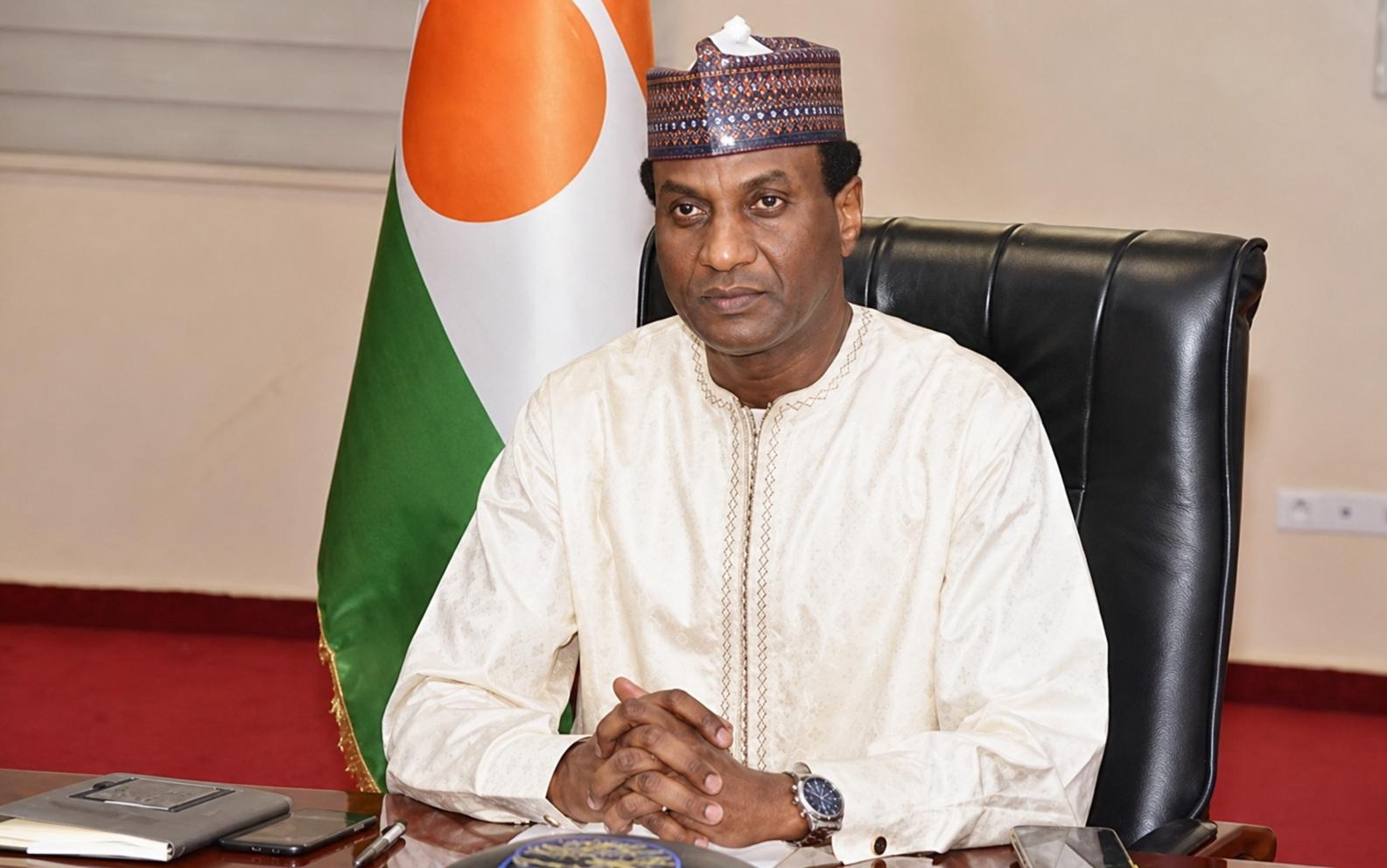
From privileged collaborator to restricted figure: the case of Niger’s transitional prime minister
In Niger’s current political landscape, where military authorities hold sway, the line between trusted advisor and potential threat can dissolve without warning. The recent developments surrounding Ali Mahamane Lamine Zeine, the country’s transitional prime minister, have reignited discussions about the precarious position of civilian leaders within a junta-led system.
Observers close to the prime minister’s office report growing unease among his associates. Security protocols around Lamine Zeine have tightened abruptly: his entire inner circle has been replaced without prior notice, and even those granted access now face rigorous physical screenings. While authorities attribute his prolonged absence from his office to a severe bout of malaria, whispers in political circles suggest a more troubling scenario—a quiet but effective house arrest.
The lack of transparency fuels speculation. In systems dominated by centralized military power, information control is a key governance tool. The absence of clear explanations only deepens suspicions, especially when security measures around a civilian figure resemble containment rather than protection.
A recurring pattern in Sahelian transitions
This situation reflects a well-documented dynamic in military-led transitions across the Sahel. When civilian technocrats or officials resist aligning with the strategic or ideological shifts imposed by uniformed leaders, the security apparatus swiftly moves to neutralize dissent. Rather than resorting to public dismissals—risky for the regime’s image of unity—juntas often opt for a subtler approach: restricting movement, monitoring communications, and isolating the individual in question.
This strategy offers a dual advantage. It preserves the facade of institutional continuity while allowing the military to reclaim full control over decision-making. It also serves as a trial balloon, gauging reactions from the public, international partners, and internal factions before taking more drastic measures.
Civilian leaders: between administrative legitimacy and military loyalty
The case of Lamine Zeine raises a critical question: how much autonomy do civilian leaders truly possess under military rule? In several Sahelian nations, technocrats are often brought in to reassure donors, stabilize economies, and project an image of structured governance. Yet their administrative authority remains conditional on unconditional political loyalty to the military command.
This pattern mirrors recent upheavals in neighboring countries. Whether examining the challenges faced by Choguel Maïga in Mali or the power dynamics surrounding Apollinaire Kyélem de Tambèla in Burkina Faso, the message is consistent: civilian leaders serve as economic buffers or diplomatic fig leaves until they deviate from the military’s agenda. Once that happens, consequences follow swiftly.
A message to the state apparatus
The heightened surveillance around Lamine Zeine is not merely a precaution against potential dissent. It sends a stark warning to the entire government: no official, regardless of rank, is immune to scrutiny by the ruling military core. The replacement of his security detail, the reduction of his engagements, and the filtering of his interactions are as much political signals as they are security measures.
For Lamine Zeine, the challenge now extends beyond policy implementation. He must navigate a labyrinth of suspicion where every movement is logged and every silence dissected. More broadly, this episode underscores a harsh reality: under junta rule, civilian power may appear on paper, but its durability hinges entirely on the military’s discretion. Trust, when granted, is conditional—and constantly at risk of being revoked.