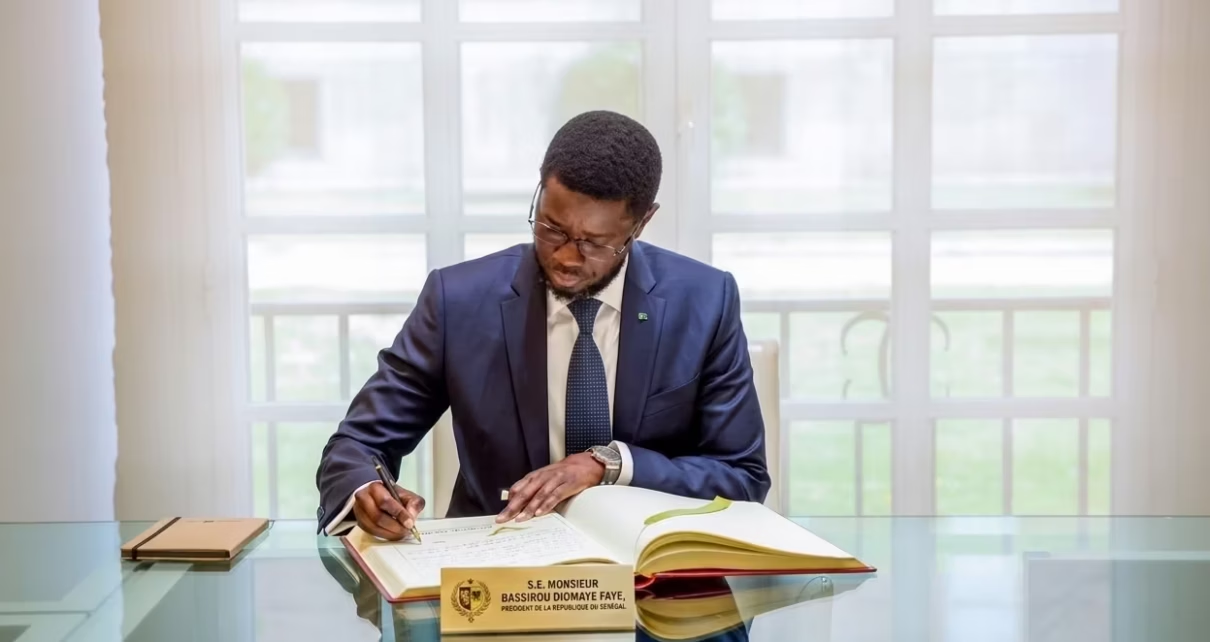
In a decisive political maneuver, President Bassirou Diomaye Faye of Senegal has reshaped the trajectory of a constitutional reform proposal that had just secured parliamentary backing. The move underscores the delicate balance of power within the National Assembly and reflects the president’s strategic intervention in the legislative process.

Parliamentary victory overshadowed by presidential intervention
For a brief moment, it appeared the constitutional reform bill had cleared its final legislative hurdle. With 129 votes in favor, the majority coalition had successfully shepherded the proposal through the National Assembly, seemingly securing a parliamentary triumph. Yet, the battle was far from over. Behind the scenes, President Bassirou Diomaye Faye intervened to alter the course of the reform entirely.
Minister of Justice Me Moussa Sarr disclosed that the president chose not to proceed with the promulgation of the bill in its current form. Instead, he opted to invoke Article 103 of the Constitution, which mandates a referendum for constitutional amendments. This decision effectively nullified the parliamentary victory, redirecting the reform process toward a direct vote by the Senegalese people.
A strategic shift in constitutional reform
The president’s decision to bypass legislative finalization and submit the reform to a referendum represents a significant departure from conventional parliamentary procedure. By choosing this path, President Faye has redefined the political landscape, prioritizing a national vote over an Assembly vote—a move that amplifies the stakes of the reform.
The parliamentary process had already seen its share of contention. Despite the rejection of multiple government amendments, the majority coalition pushed forward with the version approved by the commission, reinforcing their political commitment. Yet, the president’s intervention has now shifted the battleground from the legislative chamber to the public arena, where the reform’s fate will ultimately be decided.
Implications for Senegal’s political future
The president’s decision has sparked fresh debate about the balance of power between the executive and legislative branches. While the majority coalition celebrated their parliamentary triumph, the executive branch has demonstrated its authority to override legislative outcomes when deemed necessary. This development signals a new phase in Senegal’s political dynamics, one where constitutional reforms may increasingly hinge on public approval rather than legislative consensus.
The unfolding situation underscores the president’s strategic foresight and his willingness to leverage constitutional mechanisms to shape the country’s future. As the referendum process begins, all eyes will be on how political stakeholders, including opposition leader Ousmane Sonko, adapt to this unexpected turn of events.