Libreville, Friday, August 14, 2026 – As Gabon approaches its 66th independence anniversary celebrations, the nation’s public debate is experiencing a renewed surge of tension.
Over recent days, institutional leaders, political organizations, community activists, and media representatives have voiced strong condemnation regarding a series of comments deemed offensive or defamatory. These remarks specifically target President Brice Clotaire Oligui Nguema, his spouse, and certain members of his family.
Beneath this collective outcry lies a more profound question now confronting the country: to what extent can freedom of expression be exercised within a digital realm where political critique, activism, and personal attacks sometimes become indistinguishable?
The boundary between dissent and insult
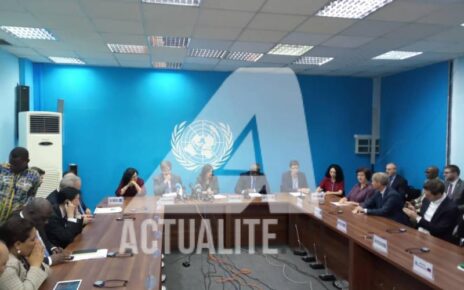
The National Commission for Democracy and Citizen Participation (CNDPC), led by Dr. Séraphin Moudounga, has urged the government to address the online excesses it has observed across various media platforms and social networks. Citing constitutional provisions related to family, marriage, public liberties, and respect for the rights of others, the Commission asserts that certain attacks transcend legitimate political controversy, instead amounting to a direct challenge against the presidential institution itself.
This appeal has resonated with numerous figures across the national landscape. The League of Women of the Democratic Union of Builders specifically condemned the remarks aimed at the presidential couple. Similarly, former special delegates of the Transition period criticized statements attributed to activist Landry Mbeng, widely known by the pseudonym Lanlaire. Prominent political leaders such as David Mbadinga, Florentin Moussavou, and Paskhal Nkoulou have also called for a return to a culture of political confrontation grounded in reasoned argument rather than mere invective.
Amir Alexandre Carron, a young political and community leader, articulated his view that the attacks on the Head of State extend beyond the individual holding the office, symbolically impacting the image of the Gabonese State. Taking a more decisive stance, the United Media Circle announced its intention to pursue legal action against Ange Landry Mbeng, accusing him of disseminating information presented as false or defamatory. The collective’s allegations specifically reference a purported internet shutdown, claims regarding financial sums, and assertions concerning the private lives of the president and his wife.
Nevertheless, these public declarations do not, in themselves, constitute judicial rulings on the alleged facts. Rather, they primarily underscore the escalation of a political and media dispute that may now be brought before the competent legal authorities.
Beyond a single activist: the broader stakes
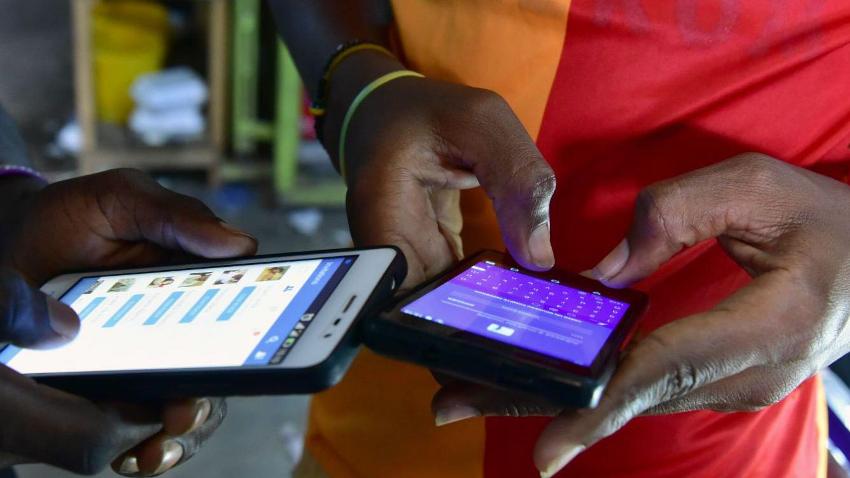
This controversy primarily highlights a challenge that has become global in scope. Social media platforms have fundamentally reshaped the dynamics between governing powers, opposition groups, traditional media, and citizens. A single online post can now traverse borders in mere seconds, reaching millions and generating political impact even before any verification can occur.
The CNDPC, therefore, advocates for the activation of judicial mechanisms stipulated by Gabonese law when content may constitute an offense, even when its creators reside abroad. Concurrently, the Commission champions the modernization of the legal framework governing cyberspace and encourages a broader discussion at the regional levels of CEMAC, CEEAC, and across the African continent.
In this context, the reference to Europe’s Digital Services Act sparks a more extensive debate concerning the accountability of digital platforms, the concerted effort to combat illicit content, and the imperative to safeguard citizens. For Gabon, the intricate task will be to forge a regulatory framework that effectively protects individual dignity and public order without inadvertently transforming digital regulation into a tool for stifling legitimate political criticism.
Indeed, the strength of a democracy is not measured by the absence of dissent. It is gauged by its capacity to tolerate contradiction while establishing clear boundaries against defamation, threats, and personal attacks. Therefore, the protection of the presidential function cannot serve as a blanket immunity from criticism, just as freedom of expression cannot be interpreted as a license to insult.
On the eve of independence: the challenge of public discourse
This unfolding controversy takes place within a particularly symbolic period. The days of August 15, 16, and 17, 2026, have been declared public holidays, observed as paid days off across the entire territory, specifically to allow the populace to participate in the celebrations of Assumption Day and the national holiday. Gabon is thus preparing to commemorate the 66th anniversary of its independence on August 17.
The timing could hardly be more poignant. As the nation commemorates its history and endeavors to project a refreshed image of itself, the quality of its public discourse itself emerges as a critical national issue. Despite their diverse affiliations and perspectives, the calls issued by various stakeholders converge on one essential principle: political opposition is legitimate, criticism of power is necessary, and freedom of expression remains a fundamental right. However, no enduring democracy can truly thrive when disagreement devolves into personal animosity.
The true challenge for the authorities will thus be to uphold the law with equal rigor for all, while simultaneously preserving the vital space necessary for democratic disagreement. For Gabonese society, the stakes are far greater than a dispute ignited on social media.
It is about determining whether the country can embark on a new phase of its political history with a debate culture mature enough to allow for the robust challenging of ideas without resorting to the destruction of individuals. This, in all likelihood, will be a significant determinant of Gabon’s democratic credibility.