Gabon: the fight against high cost of living needs deeper economic solutions
Libreville, July 2026 — For years, the fight against the high cost of living has dominated public discourse in African nations. In Gabon, this issue has escalated into one of the most pressing concerns for households, as surging prices continue to strain household budgets and erode purchasing power.
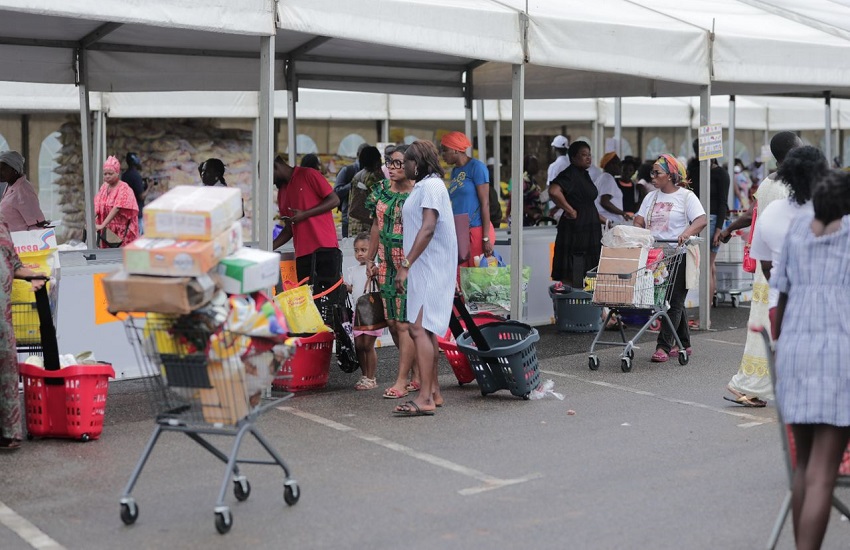
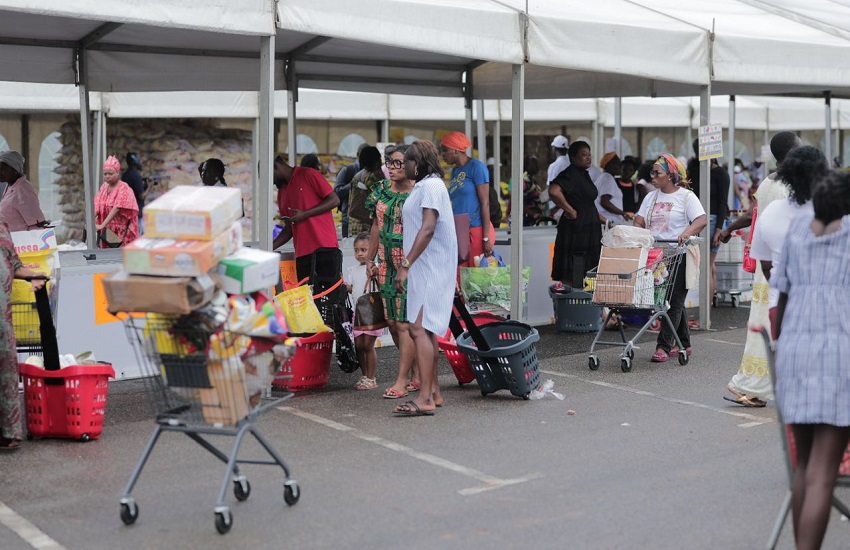
Successive governments have rolled out an array of measures to curb rising costs: price controls, tax exemptions, subsidies, special commercial operations, and even massive markets organized by the Centrale d’Achat du Gabon (CEAG). While these interventions aim to alleviate immediate financial burdens, their effectiveness remains short-lived, raising a critical question: why do prices persist at high levels despite repeated regulatory efforts?
The answer may lie not in the price tags themselves but in the underlying economic structure of the country. Perhaps the high cost of living is less a pricing issue and more a symptom of insufficient wealth creation.
Why price control measures fall short
Administrative measures to lower prices—such as temporary market interventions—provide welcome relief to struggling households. The CEAG’s initiatives, for example, offer temporary access to essential goods at reduced rates, addressing urgent social needs. Yet these solutions are inherently limited. Once the campaigns conclude, consumers return to conventional distribution channels, and prices revert to their previous levels because the foundational economic factors driving costs remain unchanged.
This reality underscores a fundamental truth: price control mechanisms address symptoms rather than root causes. To achieve lasting improvements, the focus must shift to the underlying drivers of high costs.
The structural roots of Gabon’s high living costs
Public debates on the cost of living often center on consumers and retailers. However, the problem originates upstream, in the country’s economic structure. Gabon’s heavy reliance on imported goods—particularly food and manufactured products—exposes it to global market fluctuations, rising transportation costs, and supply chain disruptions. Every increase in international prices inevitably trickles down to local consumers.
Viewed through this lens, the high cost of living reveals deeper economic weaknesses. A nation that imports most of its food imports inflation. A country that exports raw materials without processing them also exports potential jobs, future income, and purchasing power. The issue transcends mere pricing; it is fundamentally a question of economic model.
Unlocking Gabon’s economic potential
Gabon possesses significant untapped potential: vast forestry resources, rich mineral wealth, fertile agricultural land, a strategic geographic location, and relative institutional stability. Yet much of this wealth leaves the country in its raw form, only to be transformed and re-imported at higher costs.
Local processing and transformation of raw materials could serve as a powerful lever against the high cost of living. Each new factory generates employment. Each job creates income. Each income strengthens purchasing power. Each increase in purchasing power stimulates domestic consumption and fuels economic growth. The same principle applies to agriculture and livestock.
Boosting local food production through modernized farming techniques, poultry farming incentives, and agro-industrial development can gradually reduce the country’s dependence on food imports. Beyond lowering certain costs, these sectors offer significant potential for creating sustainable jobs.
The future of the fight against high living costs may lie as much in farms, poultry farms, and processing units as in price control mechanisms.
Building a resilient middle class
Traditionally, public policies have focused on controlling prices. Perhaps the time has come to reframe the debate around income generation. A society does not thrive simply because prices are artificially suppressed. It thrives when the majority of its citizens earn stable incomes that enable them to access essential goods and services, invest in education, secure their futures, and fully participate in the economy.
Expanding the middle class is one of Gabon’s most strategic objectives. A dynamic middle class fosters economic and social stability, drives domestic demand, stimulates private investment, and nurtures a vibrant national entrepreneurial ecosystem.
The true battle against the high cost of living may thus be the creation of productive jobs and sustainable incomes. In this context, purchasing power should no longer be seen as a byproduct of growth; it should become one of its primary objectives.
The role of economic transparency
This economic transformation must be accompanied by modernized governance tools. The digitalization of price monitoring presents a promising opportunity. By leveraging digital technologies, authorities can track price movements in real time across the country, identify abnormal disparities, enhance competition, and accurately assess the impact of public policies.
Economic data can become a powerful regulatory instrument. It would enable a shift from perception-based management to fact-based governance. In an era where citizens demand greater transparency, this evolution could strengthen trust between consumers, businesses, and public authorities.
The debate on the high cost of living extends far beyond Gabon’s borders, resonating across much of Africa. Governments across the continent grapple with the same challenge: how to protect populations without trapping their economies in a cycle of permanent subsidies and price corrections? Gabon has the opportunity to pioneer an innovative solution to this dilemma.
By maintaining social support mechanisms while accelerating local processing of raw materials, agricultural development, livestock expansion, industrialization, job creation, market digitalization, and middle-class growth, the country can gradually shift the fight against high living costs from a reliance on corrective measures to a foundation of transformative economic growth.
The question is no longer how long the state can continue to lower certain prices artificially. The real question is how many Gabonese will be able to live dignified lives tomorrow, supported by stable incomes from an economy that creates value, rather than relying indefinitely on corrective mechanisms to preserve their purchasing power.
This is the dividing line between an economy that manages the consequences of high costs and one that addresses their root causes—a line that may finally hold the key to a sustainable solution to Gabon’s cost-of-living crisis.