The recent decision by Burkina Faso to sever diplomatic ties with France is beginning to yield tangible consequences, not solely for bilateral relations but, more critically, for the daily lives of ordinary Burkinabè citizens.
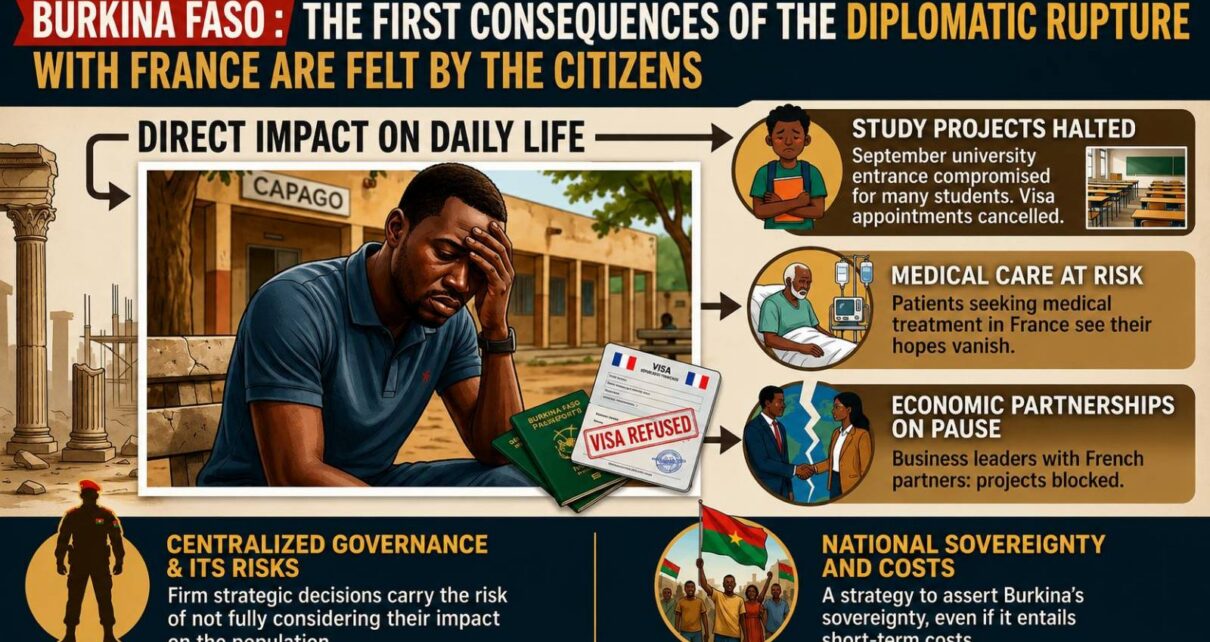
In recent days, nearly 200 visa applicants—whose files were already under review—were summoned to the offices of the CAPAGO agency to retrieve their passports, accompanied by an official notice of visa denial. This abrupt turn of events has left many individuals stunned, particularly those who had clung to the hope of a successful outcome.
The affected group includes patients scheduled for medical treatment in France, entrepreneurs engaged in cross-border economic collaborations, students preparing for the September academic term, and other travelers whose plans have been abruptly derailed. Compounding the issue, appointments for new student visa applications have also been canceled, leaving numerous families in a state of uncertainty regarding their future plans.
This unfolding scenario underscores a broader truth: policy decisions made at the highest levels of government can have immediate and far-reaching implications for the populace. Citizens, who play no direct role in shaping diplomatic choices, are often the first to bear the brunt of such measures, despite their lack of involvement in the decision-making process.
Critics of the current administration argue that governance under Captain Ibrahim Traoré appears excessively centralized, with strategic decisions made with little regard for their potential impact on ordinary citizens. They contend that this approach fosters an environment where state affairs are managed as if they were a personal enterprise, prioritizing political objectives over the practical challenges faced by the people.
>Supporters, however, maintain that the diplomatic rupture is a deliberate move to assert Burkina Faso’s sovereignty, even if it entails short-term sacrifices for the population. The debate surrounding these choices reflects a fundamental tension between national pride and the immediate needs of the people.
Regardless of political perspectives, one undeniable fact remains: hundreds of Burkinabè now face the abrupt suspension of their academic, medical, business, or travel aspirations. Behind the geopolitical maneuvering lie real lives, families, and dreams whose futures hang in the balance.