The Contradiction of a Regime Claiming Independence
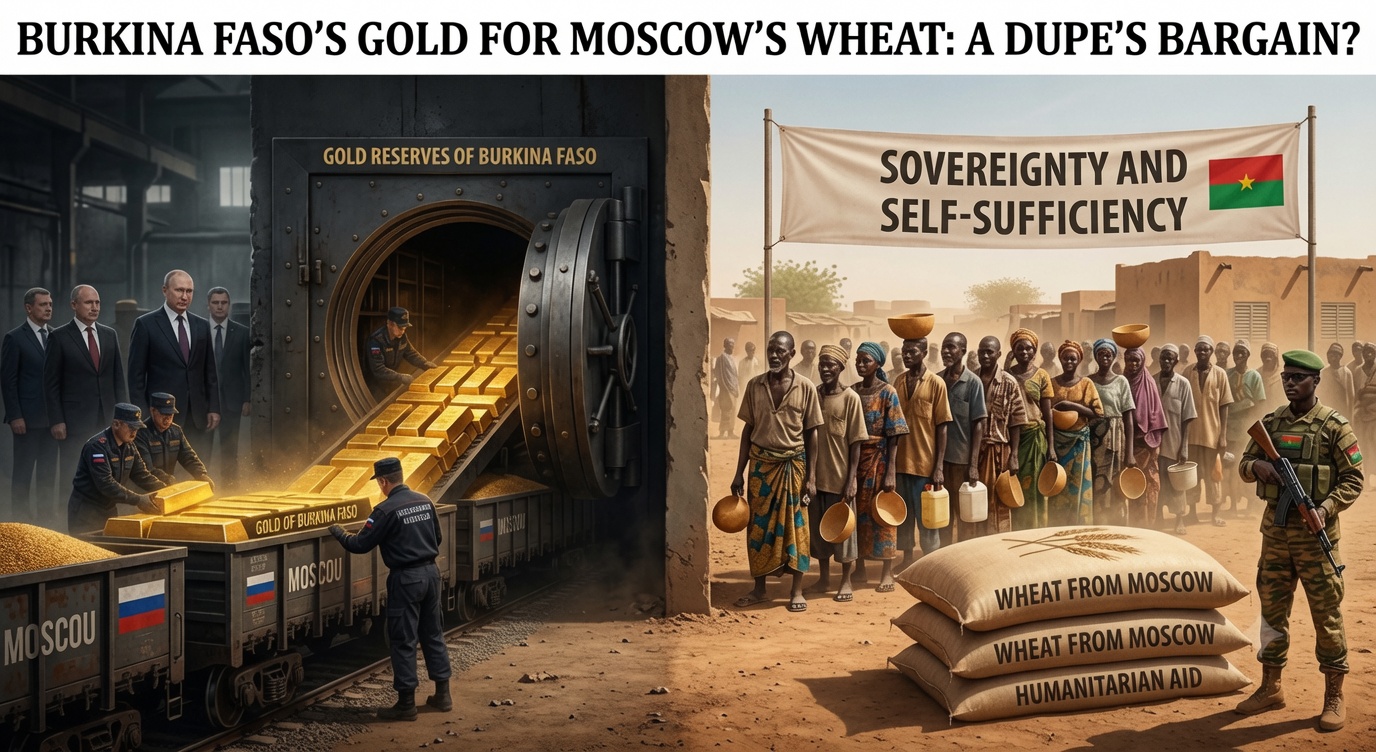
In Ouagadougou, the rhetoric of sovereignty and self-reliance echoes through the corridors of power. Yet, the harsh reality tells a different story. While the Burkinabè government proudly declares its break from foreign influence, it simultaneously extends its hand to Moscow for emergency food aid. This glaring contradiction has reached a new peak with the recent transfer of the country’s gold reserves to Russian banks—a move that exposes the fragility of the regime’s economic claims.
A Questionable Exchange
The decision to store Burkina Faso’s gold reserves in Moscow’s vaults is not merely a financial transaction; it is a symbolic surrender. For a government that has staked its legitimacy on rejecting neocolonialism and asserting full independence, this act resembles a Faustian bargain. The gold, a national treasure, is being exchanged for wheat shipments—a desperate measure to address a hunger crisis exacerbated by years of insecurity and mismanagement.
This arrangement raises critical questions: Why must a nation rich in gold, one of Africa’s top producers, rely on foreign cereals to feed its people? The answer lies not in resource scarcity but in policy failure. A sovereign state should channel its natural wealth into sustainable agriculture, food storage infrastructure, and support for local farmers. Instead, Burkina Faso’s gold is financing a fragile alliance, while its citizens endure shortages that no amount of diplomatic posturing can disguise.
The Human Cost of Political Control
The government’s iron-fisted approach to humanitarian aid further compounds the crisis. By restricting independent assistance—whether from NGOs, local associations, or grassroots initiatives—the authorities ensure that aid flows exclusively through state-controlled channels. This strategy serves a dual purpose: it centralizes power and turns basic survival into a political tool.
In regions plagued by conflict and state absence, civic organizations often fill gaps in emergency response. When these actors are sidelined, the most vulnerable populations suffer most. The message is clear: the regime prefers to be seen as the sole provider rather than a facilitator of collective resilience. Yet, no amount of administrative control can substitute for genuine food security.
Sovereignty in Name Only
The Burkinabè people are repeatedly called upon to make sacrifices in the name of national pride and anti-terrorism efforts. But what does sovereignty mean when citizens still depend on foreign wheat to survive? When insecurity persists unabated? When the state’s primary response to hunger is to beg another power for scraps?
True sovereignty is not measured by the boldness of anti-Western rhetoric or the choice of foreign allies. It is defined by the ability of a nation to protect its people, guarantee their dignity, and sustain their well-being without external dependency. Burkina Faso’s current trajectory suggests the opposite: a government trading its wealth for temporary relief, while its people are left with the hollow promise of independence.
The Illusion of Self-Sufficiency
For months, Ouagadougou has championed the idea of economic self-sufficiency. Yet, the reality is one of persistent food insecurity, where the state’s inability to feed its population has become a defining feature of its rule. The gold-for-wheat deal is not a solution—it is an admission of defeat. It signals that Burkina Faso’s leadership has prioritized political survival over national resilience, opting for symbolic gestures over structural change.
As the gold reserves depart for Moscow, the Burkinabè people are left to grapple with a paradox: a regime that claims freedom while negotiating dependence, a nation that speaks of dignity while relying on foreign charity. The true cost of this arrangement will not be measured in banknotes or diplomatic agreements, but in the hunger of millions and the erosion of trust in the state’s ability to govern.