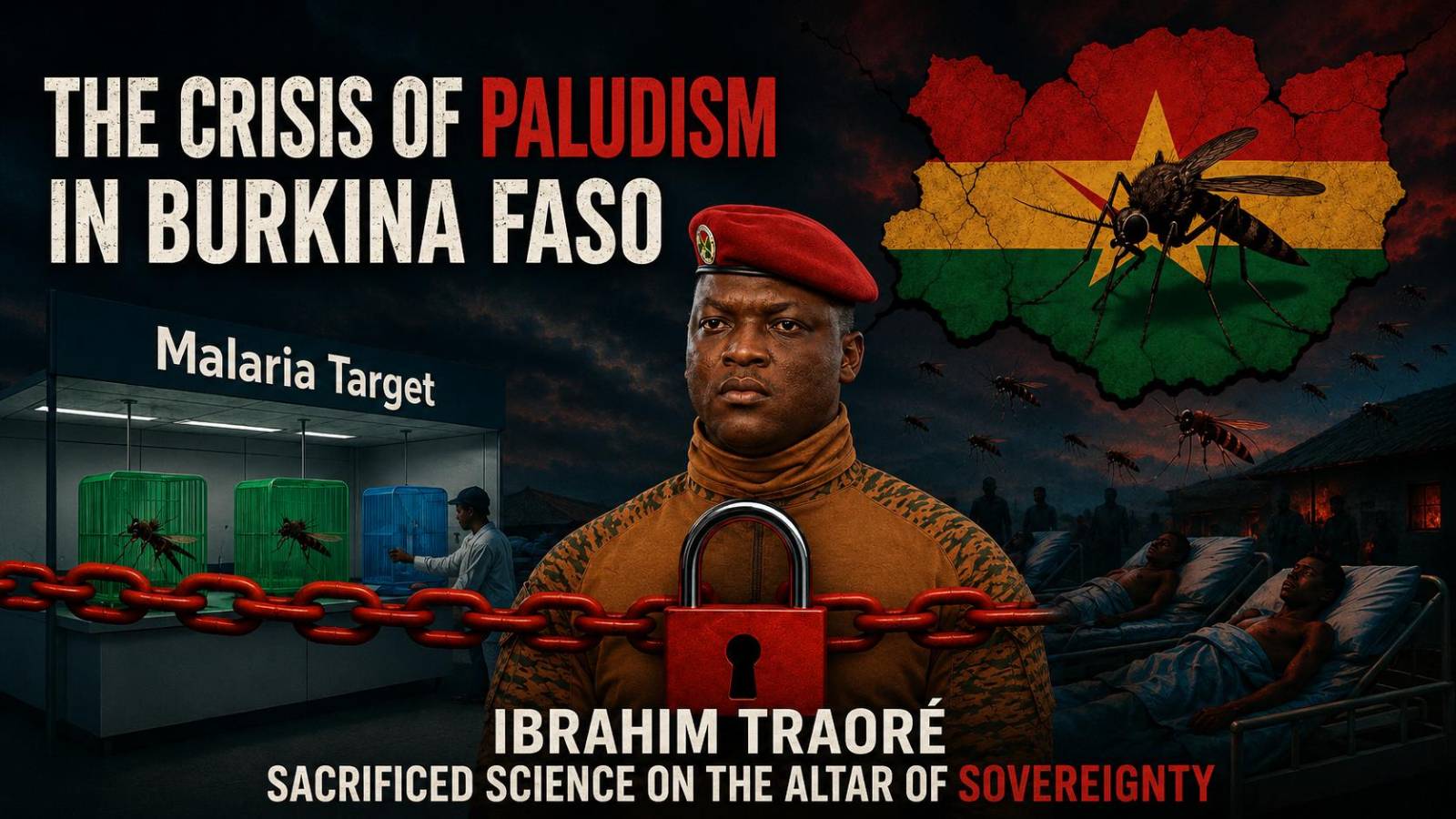
The decision by Burkina Faso’s transitional authorities, led by Captain Ibrahim Traoré, to permanently shut down the Target Malaria research laboratories and destroy its genetically modified mosquito samples marks a decisive turn toward nationalist rhetoric. While framed as a move toward national sovereignty, this abrupt action raises serious concerns about the future of medical research in the Sahel and the economic costs of isolating the country from global scientific progress.
Ouagadougou’s decision is not merely symbolic—it is a deliberate break from a decade-long research initiative funded largely by the Bill & Melinda Gates Foundation. By terminating the project and mandating the destruction of OGM mosquito samples, Burkina Faso has closed a chapter that blended science, public health, and geopolitics in ways that may never be reopened.
Sacrificing progress on the altar of sovereignty
The Target Malaria initiative, though contentious, represented one of the most promising approaches to combating malaria—a disease that continues to devastate sub-Saharan populations, particularly children under five. The project relied on cutting-edge gene-drive technology designed to reduce the fertility of disease-carrying mosquitoes. Critics, including local NGOs and civil society groups, had long argued that the risks to ecological balance outweighed the benefits.
Yet the government’s justification of ‘sovereign health autonomy’ obscures a harsher reality: Burkina Faso’s withdrawal from this collaboration risks stifling domestic innovation. The project employed some of the country’s top researchers, including those affiliated with the Institut de Recherche en Sciences de la Santé (IRSS). Their sudden exclusion from the initiative deprives Burkina Faso of critical funding, technical expertise, and state-of-the-art laboratory infrastructure.
The decision also sends a chilling message to the nation’s scientific community. By equating international research partnerships with foreign interference, the regime risks accelerating a brain drain among local scientists, who may seek opportunities abroad where their work is valued and supported.
A geopolitical earthquake reshaping regional trust
The implications of this move extend far beyond Burkina Faso’s borders. The abrupt termination of the Target Malaria project signals a fundamental shift in how investors, development agencies, and global health organizations perceive the Sahel’s stability and reliability. Three key fractures in Burkina Faso’s relationship with the international community stand out:
- Collapse of contract security: Pre-2022, Burkina Faso was seen as a predictable partner, with state agreements largely honored. Today, unilateral decisions driven by political expediency have eroded investor confidence, leading to an immediate freeze on long-term funding commitments.
- Opacification of regulatory frameworks: Where once Burkina Faso adhered to regional and international norms, it now operates under a regime of ad-hoc decrees and sudden policy shifts. This legal unpredictability has triggered capital flight to more stable markets.
- Distrust in R&D cooperation: Once hailed as engines of progress, international research partnerships are now viewed with suspicion, accused of covert interference or espionage. This climate of mistrust threatens to isolate Burkina Faso from the global flow of scientific innovation, leaving it increasingly detached from cutting-edge medical advancements.
The high price of autarkic health policy
Burkina Faso’s insistence on protecting its ‘biological heritage’ from foreign influence reflects a broader ambition to achieve self-sufficiency in health research. However, the feasibility of this vision remains uncertain. Malaria eradication demands billions in sustained investment and cross-border collaboration—an impossible feat for a country acting alone. Mosquitoes do not recognize national borders, and neither can the fight against the diseases they carry.
For stakeholders in West Africa, deciphering this geopolitical signal is essential. A misguided pursuit of sovereignty, if it drifts into technological autarky, risks pushing the Sahel further away from the global capital and therapeutic innovation flows that could save countless lives. The ultimate question remains: will the populations most affected by malaria—the children, families, and communities who bear the brunt of this disease—be left behind in the pursuit of political posturing?