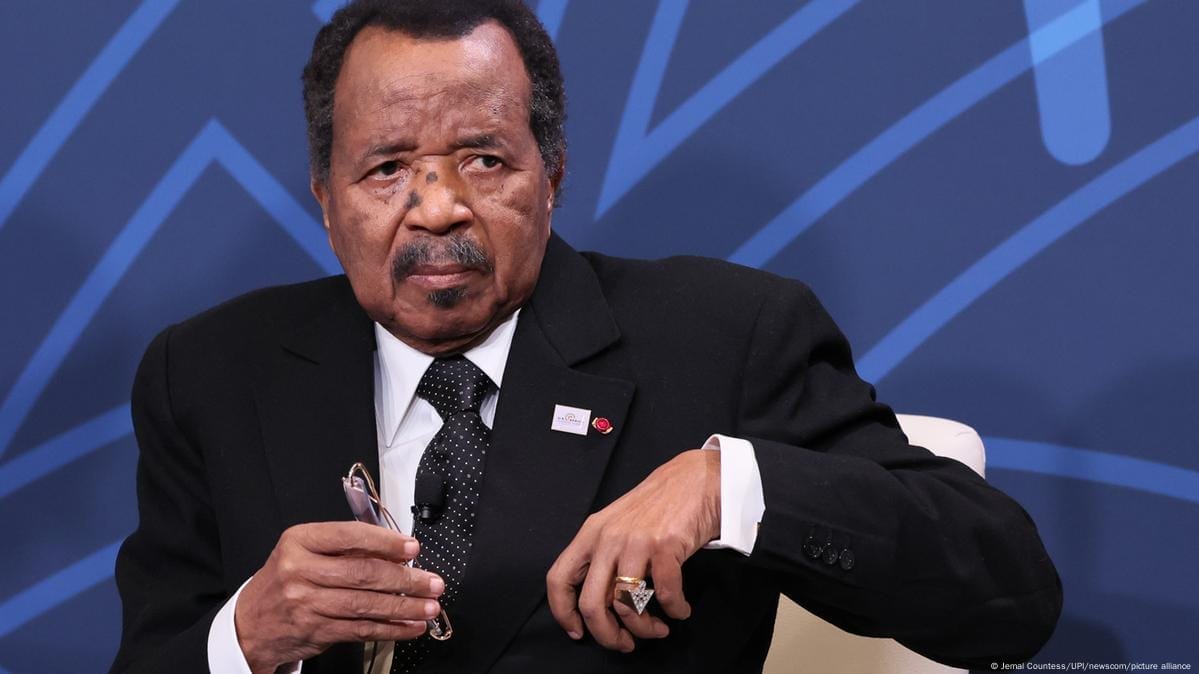
Cameroon’s prolonged presidential absence sparks institutional scrutiny
Paul Biya, Africa’s longest-serving leader, remains out of the public eye after 44 days abroad
Cameroon’s political landscape has been dominated by questions surrounding the whereabouts of President Paul Biya, whose unexpected extended stay abroad has raised unprecedented concerns about the country’s governance continuity. Departing on June 7, 2026, for what was officially described as a private European visit alongside his wife, the 93-year-old leader has now been absent for 44 days without a clear return timeline.
The silence surrounding the president’s location has triggered widespread speculation about his health and the state of the nation’s leadership. While social media and news outlets buzz with theories, the government’s official communications have offered little clarity, fueling both domestic and international concern.
Government attempts to reassure amid mounting doubts
In response to growing unease, Cameroon’s ruling party has mounted a public relations offensive. In an editorial published on July 15 in L’Action, the official mouthpiece of the Cameroon People’s Democratic Movement (CPDM), propaganda chief Christophe Mien Zok sought to quell fears by declaring: “The seat of power remains firmly occupied. The Lion has not left his throne.”
The statement aimed to dismiss claims that the country might be operating in a state of administrative limbo or being governed remotely. Meanwhile, official presidential channels have continued to release routine messages, including congratulatory notes to foreign leaders such as French President Emmanuel Macron on Bastille Day and the Montenegrin president, though no public appearances or substantive updates have been provided.
Opposition demands accountability over presidential absence
The prolonged absence has galvanized opposition forces demanding transparency. Deputy Jean-Michel Nintcheu has escalated the matter by petitioning the Constitutional Council to examine whether the president’s extended absence constitutes a constitutional vacancy.
The Democratic Union of Cameroon (UDC) has also weighed in, emphasizing that while the president’s travel does not automatically trigger a power vacuum, it exposes critical gaps in Cameroon’s institutional framework. The party argues that without a designated vice-president following constitutional reforms in April, the nation lacks clear protocols for managing extended presidential absences, creating potential governance risks.
Expert warnings highlight legal ambiguities
Constitutional law specialists point out that while no legal threshold defines maximum permissible absence, exceeding 45 days could legitimately prompt the Constitutional Council to intervene. Current regulations offer no specific guidance on presidential travel durations, leaving the interpretation of such situations open to debate.
The UDC has called for urgent institutional reforms, particularly advocating for precise legal frameworks governing presidential absences to ensure state continuity and prevent power vacuums. As the days of Biya’s absence accumulate, the standoff between government assurances of normalcy and opposition demands for transparency intensifies, leaving Cameroonians grappling with unanswered questions about their nation’s future.