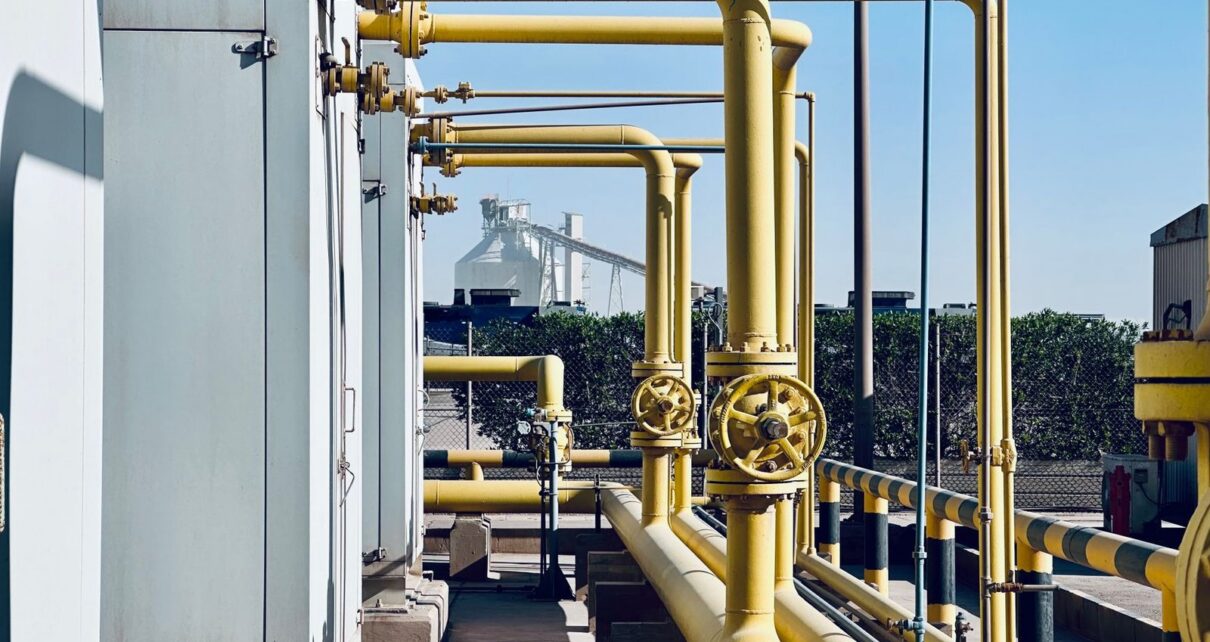
The Chad-Cameroon pipeline has become a steady revenue stream for Cameroon’s public finances. Between 2020 and 2025, the country’s treasury collected FCFA 222.2 billion in transit fees from Chad’s crude oil shipments bound for the Kribi maritime terminal. According to the Ministry of Finance’s medium-term economic and budgetary programming document for 2027-2029, this amounts to an average of FCFA 37 billion per year—a direct return for allowing the oil to cross Cameroonian soil.
Chad, a landlocked nation without a coastline, relies entirely on this pipeline to export its crude. The transit fee is calculated per barrel transported, with the rate adjusted periodically between the two countries. The actual revenue generated for Cameroon depends on the transit tariff, the volume of oil shipped, and the dollar-to-FCFA exchange rate.
Transit revenue triples over a decade
Comparing the past decade’s performance highlights the sharp increase. Official figures from the Pipeline Steering and Monitoring Committee (CPSP) show that Cameroon earned FCFA 85.5 billion in transit fees during the first eight years of operation, following its launch on October 3, 2003. The average annual revenue then was about FCFA 10.7 billion, compared to FCFA 37 billion today. Even over a shorter two-year span, recent collections exceed the first eight years’ total by FCFA 136.7 billion.
However, this surge must be interpreted carefully. The pipeline’s revenue depends on multiple factors: the per-barrel tariff, the volume of oil transported, and the dollar-FCFA exchange rate. Without a detailed annual breakdown of the FCFA 222.2 billion, it remains unclear how much each variable contributes to the observed growth.
Tariff hikes drive revenue growth
The successive increases in the transit tariff have played a key role. When the pipeline became operational, the fee stood at $0.41 per barrel. It was raised in 2013 and again in 2018, reaching $1.321 per barrel—more than tripling in fifteen years. This adjustment alone has mechanically boosted Cameroon’s earnings, regardless of oil volumes.
A new tariff revision was scheduled for October 1, 2023, as per the agreed mechanism. However, no updated rate has been publicly disclosed yet. This lack of clarity introduces uncertainty about the future trajectory of transit fees, even as tariff negotiations remain a recurring diplomatic challenge between Cameroon and Chad.
Historical comparisons require caution
When examining past data, it’s essential to account for different accounting scopes. COTCO, the operator of Cameroon’s section of the pipeline, reported around FCFA 200 billion in payments to the treasury between 2004 and 2013. However, this figure included income taxes and other duties paid by the company—not just the transit fee. Thus, it cannot be directly compared to the FCFA 222.2 billion collected between 2020 and 2025, which reflects only the transit revenue. The exact share of the transit fee within the FCFA 200 billion remains undisclosed, making the FCFA 85.5 billion from the first eight years the most reliable benchmark for comparison.
The current period underscores the pipeline’s financial significance. By May 2026, Cameroon had already collected FCFA 15.1 billion in transit fees, according to CPSP data. While this figure does not predict the full-year result, it reinforces the pipeline’s role as a major source of revenue for Yaoundé from Chad’s crude exports. The pending announcement of the new tariff—expected since October 2023—will be a critical factor in shaping the pipeline’s financial outlook in the coming years.