The staggering scale of mismanagement: over 26 trillion FCFA allegedly diverted in Cameroon
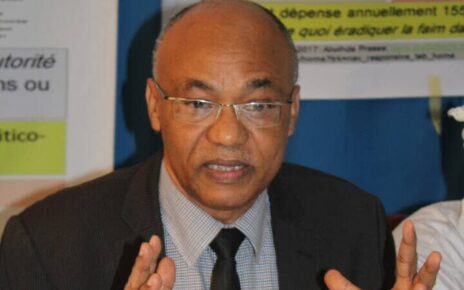
In a scathing public address, Cameroonian public figure Issa Tchiroma Bakary has laid bare what he describes as systemic looting of the nation’s wealth, citing staggering figures across multiple sectors. From gold and oil to timber, fraudulent contracts, and institutionalized graft, the revelations paint a portrait of a country hemorrhaging resources under decades of misrule.
The extractive sector: a tale of plundered riches
According to Issa Tchiroma Bakary, Cameroon’s extractive industries have been ravaged by corruption. Over the past four decades, State oil revenues managed by the SNH have reportedly bypassed parliamentary oversight, with billions in petroleum profits—siphoned at less than 30% of market value to entities like Glencore—vanishing into opaque channels. Independent audits and reports from institutions like the IMF and World Bank have flagged billions in unreported export earnings, while illegal logging has stripped the country of 80% of its timber, all with state complicity.
‘’Between gold, oil, and timber alone, over 10 trillion FCFA has been lost,’’ Bakary declared. ‘’This isn’t just mismanagement—it’s state-sanctioned theft.’’
Budgetary fraud: shadowy lines and phantom expenses
The second pillar of corruption, Bakary argues, lies in the deliberate falsification of public spending. Two obscure budget lines—Line 65 and Line 94—were erased from records spanning 2012 to 2021, accounting for 5.4 trillion FCFA in unaccounted expenditures. The Special Criminal Court, ironically established by the regime, has convicted officials for embezzling nearly 9 trillion FCFA since 1997. Meanwhile, ghost employees—over 20,000 by official admission—have drained the treasury for years, with an annual loss nearing 200 billion FCFA.
Notorious scandals further underscore the scale: the Yaoundé-Douala highway, 2021 Africa Cup of Nations, and COVID-19 vaccine procurement all saw documented over-invoicing exceeding 500 billion FCFA.
Tax and customs fraud: institutionalized looting at ports
Fraudulent practices have also thrived in tax administration and customs operations. Official reports from ANIF and CONAC reveal systemic schemes: 1.665 trillion FCFA in suspicious financial flows in 2023 alone, 1.246 trillion FCFA in documented customs fraud over six years, and 1.745 trillion FCFA in scanning fraud at the Port of Douala, attributed largely to SGS. The port has become a battleground for rival factions within the regime, each vying for control of the institutionalized graft.
The Biya clan: fortunes built on plundered wealth
The final layer of corruption targets the president’s inner circle. Investigations have uncovered 744 million Euros in assets acquired in the Netherlands, France, and the Middle East. In Cameroon, properties like the Nyom domain (valued at 18 billion FCFA) and real estate in Dubai (44 billion FCFA) have been linked to the regime. Even lavish stays at the Continental Hotel in Geneva—priced at 50,000 dollars per night—have been documented, with no patrimonial declarations filed despite constitutional obligations.
A nation bled dry: the staggering cost of impunity
Bakary’s conservative estimate puts total embezzlement at 26 trillion FCFA—a figure he admits is likely a floor. Experts suggest the true scale could reach 80 trillion FCFA, considering the regime’s use of shell companies and tax havens. To contextualize the loss: 26 trillion FCFA could have funded 36 years of salaries for Cameroon’s 380,000 teachers, healthcare workers, and soldiers—or built 2,600 district hospitals, 260 per region.
‘’There will be no amnesty, no secret deals trading impunity for a quiet transition,’’ Bakary warned. ‘’Every high-ranking official guilty of malfeasance will face justice—nationally and internationally.’’