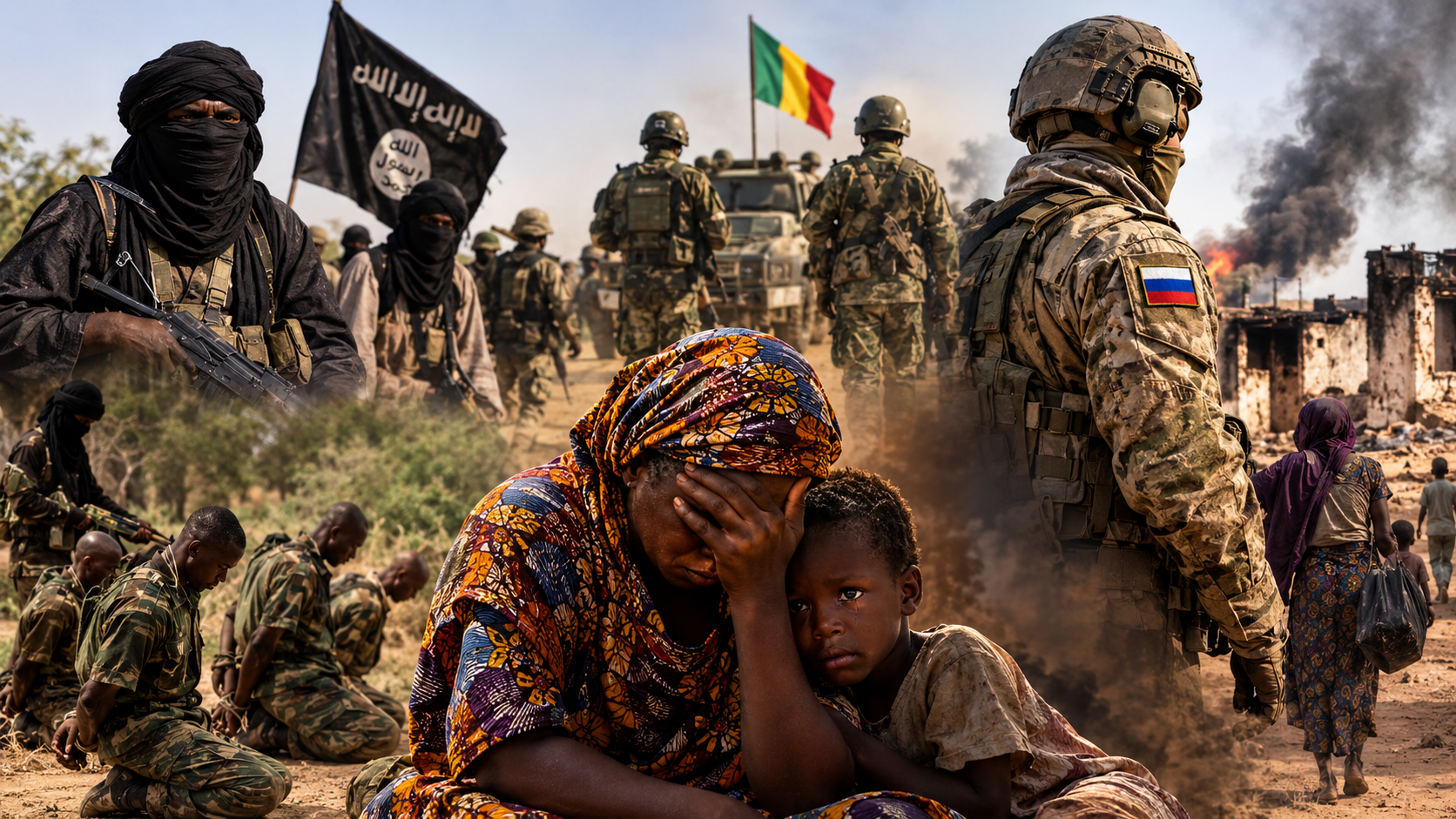
In Mali, a disturbing paradox is unfolding: while the JNIM executes soldiers, civilians are falling victim to abuses allegedly perpetrated by state forces with the backing of Africa Corps. This dual dynamic raises urgent questions about the effectiveness and ethics of the government’s military strategy. Who, exactly, is safeguarding the population when both jihadist violence and state-led operations claim innocent lives?
Why civilian protection is collapsing amid military operations
The Malian Armed Forces are caught in a violent stalemate. On one side, their troops face relentless attacks from the JNIM, whose recent executions of soldiers underscore the persistent threat. On the other, reports indicate that civilians already trapped between jihadist groups and counterterrorism operations are suffering under alleged abuses by Malian security forces. This two-pronged crisis exposes a fundamental failure: military campaigns meant to restore security are instead deepening the suffering of those they claim to defend.
The dangerous oversight of Africa Corps’ involvement
Since Bamako’s military partnership with Moscow intensified, the presence of Africa Corps has become a defining feature of Mali’s security strategy. Yet when allegations of human rights violations surface, the collaboration demands scrutiny. Can a counterterrorism partnership that tolerates civilian harm truly justify its methods? The protection of non-combatants must remain non-negotiable, regardless of geopolitical alliances. When military operations blur the line between justified force and reckless aggression, the cost is paid in human lives not just in headlines.
The alliance with Africa Corps was sold as a turning point. But for the families mourning civilian casualties, the results feel far from transformative. The international community’s role in Mali extends beyond logistical support; it carries a responsibility to ensure that partnerships do not devolve into unchecked impunity.
Accountability must bridge the justice gap
Mali’s government insists its military operations are reclaiming territory from jihadist groups. Yet the tragic irony persists: civilians are still dying. The JNIM’s atrocities against soldiers are indefensible, but so too are the alleged retaliatory attacks by state forces. To restore credibility, Mali must do more than tout territorial gains it must investigate abuses transparently and hold perpetrators to account, whether they wear uniforms or carry weapons for armed factions.
This isn’t just about optics. The international humanitarian law is clear: civilians must never be targeted or caught in the crossfire. Mali’s leaders cannot afford to treat accountability as an afterthought. A strategy that sacrifices human rights for short-term security gains will inevitably fuel further instability and erode public trust in institutions meant to protect them.
What real security looks like for Mali’s people
A successful counterterrorism approach in Mali must prioritize two things: decisive action against armed groups like the JNIM and an unyielding commitment to protecting civilians. There are no shortcuts. Military victories mean little if communities continue to live in fear of jihadists, of state violence, or of the next explosion in a market square.
The government’s narrative of reclaiming Mali from extremist control rings hollow when civilians remain trapped in violence. Security cannot be measured solely by the number of operations conducted or villages retaken. It must be measured by the number of lives preserved. Until Mali’s military strategy aligns with this principle, the cycle of violence will persist and the most vulnerable will keep paying the price.
By AMINA SALEY — Journalist