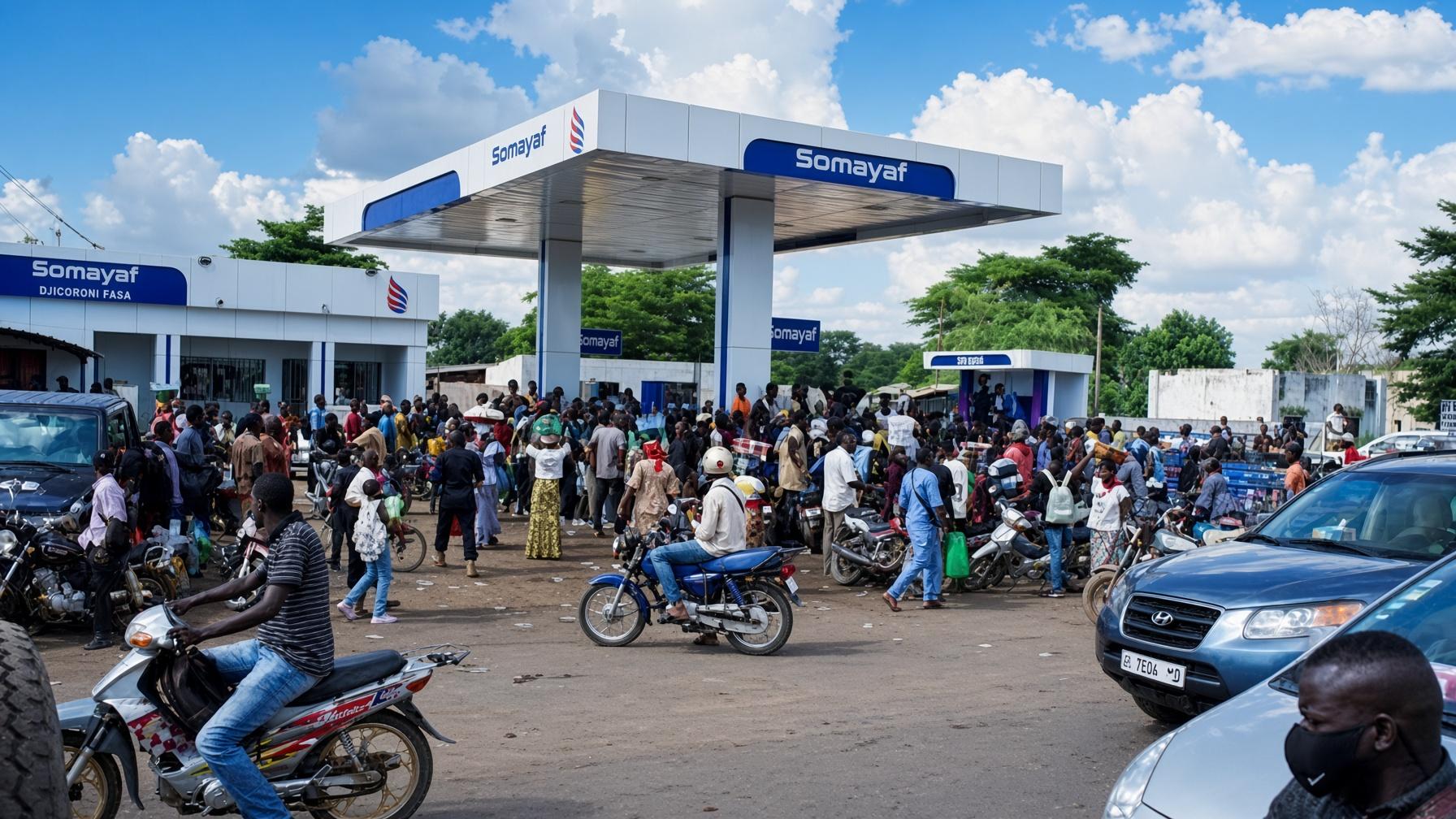
Niamey’s streets now mirror the nation’s energy crisis
As petrol stations run dry across Niamey, Niger’s capital is gasping under the weight of a fuel famine that refuses to ease. Citizens endure daily ordeals of exhausting queues, only to find pumps devoid of essential supplies. The authorities’ attempts to alleviate the crisis—including a hastily published list of barely stocked stations—backfired spectacularly, drawing swarms of desperate motorists to the same locations, turning rationing into chaos.
How the fuel drought is throttling Niger’s economy
The scarcity isn’t merely an inconvenience—it’s a full-blown economic paralysis. Fuel powers Niger’s lifeblood: from commuter transport to food distribution and the survival of small-scale traders. With no reliable supply, transporters are forced to cancel routes or inflate prices, pushing costs beyond reach for most. The vacuum is quickly filled by informal sellers peddling adulterated gasoline at sky-high rates, leaving drivers with damaged engines and empty wallets. The irony? This disaster unfolds despite Niger possessing its own refinery in Zinder.
A structural chasm: demand outstrips supply, yet plans lag far behind
Official reports from the petroleum ministry reveal a staggering shortfall: nearly 197 million liters of gasoline and 53 million liters of diesel vanished from national reserves in just eight months. This isn’t a sudden hiccup—it’s the result of chronic underproduction at the Soraz refinery, which churns out only 20,000 barrels daily, prioritizing diesel over gasoline. The shutdown of cheaper smuggled fuel from Nigeria—triggered by the end of subsidies across the border—compounded the collapse, yet authorities offered no contingency strategy. Imports, a costly stopgap, now dominate the market, exposing a governance gap that refuses to close.
Rushed fixes, no long-term fixes: the hollow face of crisis management
Niger’s response to the fuel drought reads like a playbook of ineffectiveness. Rationing sales and broadcasting scattered station inventories do nothing to address the root problem; they only shift despair from one neighborhood to another. Meanwhile, public communication borders on negligence. Nigeriens demand clarity on stock levels and distribution timelines, but receive only silence—a silence that breeds rumors, panic, and deepening distrust. When allegations of mismanagement or corruption arise, officials dismiss them without transparency, leaving citizens with no assurance that resources are being handled responsibly.
The people bear the cost: hunger, debt, and collapsing commerce
The brunt of this crisis falls squarely on households and small businesses. Daily wage earners lose hours in unending queues; motorcycle taxi drivers plunge into debt to purchase overpriced black-market fuel; entire markets stagger under inflated transport costs. Economists warn that persistent shortages could trigger an inflation spiral, pushing food staples out of reach for millions. This isn’t just a fuel shortage—it’s a collapse of public trust and a stark verdict on a government that cannot guarantee the most basic necessity: reliable energy for daily life and work.
What comes next?
The path forward demands more than temporary patches. Niger must either scale up domestic refining capacity, secure stable import deals, or restore transparency in supply chains—or accept that the streets will continue to be ruled by desperation.