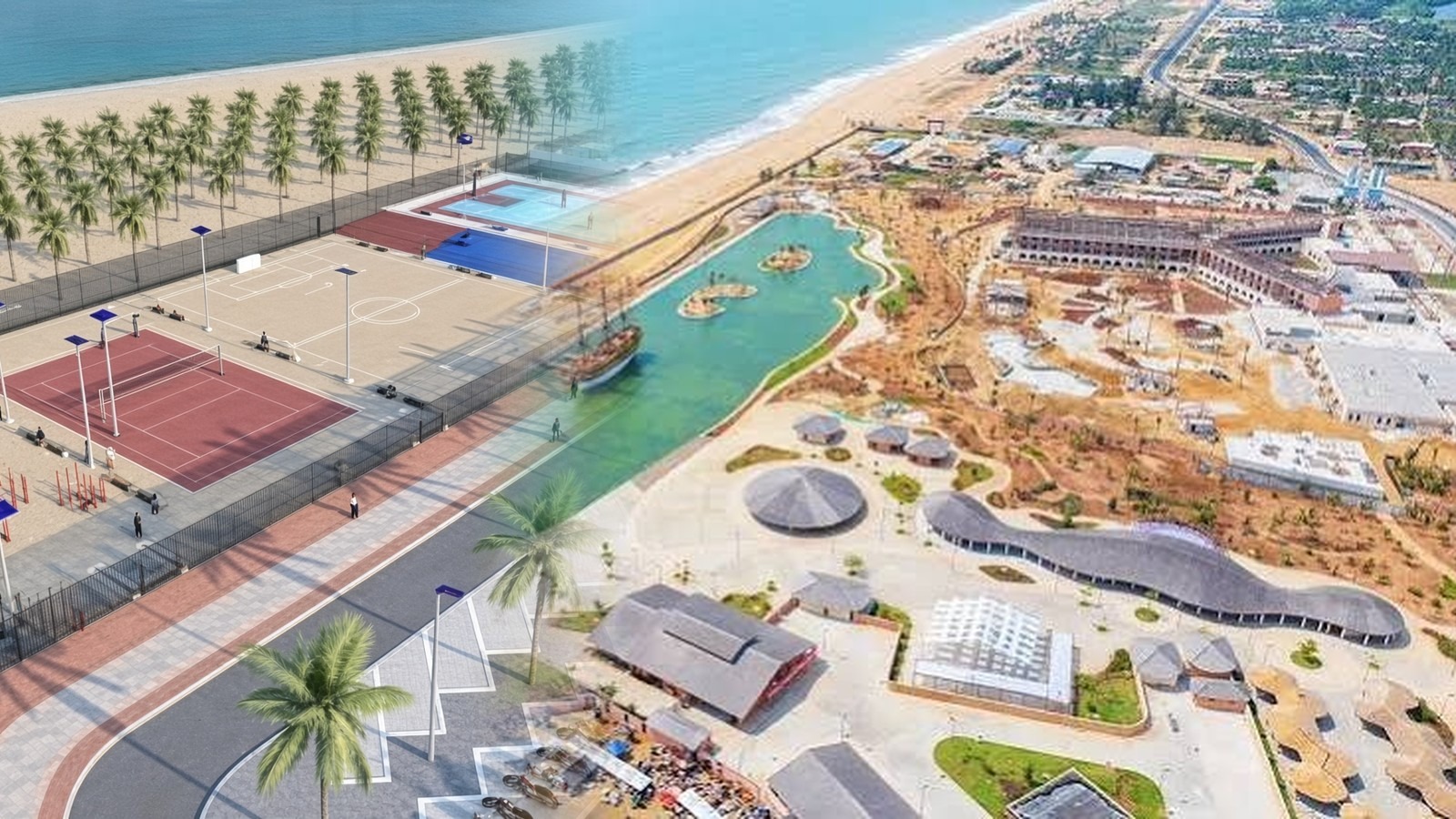
Can Benin develop its coastline without sacrificing its natural defenses?
The stretch of coast between Fidjrossè and Ouidah has become a testing ground for a difficult question: how do you build a tourism economy on a fragile shoreline without wrecking the wetlands that keep it habitable? Benin’s government has just taken a step toward answering that question by creating a new authority to oversee the development of this strategic corridor.
Why this stretch of coastline matters so much
The road linking Fidjrossè to Ouidah has become one of the most visible symbols of Benin’s push to modernize its southern coast. Once dominated by natural landscapes, wetlands and local livelihoods, the area has drawn heavy investment aimed at boosting its appeal.
New roads, drainage systems, landscaping and tourism facilities have gradually reshaped this part of the littoral. But that transformation has a flip side. Rising land pressure and human activity now threaten the marshes and wetlands that play a vital role in water regulation. The government wants to bring this tension between growth and conservation under firmer control.
Wetlands are not wasteland
According to the assessment presented at the Council of Ministers, parts of the public natural domain are being occupied in a chaotic manner. Marshes and other wetlands are particularly affected.
These areas are not simply empty plots waiting for urbanization. They help retain water and reduce the impact of heavy rainfall. As they are built over or gradually occupied, that natural capacity shrinks. For the Beninese authorities, this makes flooding worse.
The new authority is therefore intended to prevent tourism and real estate ambitions from causing irreversible damage to the natural environment.
A broad mandate to coordinate competing uses
The future Authority for the Development of the Basins from Fidjrossè to Ouidah will have a wide remit. It will be responsible for coordinating land-use planning, environmental protection, urban and landscape development, tourism promotion and sustainable coastal management.
Its intervention zone will cover sensitive and wetland areas between Fidjrossè and Ouidah. This body complements the framework set by Benin’s 2018 law on the protection, development and enhancement of the coastal zone, which had already established the National Cell for Coastal Protection and Management.
Erosion and sea submersion: the other threats
Flooding from rainfall is not the only concern. The coastline is also exposed to coastal erosion and marine submersion. The new authority will help implement structures and measures to limit these risks, working with the relevant administrations.
It will also monitor the environmental quality of the area and regulate discharges, pollution and nuisances that could affect the coastal domain. Special attention will go to the dune belt, coastal ecosystems and wetlands, whose preservation is now seen as a condition for the sustainability of any development.
Tighter control over construction
Urbanization is another key focus. The new structure will enforce planning rules and specifications for various projects. It will also monitor land occupation and ensure compliance with architectural and urban standards specific to the coast.
Its role will be especially important for temporary occupation permits on the public maritime and lagoon domain. Its binding opinion will be required before such permits are issued. This should strengthen oversight of activities and installations in an area where competing uses can quickly clash with environmental imperatives.
Tourism remains central to the strategy
The creation of this authority does not mean tourism development is being called into question. Rather, according to the government, it is about organizing it better.
The body will review projects involving tourism, beach, cultural and recreational infrastructure. It will also coordinate commercial, artisanal, sports and tourism activities along the coastal strip. The goal is to make several functions coexist in the same space: tourism, leisure, economic activity, urbanization and environmental protection.
This balance will be decisive for the future of the Route des Pêches, one of Benin’s flagship tourism development projects.
Private sector invited to participate
To finance and operate future facilities, the government is also counting on public-private partnerships. The new authority will promote such collaboration to mobilize investment around planned infrastructure and equipment.
This approach comes as Benin seeks to boost its tourism appeal and turn its coastline into a driver of economic development. But success will also depend on the authorities’ ability to prevent investment and urbanization from weakening the very natural spaces they aim to showcase.
A new stage in managing Benin’s coastline
The statutes of the new authority have already been approved by the Council of Ministers. The minister responsible for living environment and sustainable development must now, together with other relevant ministries, organize its effective establishment.
For Benin, the challenge goes beyond creating a new administration. It is about regaining control of a territory under growing pressure, even as it remains one of the country’s showcases for tourism development.
Between protecting wetlands, fighting erosion, controlling urbanization and developing tourism, the Fidjrossè-Ouidah corridor now looks like a full-scale laboratory for the difficult equation between urban growth and coastal preservation.