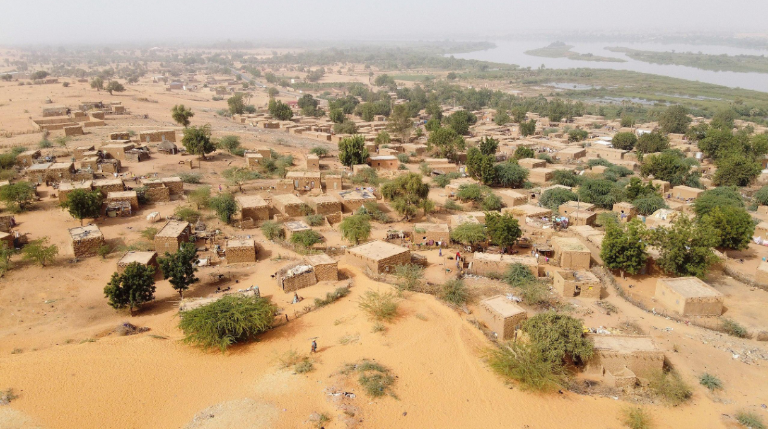
Another deadly strike shakes the western Niger region
At least 37 civilians from Tillim, in Niger’s Tillabéri region, lost their lives Thursday in an ambush attributed to the Islamic State in the Sahel (EIS), near Téra in western Niger. The victims were part of a convoy traveling to the market under the protection of local militias, the Domol Leydi. This violent incident follows a period of relentless attacks linked to the armed group in this area.
Why convoys in Tillabéri remain vulnerable to EIS assaults
The convoy, originating from Tillim, was heading toward a local market when it was targeted. The Domol Leydi, a community-based militia, had been deployed to safeguard the route. Despite their presence, the convoy fell victim to the ambush, leaving 37 civilians dead. This attack raises pressing questions about the effectiveness of local defense measures in the face of well-organized jihadist groups.
In rural Niger, market days are vital for economic and social life. However, these journeys have become perilous in areas like Tillabéri, where civilians face life-threatening risks just to access basic necessities. The incident underscores how civilians remain trapped between economic needs and escalating violence.
The past ten days of relentless violence in Téra
The Tillim convoy attack is part of a wider wave of violence that has rocked the Téra region over the last ten days. The Islamic State in the Sahel has intensified operations in the area, tightening its grip on local populations. These recurring attacks have disrupted daily life, making even essential movements perilous for residents.
- Farmers are cutting back on agricultural activities in high-risk zones,
- herders struggle to move their livestock safely, and
- traders hesitate to visit markets, fearing ambushes.
The consequences extend beyond immediate danger. Families are losing their livelihoods, while communities are increasingly reliant on fragile supply chains that are difficult to access. The humanitarian toll of this crisis continues to deepen, straining traditional support networks.
Domol Leydi’s role: a community’s last line of defense
The Domol Leydi, a local militia group, typically provides escorts for civilians traveling between villages and markets. Their presence reflects the state’s limited ability to ensure safety across vast rural areas. However, the Tillim attack exposed the fragility of these measures.
Despite their vigilance, the militias, though dedicated, face formidable enemies. Jihadist groups like EIS possess mobility and coordination advantages, allowing them to strike even when communities take precautions. This incident highlights the urgent need for sustainable protection strategies that go beyond voluntary militias.
Tillabéri’s ongoing struggle against jihadist threats
The Tillabéri region remains one of Niger’s most volatile zones. Located in the western part of the country, it borders Mali and Burkina Faso—a crossroads for armed groups operating in the Sahel. The Islamic State in the Sahel and other factions, including the Jama’at Nusrat al-Islam wal Muslimin (JNIM), continue to destabilize the area.
For many villages, daily life has been upended by the persistent threat of violence. Markets are struggling to function at full capacity, and farmers and traders face mounting obstacles. Displacement has surged as families flee their homes in search of safety, further straining local resources and altering traditional community structures.
What future for civilian safety in western Niger?
With 37 lives lost in a single ambush, the Téra attack serves as a stark warning about the escalating security crisis in western Niger. The challenge now is not just to react to atrocities but to prevent them. Authorities must prioritize measures that ensure safe passage for civilians, especially in rural zones where movements are essential for survival.
The tragedy of Tillim shows that civilians remain the most vulnerable in this conflict. As attacks multiply in Tillabéri, families mourn their dead, while neighboring communities brace for the next strike. For many, a routine trip to the market has become a high-stakes gamble—one that far too often ends in loss.