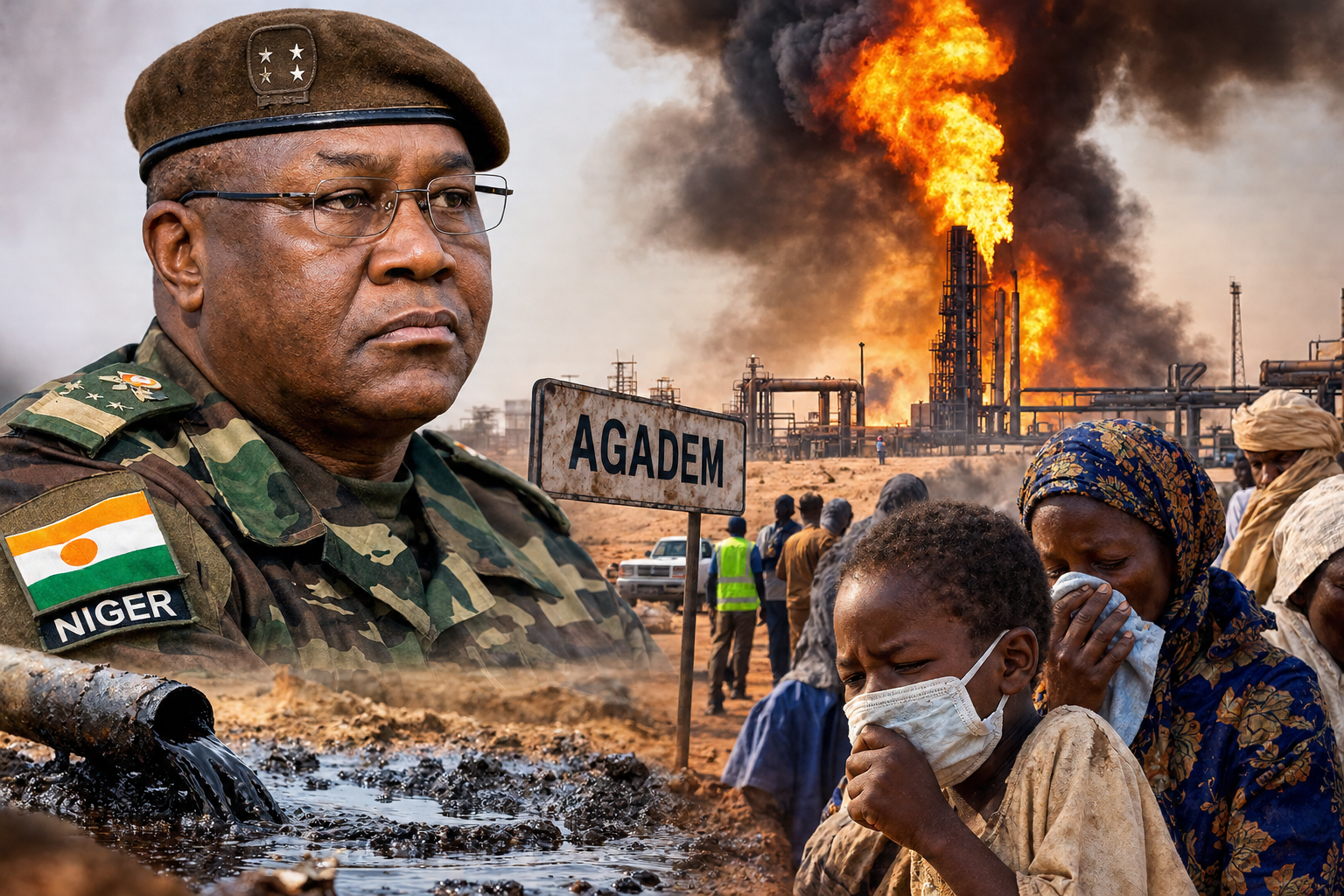
What is unfolding in Agadem, within the Diffa region, ought to provoke serious alarm. A crude oil and gas eruption—classified as exceptionally grave by Niger’s own Ministry of Petroleum raises pressing questions about the safety of oil facilities and the protection of nearby communities. Most troubling is that the incident remains only partially contained. As authorities grapple with its aftermath, a fundamental question emerges: what dangers do local residents face, and what steps are being taken to safeguard their health?
Health hazards posed by hydrocarbon exposure
Crude oil and the gases that can escape during an industrial accident are far from harmless. Depending on their composition, concentration, and duration of exposure, they may cause eye and skin irritation, headaches, dizziness, or respiratory difficulties. Certain compounds found in hydrocarbons can also produce more severe health effects. Added to this are risks of soil and water contamination, with potential consequences for the resources communities rely on daily. In such a situation, the priority should be unambiguous: secure the area, limit exposure to hazardous substances, monitor for possible contamination, and inform residents about necessary precautions.
Lessons from recent gas leaks in the region
Incidents reported in Nigeria last month serve as a reminder of the dangers gas leaks pose to populations living near industrial facilities. Residents reportedly experienced burns and nosebleeds following a gas leak. Yet the precautionary principle must prevail: when a gas leak or hydrocarbon eruption occurs, waiting for health consequences to be formally established before protecting people would be a grave error.
Doubts over Tiani government’s crisis response capacity
This is precisely what makes the Agadem situation so concerning. Does the Tiani government possess the technical, human, and material resources needed to manage an industrial crisis of this magnitude effectively? The question warrants asking, especially when the incident is officially described as exceptional and its containment is not yet achieved. Announcing an investigation or searching for the accident’s causes is not enough. Residents need immediate measures, precise information about risks, a health surveillance system, and controls to determine whether air, soil, or water have been contaminated.
Unanswered questions on safety and medical protocols
It is also essential to know whether nearby populations have received clear safety instructions, whether medical assessments are planned for potentially exposed individuals, and whether authorities have an intervention plan suited to this type of accident. These questions are neither political polemics nor attempts to discredit the country. They directly concern the safety of citizens and the responsibility of authorities charged with protecting them.
Sovereignty and the duty to protect citizens
Since taking power, Tiani’s military regime has consistently emphasized national sovereignty, control over resources, and Niger’s capacity to shape its own destiny. Yet sovereignty is not measured solely by nationalizing economic ambitions, speeches about independence, or the will to exploit subsoil wealth. It is also measured by a state’s ability to prevent accidents, enforce safety standards, rapidly mobilize necessary resources, and protect citizens when an industrial disaster strikes.
Oil exploitation represents a major economic stake for Niger. But it also carries considerable responsibilities. Revenue generated by hydrocarbons cannot be considered a success if populations living around facilities are exposed to risks they cannot control and about which they have no reliable information. National wealth must not become a source of anxiety for local communities.
Concrete answers demanded from authorities
In the case of Agadem, authorities must therefore provide concrete answers. What is the exact state of affairs on the ground? Which substances have escaped and in what quantities? Have analyses been conducted to assess health and environmental risks? What measures have been taken to prevent prolonged exposure of residents? And above all, what resources are being deployed to prevent the incident from worsening?
As long as these questions remain without sufficiently precise answers, the population’s concerns will remain legitimate. This is not to claim that residents have already suffered proven health damage, but to recall that an industrial incident of this nature demands maximum vigilance and transparent communication.
Beyond political rhetoric: the test of governance
Beyond political discourse, what is now expected is the ability of Nigerien authorities to deliver concrete responses. The population should never have to choose between the economic benefits of oil exploitation and the preservation of their health. They are entitled to both: to benefit from their country’s wealth and to live in an environment where industrial risks are seriously assessed and controlled.
For, at its core, the real question is this: what is the point of claiming sovereignty over national resources if the state cannot guarantee, in such sensitive circumstances, the safety of populations living nearby? Governing is not merely promising independence or defending national control of wealth. It is also anticipating dangers, assuming responsibilities, and protecting citizens’ lives when danger arrives at their doorstep.
By AMINA SALEY — Journaliste / Rédacteur