Why does a nation rich in oil still struggle to fuel its own economy?
At a time when the world is racing to secure energy supplies, Niger home to vast oil reserves and a thriving petroleum sector faces an uncomfortable paradox. Despite producing over 110,000 barrels of crude oil daily and exporting 90,000 barrels, the country remains heavily reliant on imported fuel to meet domestic demand. This gap between production and availability is not just a technical glitch it exposes deep-rooted flaws in the national energy system and raises serious questions about the government’s ability to deliver on its promises of energy sovereignty under General Abdourahamane Tiani’s leadership.
For months, worsening fuel shortages marked by long queues at gas stations, recurring stockouts, and disruptions in transportation have placed the Nigerien economy under strain. Small business owners, independent drivers, and public transport operators report significant losses as their operations grind to a halt due to unavailable diesel or gasoline. The ripple effects are felt across the entire economy, where road transport underpins agriculture, trade, and urban supply chains. The situation contradicts official narratives that tout the country’s oil sector as a foundation of renewed national autonomy.
The hidden costs of producing oil without refining it efficiently
Niger’s oil adventure began in 2011 with the development of the Agadem Basin. Today, the Société de Raffinage de Zinder (SORAZ) processes a portion of the country’s output, yet the resulting refined products remain insufficient to meet national needs. In 2024, the country exported nearly 90,000 barrels per day while refining only about 20,000 barrels. Despite these figures, the deficit in gasoline alone reached 159.74 million liters in 2025 and surged to 196.62 million liters in the first eight months of 2026. Diesel shortages have also deepened, with a 52.60-million-liter shortfall over the same period.
These numbers do not reflect a sudden crisis but rather a structural imbalance. The issue is not the absence of infrastructure or production capacity Niger has both but the inability to consistently convert crude oil into usable fuel and distribute it across the country. As a result, a nation that exports oil finds itself importing gasoline and diesel to keep its engines running, raising a critical question: what value does local production hold if it does not translate into reliable domestic supply?
A troubling reliance: why Niger turns to Algeria for fuel
In March 2026, Niger and Algeria signed a hydrocarbons cooperation memorandum, followed by three specific agreements between the Nigerian National Oil Company (SONIDEP) and Algerian subsidiary entities of Sonatrach. These accords aim to stabilize the regional energy landscape, but they also expose the fragility of Niger’s energy strategy.
The public deserves clear answers: What financial commitments has Niger undertaken? What volumes of gasoline and diesel are being procured, and at what price? Are there long-term supply guarantees or compensatory mechanisms? Without transparency, citizens cannot assess whether these agreements serve national interests or merely transfer dependence from one foreign partner to another.
For a nation that prides itself on resource ownership, the decision to seek external fuel shipments especially when its own refinery operates below capacity must be justified with concrete plans, not just political rhetoric. Sovereignty in energy is not declared it is demonstrated through consistent supply, affordable pricing, and accountable management.
The financial black box: debts and mismanagement behind the crisis
In October 2026, the government announced the formation of a technical committee to address supply disruptions and restructure cross-debts among key players: the State, SONIDEP, SORAZ, the Niger Electricity Company (NIGELEC), and China National Petroleum Corporation Nigeria (CNPCNP). The mandate includes finalizing a three-month action plan to clear overdue payments that have paralyzed the sector’s liquidity.
This admission reveals a paradox: a strategic sector that should generate prosperity has instead accumulated financial liabilities that now threaten its continuity. Who owes whom? What are the exact amounts? How did operational failures lead to such a debt spiral? The lack of published audits and transparent records only fuels public skepticism. When national resources are at stake, accountability cannot be partial or delayed.
Fuel shortages hurt more than engines they stall lives and livelihoods
The human cost of this crisis is being paid daily by ordinary Nigeriens. A taxi driver waiting for hours in a fuel queue loses income. A farmer who relies on generators to power irrigation can no longer tend crops. Small traders watching their goods spoil in warehouses. These are not marginal inconveniences they represent real economic losses that ripple through households and communities.
Energy sovereignty is not measured in barrels exported or refineries inaugurated. It is measured in the ability of a nation to power its schools, hospitals, markets, and homes without interruption. When citizens bear the brunt of systemic failure, the legitimacy of any energy policy is called into question.
The Tiani regime’s credibility test: from rhetoric to results
Since assuming power in July 2023, General Tiani has positioned national sovereignty as the cornerstone of his governance model. Yet the ongoing fuel crisis calls this vision into question. High-profile oil deals and export announcements do not substitute for a functional domestic market. If Niger’s oil wealth is to benefit its people, it must first ensure their daily mobility and productive capacity.
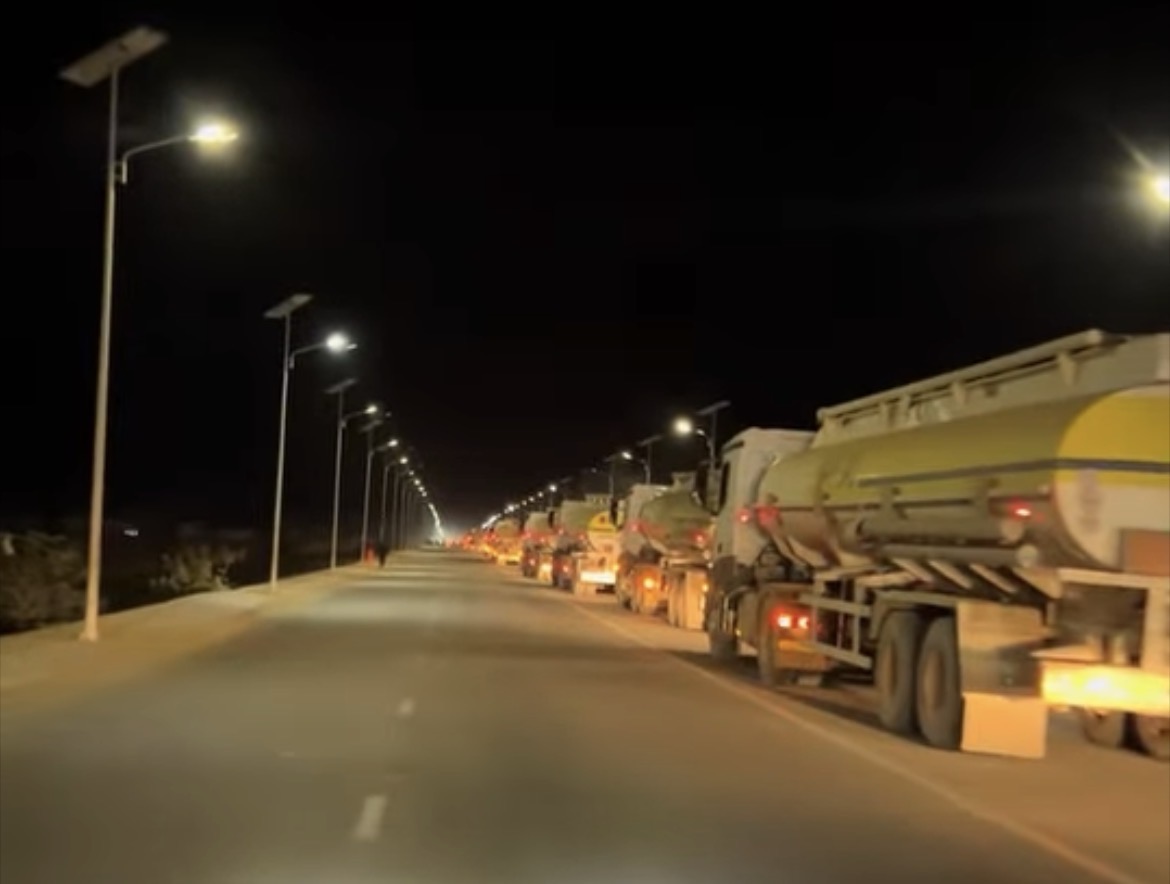
The arrival of 53 tanker trucks from Algeria on November 1, 2026 delivering 1.65 million liters of fuel offers temporary relief. But it does not resolve the chronic issues: inefficient refining, undercapitalized distribution networks, and opaque financial entanglements. For all the rhetoric of energy independence, the test of sovereignty lies not in foreign partnerships, but in the nation’s ability to meet its own energy needs reliably and fairly.
The challenge facing the military leadership is clear. Niger does not lack oil, technology, or ambition. It lacks effective governance, transparent management, and a coherent energy strategy that prioritizes citizens over short-term political gains. Until these gaps are closed, the promise of resource-based prosperity will remain unfulfilled and the fuel pumps will continue to tell the real story.
By AMINA SALEY — Journalist