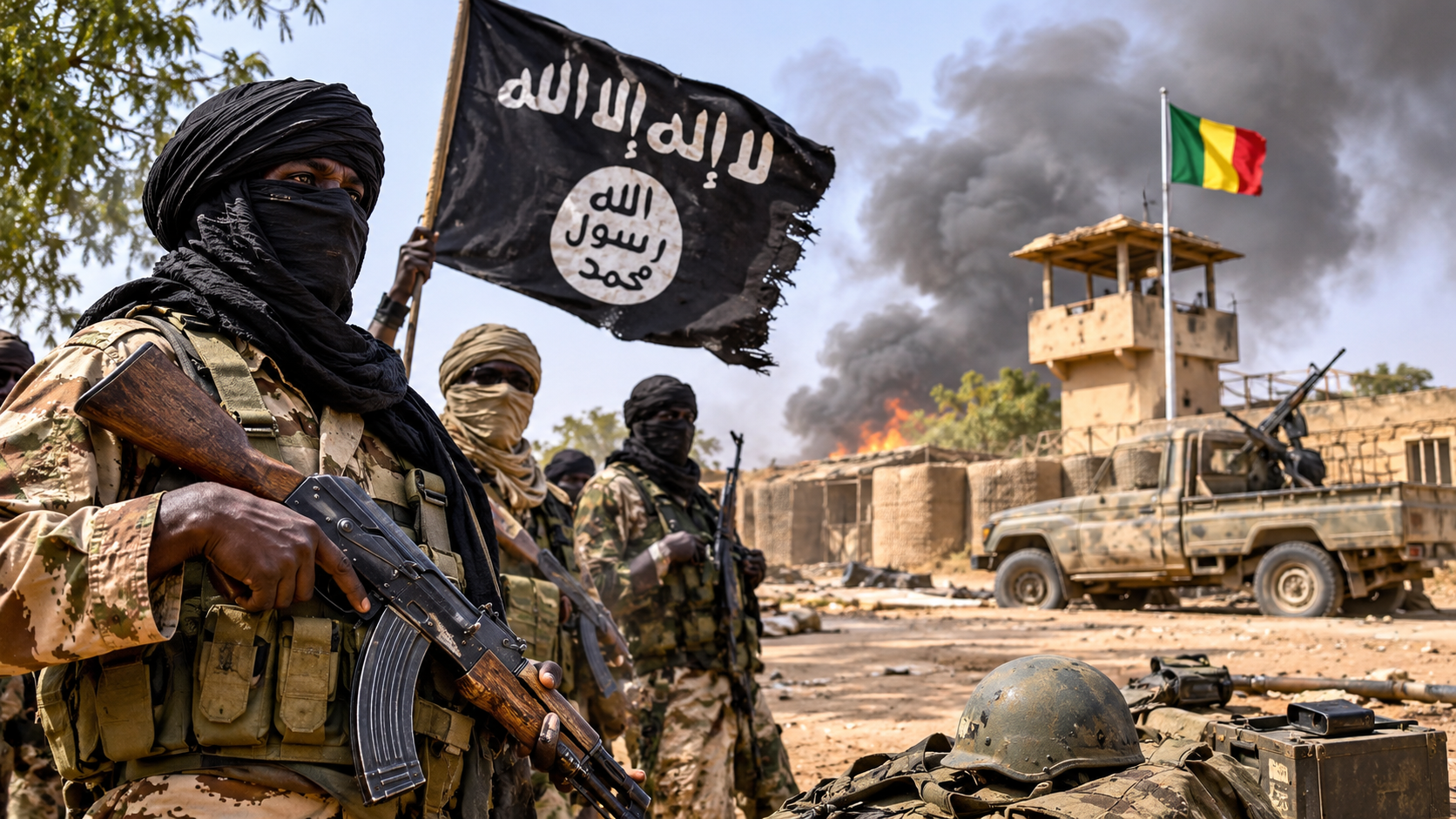
After the assault in Bayman, local forces face a critical test
An ominous Saturday dawned over Mopti on October 31, 2026, when a position manned by pro-junta militias in the village of Bayman came under siege. The assault, immediately claimed by the Group for the Support of Islam and Muslims (JNIM), left the militiamen scrambling to defend ground they had been tasked to hold. The strategic site previously portrayed as a bastion of stability in the region now stands as a symbol of the widening cracks in Bamako’s security architecture.
What does the JNIM’s victory mean for the junta’s western flank?
The JNIM’s statement declared the neutralization of several fighters and the seizure of the base, which it described as a former outpost of the so-called “Russafricans.” The term refers to militia groups closely aligned with the Russian military presence in Mali. While the group’s claims cannot be independently verified at this stage, the episode underscores a troubling pattern: no position, no matter how fortified or how recently touted as secure, appears immune to daring incursions.
Casualties remain shrouded in uncertainty
As of now, no reliable casualty figures have emerged from the Bayman assault. The opacity surrounding the aftermath contrasts sharply with the JNIM’s bold claims and raises urgent questions. How many fighters perished in the initial barrage? How many were captured? Without transparent verification, any numeric assessment would be speculative at best and reckless at worst. Yet the absence of clarity itself speaks volumes about the information vacuum enveloping frontline operations.
A recent history of setbacks
This incident is not an isolated anomaly. It joins a string of high-casualty blows suffered by Malian and allied forces over the past year. The JNIM’s devastating assault on Dioura on September 10, 2026, claimed the lives of at least 100 Malian soldiers and five Russian paramilitaries, with dozens more reported missing in action. Each major attack chips away at public confidence and stretches thin the narrative of steady progress.
Military cooperation under scrutiny
The recurring pattern of offensives against formally secured positions challenges the effectiveness of Bamako’s military cooperation with foreign partners. Despite joint operations, aerial bombardments, and repeated official statements celebrating advances, jihadist cells maintain the capacity to strike at will. In a recent operational review, military authorities boasted of neutralizing more than 4,800 “terrorists” and conducting over 850 airstrikes since May 2026. These data points, however, stem from internal reports and have not been corroborated by independent observers.
Territorial control: more smoke than fire?
The disparity between claimed victories and ongoing instability demands scrutiny. While authorities showcase impressive tallies of terrorists eliminated and sorties flown, the reality on the ground tells a different story. Villages and bases fall, populations flee, and supply routes remain contested. The relentless cycle of attacks suggests that the cumulative impact of aerial campaigns and militia deployments is failing to translate into sustainable territorial security or meaningful protection for civilians.
The stakes for Bamako’s survival
A single weekend in Mopti has once again laid bare the fragility of the junta’s position. If the JNIM’s claim of seizing Bayman is confirmed and there is every reason to treat it as credible it represents not just a tactical loss, but a strategic dilemma. How long can local forces hold out against an enemy that does not recognize the legitimacy of the current regime and is steadily tightening its grip across central Mali? The clock is ticking, and the answer may well determine the future of Mali’s transition or the consolidation of jihadist influence.
By IBRAHIM OUMAROU — Journalist