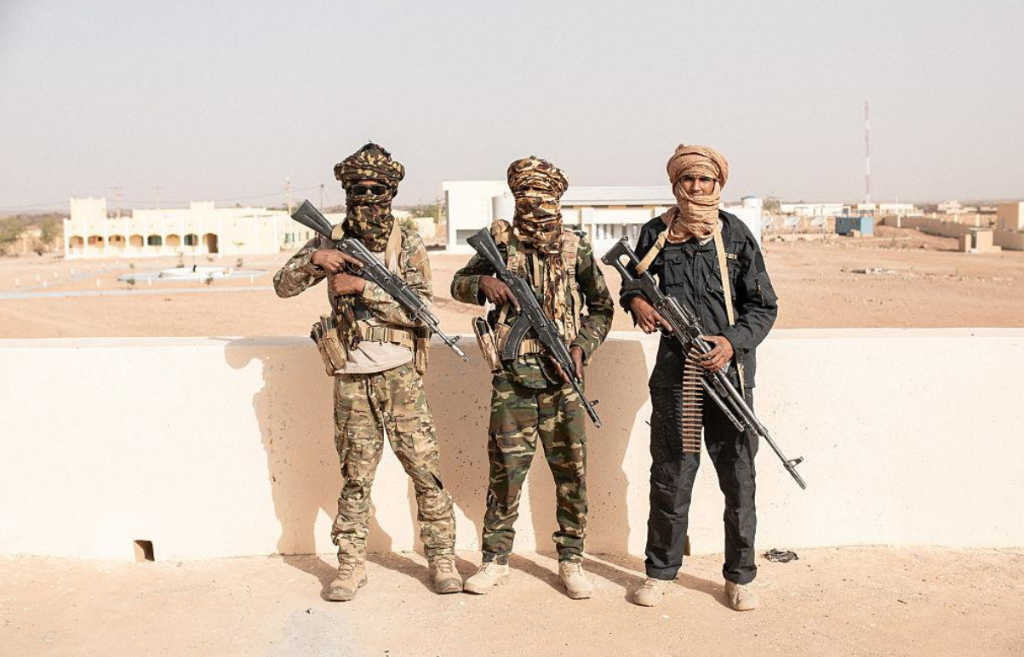
The Sahel’s shifting sands now face a pivotal question: can the Front de Libération de l’Azawad’s (FLA) untested partnerships with eastern Libya’s Haftar faction and the United Arab Emirates redefine balance of power in the region? As Bamako’s military reclaims key strongholds, the separatist group scrambles for lifelines beyond Mali’s borders—fueling a high-stakes regional chess game.
Military reversal in Kidal propels insurgents toward unconventional allies
The recapture of Kidal on October 6, 2026, without a single shot fired marked a turning point in Mali’s crisis. The FLA’s voluntary withdrawal from the city—framed as a deliberate tactical retreat to preserve assets—stripped rebels of their last northern bastion. Now scattered and weakened, the movement is urgently seeking external support to counter the Malian army’s momentum. With the 2015 Algiers Peace Accord officially abandoned by Bamako’s transitional government, the separatists’ traditional channels have collapsed, leaving few options.
Geography offers a lifeline: the Sahara’s porous borders and Libya’s eastern region, under the control of the Libyan National Army and its controversial leader Khalifa Haftar, present a transit corridor. A FLA delegation reportedly traveled to Benghazi to meet with Haftar’s son, Saddam Haftar, laying the groundwork for potential arms transfers—though no formal agreements have yet materialized.
Uae’s shadow diplomacy clashes with Algeria’s red lines
While Libya provides proximity, the United Arab Emirates offers something more valuable: financial muscle and regional influence. Abu Dhabi’s long-standing engagement across Africa’s Sahel-Horn corridor positions it as an attractive partner for insurgent groups seeking to diversify funding streams. However, this potential union risks igniting a diplomatic firestorm with Algeria, Mali’s northern neighbor and a historical guarantor of regional stability.
Algeria’s security doctrine prioritizes an impenetrable southern flank. The collapse of Algiers’ mediation in Mali—once the cornerstone of the failed 2015 peace process—and the growing UAE footprint have strained relations to a breaking point. Algerian authorities view any Emirati involvement as a direct threat to national security, especially as Abu Dhabi expands security and economic networks from the Gulf to the Sahel.
Algeria’s counter-move: reconstructing the Sahel security arc
Faced with encroaching external actors, Algeria has launched a proactive diplomatic offensive. The strategy hinges on three pillars: shoring up ties with Bamako’s transitional government to restore border security, countering smuggling networks, and managing migration flows. Joint counter-terrorism operations and economic cooperation are now the bedrock of Algerian-Malian relations, replacing the combative rhetoric of past years.
This pivot extends southward to Niger, where Algiers is rebuilding bilateral partnerships after years of strained relations. A renewed focus on Nigerien-Algerian collaboration addresses shared threats: cross-border terrorism, illicit trafficking, and the risk of foreign-backed destabilization. For Niamey, this alliance offers a critical bulwark against regional fragmentation. For Bamako, it serves as a pragmatic alternative to reliance on outside patrons.
Why Algeria’s balancing act could dictate the Sahel’s future
The coming months will determine whether Algeria can sustain its regional deterrence. Success hinges on two factors: the durability of its alliances with Bamako and Niamey, and the ability to stanch the flow of external influence into the Sahel. The FLA’s outreach to Libya and the UAE, though untested, introduces a volatile new variable. If Abu Dhabi commits resources to the separatists, Algeria’s northern defense could face unprecedented pressure. Conversely, a swift Algerian consolidation with its Sahelian partners may neutralize these threats before they materialize.
What’s next for the fla and its international gambles
The FLA’s leap into uncharted diplomatic territory could either revitalize its struggle or render it obsolete. With Kidal lost and domestic support dwindling, reliance on foreign patrons is now existential. Yet funding alone may not suffice—real military advantage demands logistical pipelines through the Sahara’s vast desert expanses. Whether Libya’s Haftar or the UAE can deliver remains uncertain, but the very act of seeking such allies underscores a desperate search for relevance in a rapidly consolidating Sahelian security order.