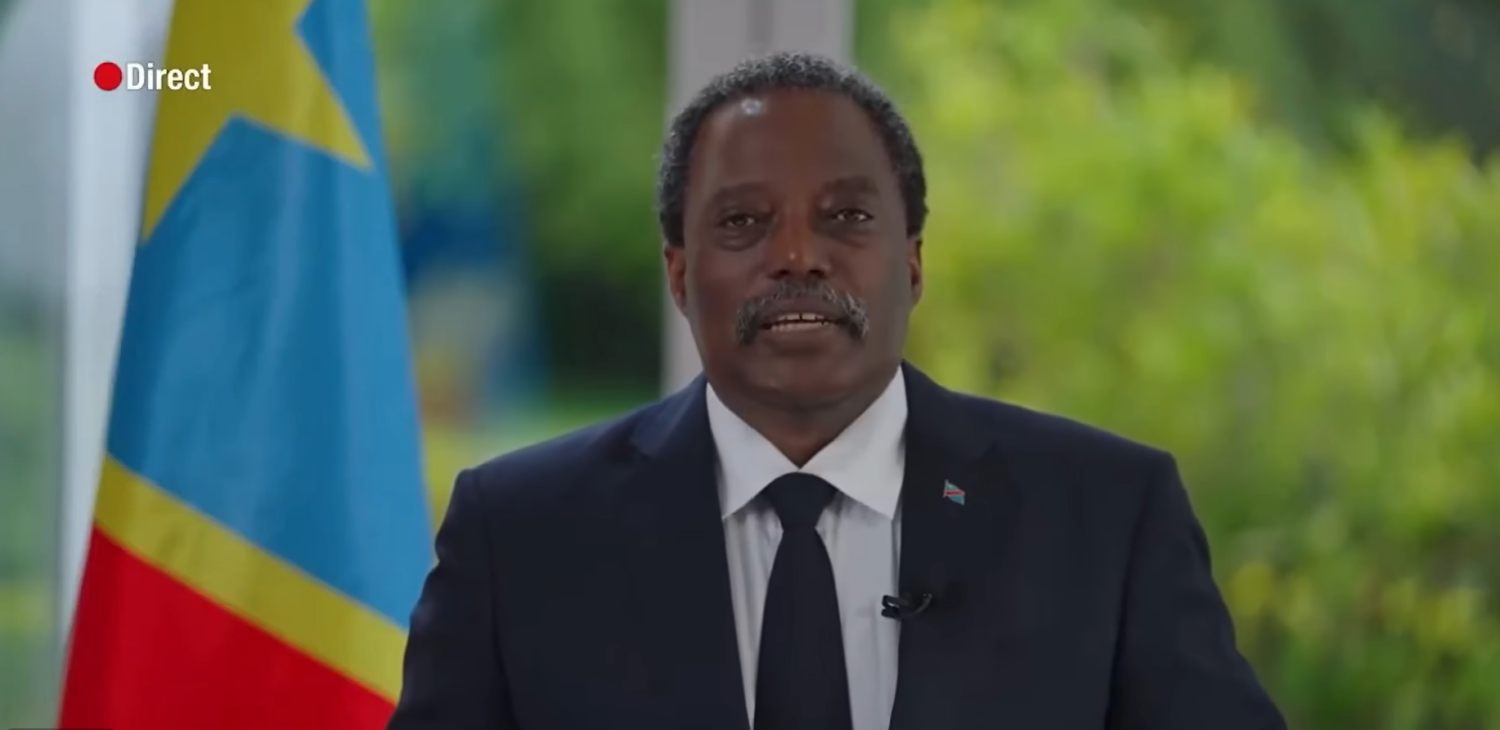
When Joseph Kabila, former President of the Democratic Republic of Congo (DRC) from 2001 to 2019, officially took command of the Front for the Refoundation of the Nation (FRN) on October 12, 2026, he didn’t just re-enter the political arena—he reignited a powder keg. This alliance, uniting armed groups like the M23 and the former Congo River Alliance under a political banner, serves as a calculated distraction. Behind the facade lies a rebellion backed by Rwanda, designed to deflect international scrutiny from Kigali’s proxy networks while threatening to engulf the DRC in fresh chaos.
The Kabila Dynasty: from rebellion to power
The Kabila saga began in 1996 when Laurent-Désiré Kabila emerged from the shadows at the helm of the African Liberation Forces of Congo (AFDL), a rebellion armed and backed by Rwanda’s Paul Kagame to overthrow Mobutu Sese Seko. Victorious in Kinshasa in 1997, Laurent-Désiré quickly turned against his erstwhile patron, sparking the Second Congo War and eventually being assassinated in 2001.
His son, Joseph Kabila, inherited the presidency at just 29 years old. For nearly two decades, he navigated treacherous waters, balancing DRC governance with the demands of eastern militias and Rwanda’s regional ambitions. Now, by openly aligning with the same proxies he once fought, Kabila risks turning a localized ethnic insurgency into a national power grab.
Turning rebels into a legitimate opposition: Kabila’s high-stakes play
The M23, long perceived as a Tutsi militia and the armed wing of Rwanda, found in Joseph Kabila the political credibility it desperately lacked. This marriage of convenience elevates the rebel movement beyond its ethnic and national boundaries, transforming it into a national opposition force. Analysts suggest this alliance could unify fragmented factions under a single, charismatic leader—one with a storied past and a controversial legacy.
The consequences are stark: what was once a border skirmish has the potential to erupt into a full-blown constitutional crisis. With Kabila now positioned to challenge incumbent Félix Tshisekedi, the stage is set for a dangerous showdown that could destabilize the entire DRC.
Congo’s fragile giant: a mineral-rich nation under siege
The DRC is a territorial colossus spanning over 2.3 million square kilometers—nearly 90 times the size of Rwanda—but it is an economic and political juggernaut built on shifting sands. Eastern provinces like North Kivu and Ituri are mineral treasure troves brimming with gold, coltan, cobalt, zinc, and manganese. These resources fuel global industries, yet their exploitation is mired in systemic chaos.
Rwanda, despite lacking mineral deposits of its own, has been accused of leveraging the M23 and allied militias to extract and export Congolese minerals. Geopolitical observers warn that this predatory dynamic is not just a byproduct of conflict—it is its lifeblood. The minerals mined under armed guard feed international supply chains, from Chinese tech giants to Western electronics manufacturers, all while Kinshasa struggles to exert control.
The human cost: communities caught in the crossfire
The DRC’s eastern region is home to nearly 150 armed groups, from self-defense militias to criminal gangs and jihadist factions. Civilians are the primary casualties in this enduring violence. Decades of systematic rape, mass displacement, and extrajudicial killings have made the Kivus and Ituri some of the most dangerous places on earth.
By lending his name and political weight to the FRN, Joseph Kabila isn’t just escalating a conflict—he is placing the heaviest burden on the most vulnerable. The civilians of eastern Congo, already trapped between warlords, foreign exploiters, and a weak state, face the prospect of even greater brutality as the fighting intensifies.