Why Benin’s growth trajectory demands attention
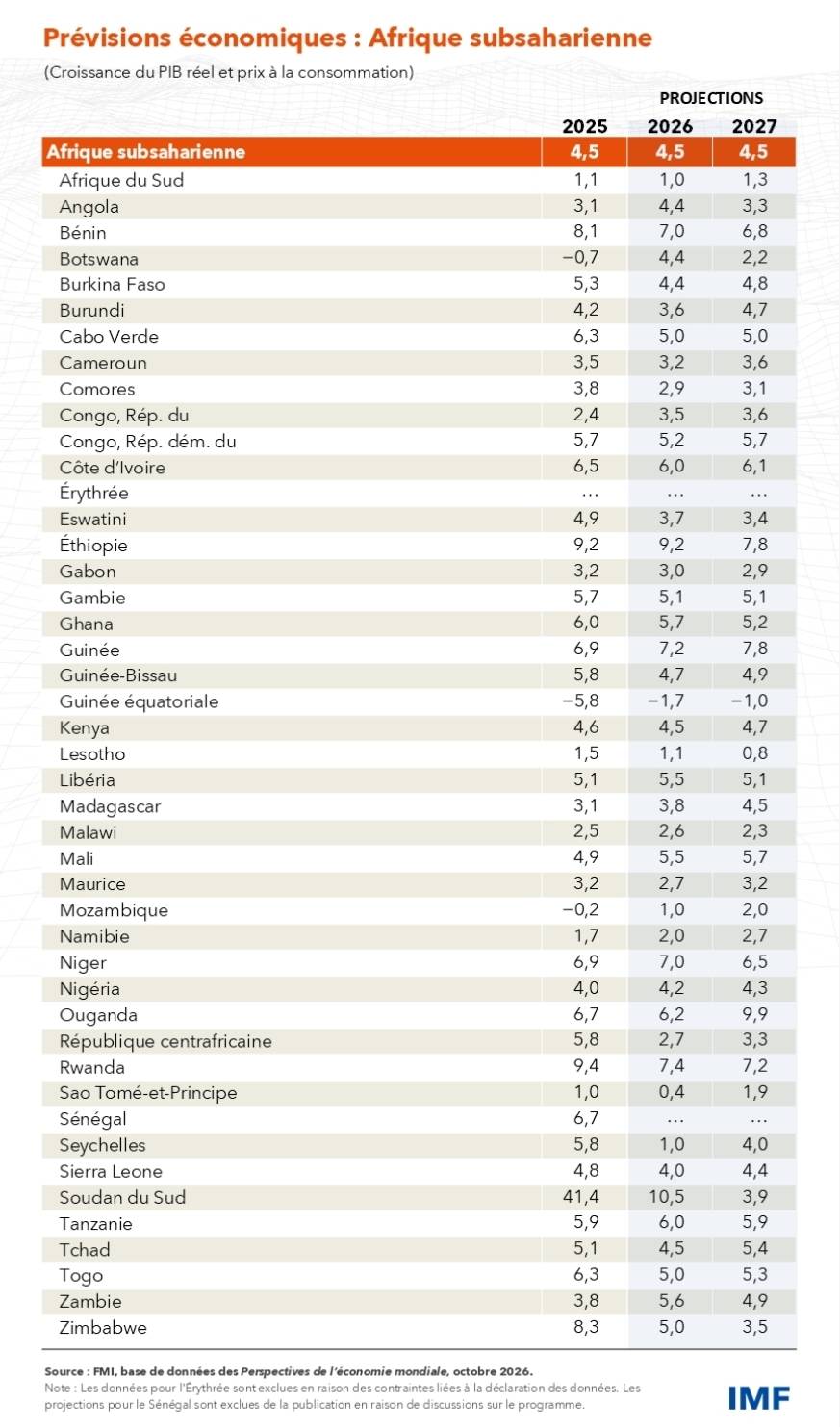
With projected economic growth of 7% in 2026 and 6.8% in 2027, Benin stands out in West Africa’s economic landscape. While the broader sub-Saharan region anticipates an average growth of 4.5% over the same period, the country’s performance raises a critical question: Can Benin’s success become a sustainable model for its neighbors?
The International Monetary Fund’s latest projections underscore a widening gap between Benin’s economic momentum and regional averages. After achieving 8.1% real GDP growth in 2025, the country remains on track to outperform its peers consistently. This trajectory positions it as the only West African nation to rank among the top three fastest-growing economies in sub-Saharan Africa for 2026 and 2027.
Beyond the numbers: What drives Benin’s economic rise
Benin’s exceptional performance reflects deliberate policy choices rather than mere cyclical trends. Key drivers include:
Strategic public investments in infrastructure, particularly in ports and energy, which have boosted trade competitiveness and reduced operational costs for businesses.
Reform-driven diversification away from traditional agriculture toward high-value sectors such as manufacturing, digital services, and agro-industry.
Streamlined business regulations that have improved the ease of doing business, attracting foreign and domestic capital.
These factors collectively contribute to a business environment where growth is not only possible but increasingly sustainable. However, experts caution that such progress must be measured by more than headline GDP figures.
The limits of growth: When statistics don’t tell the full story
While Benin’s economic ascent is undeniable, the true test lies in translating growth into tangible improvements for its citizens. Consider these critical benchmarks:
Job creation quality: Are new opportunities concentrated in formal sectors, or do they remain informal and precarious?
Income distribution: Are gains broadly shared, or do they benefit a narrow segment of the population?
Productivity gains: Does growth reflect structural improvements in technology and efficiency, or is it driven by temporary factors like commodity price spikes?
The government faces the challenge of ensuring that macroeconomic gains translate into microeconomic benefits particularly for youth, women, and rural communities. Without inclusive policies, even strong growth could leave structural inequalities intact.
Lessons for West Africa: Can Benin’s model be replicated?
Benin’s success story offers valuable insights for neighboring countries grappling with stagnation or uneven development. The key takeaways include:
Policy consistency: Sustained economic progress requires stable, predictable policies that encourage long-term investment.
Investment in human capital: A skilled workforce is essential to capitalize on industrialization and technological adoption.
Private sector development: Strengthening small and medium-sized enterprises (SMEs) creates jobs and fosters innovation.
Infrastructure as an enabler: Reliable energy, transport, and digital networks reduce costs and unlock economic potential.
However, replication is not a question of imitation but adaptation. Each country’s economic context geography, resources, governance shapes its growth possibilities. Benin’s trajectory suggests that success depends less on natural endowments and more on political will and pragmatic reforms.
The road ahead: Stability, resilience, and real progress
For Benin, the next phase of its economic journey will require balancing three priorities:
Consolidating gains: Maintaining growth momentum while avoiding overreliance on specific sectors or external partners.
Building resilience: Preparing for global shocks, climate variability, and commodity price fluctuations that could derail progress.
Delivering for citizens: Prioritizing poverty reduction, education, healthcare, and social protection to ensure growth is inclusive and transformative.
The IMF’s projections present an opportunity for Benin to position itself as a regional economic leader. Yet, the ultimate measure of success will not be its ranking in continental growth tables, but its ability to create an economy that works for all. If Benin succeeds in this endeavor, it could indeed emerge as a guiding example for West Africa and beyond.
By IBRAHIM OUMAROU — Journalist