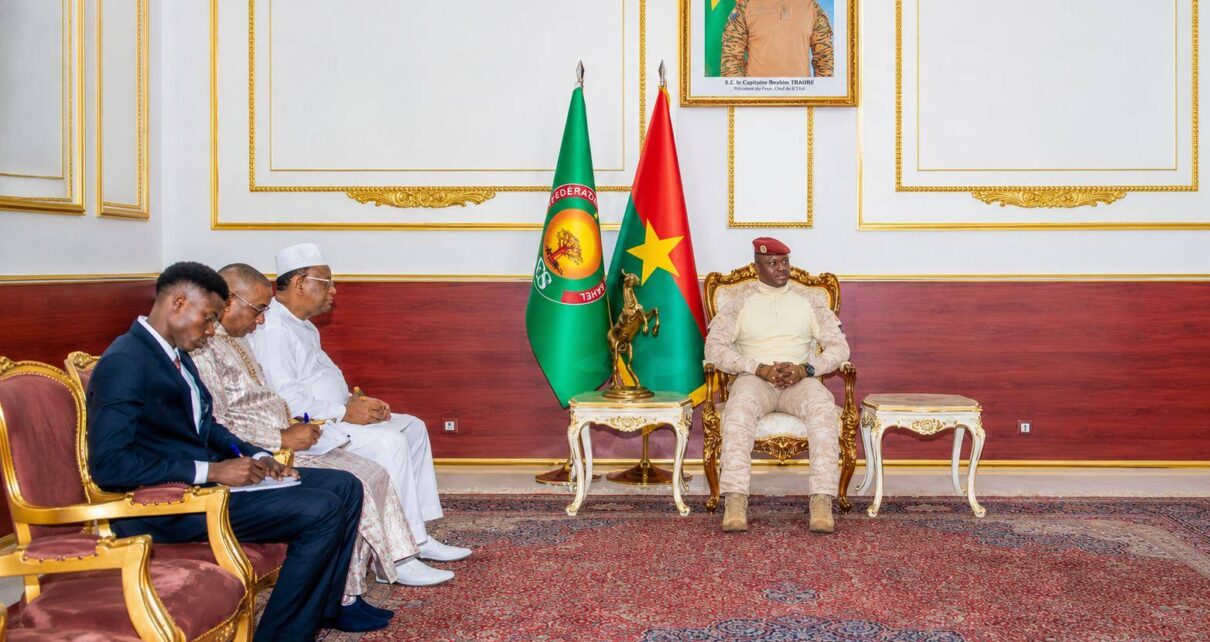
The recent visit to Ouagadougou by Lansana Kouyaté, mediator of the Economic Community of West African States (ECOWAS) for the Alliance of Sahel States (AES), has reignited the spotlight on regional diplomacy. Confronted with Captain Ibrahim Traoré, the envoy underscored the necessity of cooperation, emphasizing an inescapable truth: political decrees cannot sever the deep-rooted ties between peoples.
While the ECOWAS approach reflects a pragmatic realism, it is met with deep skepticism. This skepticism stems from a well-documented pattern among the region’s military regimes, known for prioritizing short-term power over long-standing commitments.
The case for dialogue: balancing pragmatism and regional stability
Dismissing ECOWAS’s hand of partnership would be shortsighted. By opting for dialogue over confrontation, the West African bloc demonstrates a much-needed political maturity. Its strategy is rooted in two compelling realities:
- A lifeline for landlocked nations: Over 70% of trade for Sahelian countries like Burkina Faso, Mali, and Niger flows through the coastal ports of ECOWAS member states. Cutting these lifelines abruptly would devastate populations already grappling with terrorism and economic hardship. ECOWAS recognizes the moral imperative of shielding citizens from the consequences of leadership decisions.
- The futility of isolated security efforts: Jihadist groups operate without regard for AES or ECOWAS treaties. Combating insecurity without robust cross-border cooperation is a strategic misstep. ECOWAS seeks to salvage what remains of collaborative security frameworks in the region.
The flaw in optimism: historical distrust and broken promises
Though ECOWAS’s intentions are commendable, its approach risks overlooking a critical flaw: the deep-seated asymmetry in good faith among negotiators. The track record of military-led governments in the AES—from Bamako to Ouagadougou—paints a sobering picture of unkept promises, both domestically and internationally.
Eroding timelines and shattered transitions
Initially, the AES member states pledged transitions lasting between 18 to 24 months. Today, those timelines have been discarded without consultation, indefinitely postponing elections under the guise of security imperatives. This pattern reveals a troubling disregard for constitutional order and public trust.
International commitments: a moving target
ECOWAS has repeatedly faced the bitter reality of agreements signed in good faith—only to be abandoned months later under the banner of “reclaimed sovereignty.” Regional integration treaties, built over decades, have been dismantled swiftly to align with populist rhetoric. Engaging in “exemplary cooperation” with partners who treat international law as optional is akin to constructing a house on shifting sands.
A fractured social contract
The most alarming breach lies within the Sahel’s own borders. Military juntas in the AES arrived with bold promises: restoring security and rebuilding the state. Yet today, they are marked by:
- The suspension of political parties and suffocation of civil society.
- The suppression of independent media and persecution of dissent under the pretext of “national unity.”
- An inability to curb violence despite shifting geopolitical alliances.
In essence, the foundational duty of any state—to protect its citizens while upholding fundamental freedoms—is being systematically violated.
Dialogue with integrity: a path forward
ECOWAS is justified in pursuing dialogue to avert chaotic ruptures. Maintaining economic and technical bridges is vital for the subregion’s survival. However, unchecked optimism could prove dangerous. The bloc cannot afford to legitimize de facto situations or grant international credibility to regimes that exploit negotiation periods solely to entrench personal power.
Dialogue must come with tangible, binding guarantees. Without these safeguards, this mediation effort risks perpetuating a familiar cycle: hollow promises followed by inevitable betrayal.