The African Peer Review Mechanism (APRM), Africa’s flagship governance instrument established by the African Union, has commended Côte d’Ivoire for its strides in political stability, economic transformation, and institutional reforms.
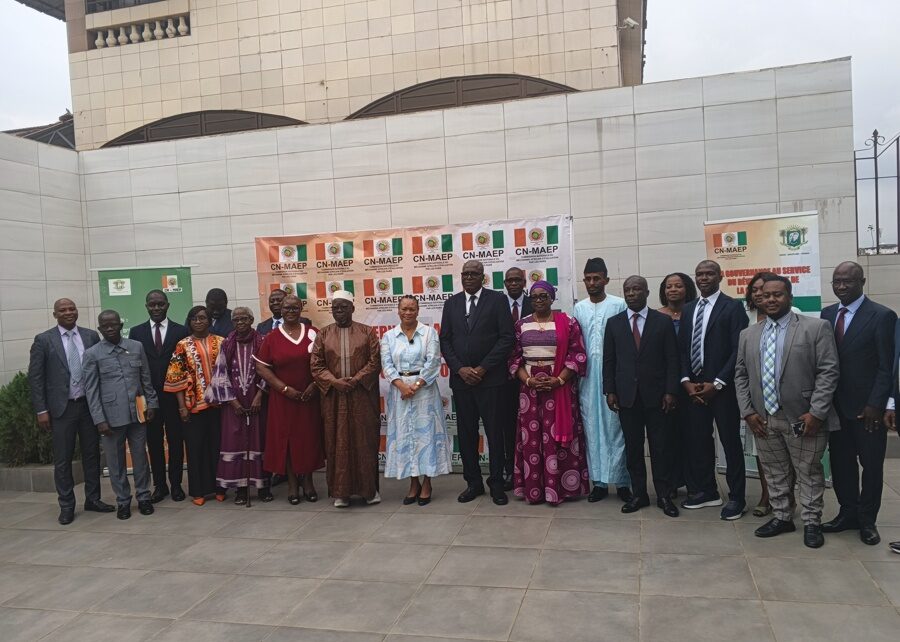
During a working visit to Abidjan’s Cocody district, Marie-Antoinette Rose-Quatre, the APRM Continental Secretariat’s Director-General, highlighted Côte d’Ivoire’s significant progress. ‘We acknowledge the remarkable efforts Côte d’Ivoire has made in consolidating political stability, driving economic transformation, and implementing institutional reforms. These achievements lay a solid foundation for its upcoming second-generation peer review evaluation,’ she stated.
Rose-Quatre emphasized that the second-generation evaluation represents more than an assessment—it’s a strategic opportunity for Côte d’Ivoire to review progress since its initial evaluation, pinpoint emerging governance challenges, and showcase best practices that could inspire other African nations.
She underscored the APRM’s core principles: voluntarism, mutual learning, transparency, accountability, and peer evaluation. ‘Our goal isn’t to judge countries but to support them in strengthening democracy, political governance, economic governance, corporate governance, and socio-economic development,’ she explained.
During her stay, the Continental Secretariat team will collaborate with Ivorian authorities to finalize the evaluation roadmap, identify outstanding preparatory tasks, and agree on concrete measures to ensure a smooth assessment process. ‘We are fully committed to providing Côte d’Ivoire with the technical and institutional assistance needed throughout this journey. This partnership is built on trust, dialogue, and our shared commitment to enhancing governance across our continent,’ she added.
Earlier, PR David Moussa Soro, President of Côte d’Ivoire’s APRM National Commission, reaffirmed the institution’s commitment to leveraging governance for national development. ‘In Côte d’Ivoire, governance and development are advancing in lockstep,’ he asserted.
Soro outlined two national initiatives designed to promote good governance: the Summer University for Good Governance, aimed at grassroots populations, and a scientific journal on African integration and governance tailored for academia. The latter provides a platform for scholarly publications on governance issues in line with the CAMES protocol.
He also reiterated the National Commission’s readiness to support the Continental Secretariat’s efforts.
The Director-General’s itinerary included a meeting with the Ivorian Senate on July 22, 2026, followed by discussions with Nialé Kaba, Côte d’Ivoire’s Minister of Foreign Affairs.
Established in 2003, the APRM is a voluntary agreement among African states to evaluate and improve governance at the highest levels, fostering political stability, economic integration, sustainable growth, and development.