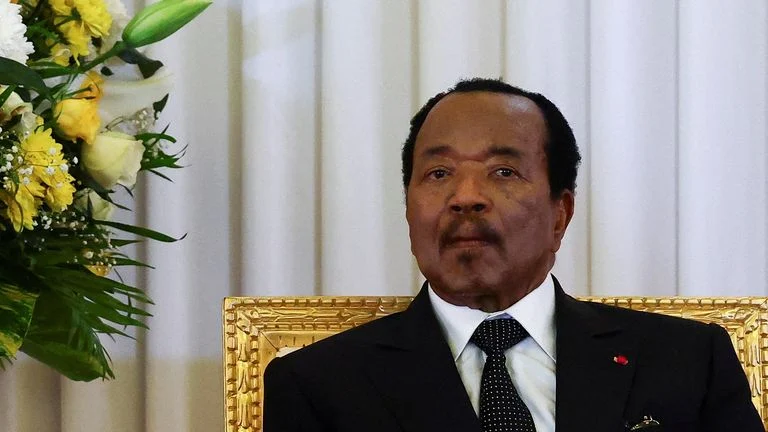
What began as an announced private trip to Europe has stretched into an unusually long absence. President Paul Biya of Cameroon, along with his wife, left the country on June 7, 2026, and has yet to return after more than 40 days. This prolonged disappearance has sparked growing concern among citizens, especially as no official statement has been issued to reassure the nation following his re-election last November for a seventh term.
This pattern is nothing new for a leader who has spent decades alternating between governing from Etoudi Palace and long stays abroad. Biya, now in his 90s, has long preferred medical treatment in Switzerland to local facilities, reinforcing the perception that his health may be a factor in his extended absences. Yet in a country where presidential health remains a closely guarded secret, the public is left in the dark. Rumors spread unchecked while authorities remain silent—until, as has happened before, the justice system steps in to silence dissent.
Who really leads Cameroon?
With each passing day away from the capital, a persistent question grows louder: who is actually in charge in Cameroon? Critics argue the country operates on autopilot, citing the president’s prolonged absences as evidence of a leadership vacuum. How can one fulfill the duties of head of state while spending more time abroad than in Yaoundé, engaging with citizens and addressing their concerns?
At 93, with visibly declining health, doubts persist about Biya’s ability to govern effectively. His latest seven-year mandate—secured after sidelining credible opponents—may well be his most challenging. Yet Biya appears undeterred, seemingly clinging to power with the same resolve as a monarch refusing to abdicate, even in his final years.
Political impatience mounts
The frustration is palpable, even within political circles. Opposition figures like Jean Michel Nintcheu have gone so far as to urge the Constitutional Council to declare a power vacuum. The ruling party wasted no time dismissing such claims. “The Lion has not left his den,” declared a senior figure in the ruling party’s propaganda wing, reinforcing the idea that Biya’s absence is temporary and inconsequential.
A government frozen in time
Cameroon under Paul Biya holds a singular distinction: it boasts Africa’s oldest serving president and, remarkably, its oldest police chief—Martin Mbarga Nguélé, who turned 90 this July. The government itself reflects this stagnation. Since Biya’s re-inauguration on November 6, 2025, no new cabinet has been formed. Prime Minister Joseph Dion Ngute’s administration has remained in place since January 2019—longer than a standard presidential term. Even after a constitutional amendment reactivated the vice-presidency in April, Biya has yet to appoint a second-in-command.
In Cameroon, continuity trumps change. And under Biya, continuity often means years without renewal—in leadership, in policy, and in public accountability. As the days pass with no word from the president, one thing is clear: the message to citizens demanding presence and transparency is blunt—move along; there’s nothing to see here.