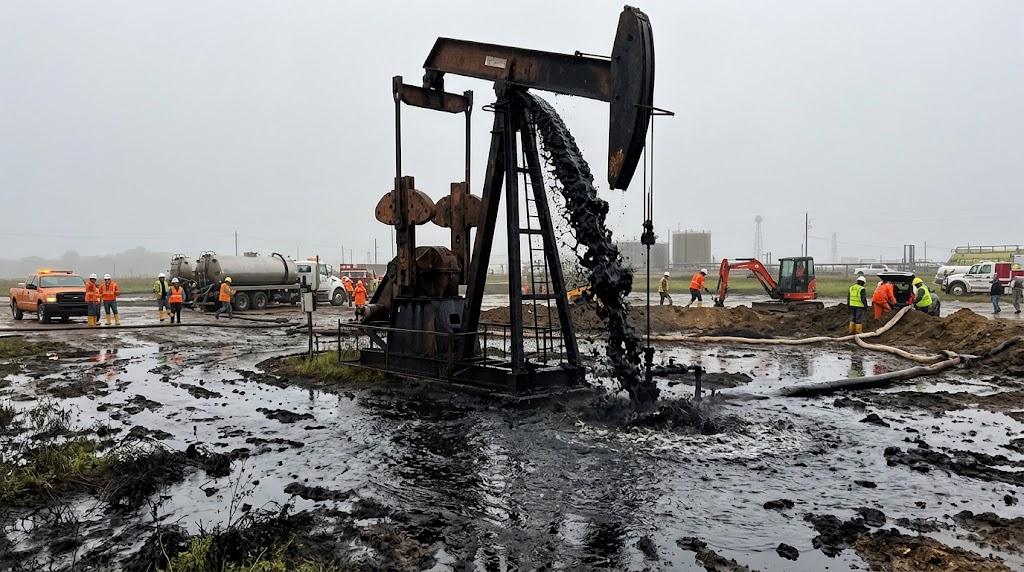
Over 1,500 kilometers from Niger’s capital, a silent but escalating emergency is unfolding in the Agadem oil field, where the vast Sahara Desert meets a looming environmental catastrophe. Since a critical failure at the Goumeri W8 well on 25 September 2026, the region has faced an unrelenting surge of crude oil and methane emissions, threatening to reshape the desert’s delicate ecosystem forever.
Why delaying environmental action could devastate Niger’s economic and ecological stability
The first two weeks of the disaster unfolded with minimal public acknowledgment. Neither Nigerien authorities in Niamey nor representatives from China National Petroleum Corporation (CNPC) issued any warnings about the growing threat. It wasn’t until 12 October that officials acknowledged—after independent environmental assessments confirmed the worst—what was already evident: the leak posed a “critical and uncontrollable hazard,” far exceeding local mitigation capabilities.
The environmental impact of inaction is now undeniable. Satellite data from the European Union’s Sentinel-5P program detected a massive methane plume releasing over 40 metric tons per hour. Within three weeks, the well had already discharged 17,000 tons of methane—a greenhouse gas 80 times more damaging than carbon dioxide over two decades. Yet the human toll is equally stark: two workers suffered severe injuries that could have been prevented with timely intervention.
From aggressive drilling to ecological collapse: how the Agadem oil field became a ticking time bomb
The Agadem oil field, designed to produce 90,000 barrels daily to supply the Benin-bound pipeline, has prioritized output over safety from the outset. Maintenance records reveal three consecutive quarterly inspections were postponed to keep production uninterrupted. Audits also exposed a critical failure: the absence of mandatory external pressure sensors within a ten-kilometer radius—an oversight that allowed the gas leak to spiral out of control.
When the blowout occurred, Niamey had no choice but to appeal to Algeria’s Sonatrach for emergency assistance, dispatching a specialized crisis team from Algiers. This desperate last-minute appeal underscores a troubling paradox: while Niger gambles its economic future on oil exports, it lacks the internal infrastructure and expertise to handle a disaster of this magnitude.
The hidden costs of unchecked fossil fuel expansion in the Sahara
For nomadic communities in the Sahel, traditional migration routes now intertwine with invisible methane clouds, while local groundwater sources face irreversible contamination risks. Wildlife surveys confirm that key species like gazelles and fennec foxes are permanently abandoning the contaminated zones. Meanwhile, CNPC has maintained a striking silence in its public statements, mirroring the opacity that has long characterized multinational extractive operations in distant regions.
This unfolding crisis at Agadem exposes a harsh truth: in Niger, the pursuit of oil profits is being executed without regulation, transparency, or meaningful environmental protections capable of stopping the disaster in its tracks.
Three pressing hurdles Niger’s leaders must confront
- A race against time: Drilling a relief well could take up to two months, during which methane emissions will continue unabated, worsening the ecological damage.
- Financial fallout: International investors and insurers may rethink financing for future Saharan oil ventures after witnessing this environmental disaster.
- Regional scrutiny: Neighboring Sahel nations, including Benin—which imports the crude oil—could demand stricter environmental commitments in future trade and transit agreements.
Niger’s critical crossroads: fleeting oil profits or lasting environmental harm?
The Sahara was never intended as an industrial sacrifice zone, and the absence of immediate fatalities cannot excuse Niamey’s sluggish response or CNPC’s lack of transparency. Each day without decisive action transforms a preventable accident into a generational ecological burden. President Bazoum’s administration now stands at a defining crossroads: Is Niger willing to risk its land, air, and future in exchange for short-term oil revenue, or will it act decisively to curb the spreading methane catastrophe?