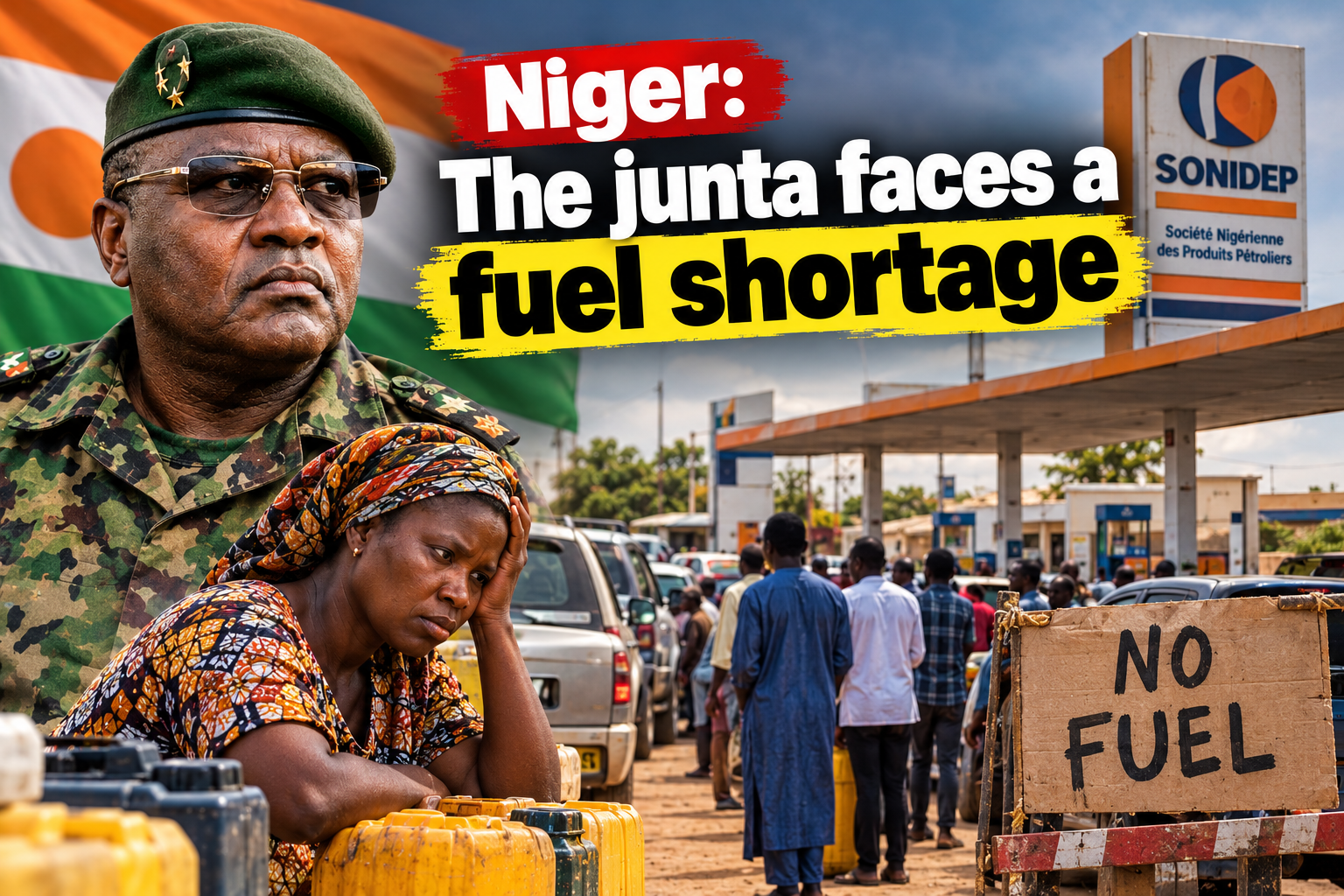
In Niamey, the fuel shortage is gradually disrupting mobility, stalling economic activities, and fueling the frustration of a population already grappling with daily hardships. This raises a critical question: how can a petroleum-producing nation face such severe supply challenges?
An escalating crisis with far-reaching consequences
The fuel shortage in Niger has reached alarming levels in the capital, disrupting public transportation, complicating daily commutes, and straining commercial operations. For many Nigeriens, securing fuel has become an additional challenge in an already difficult economic climate.
The impact extends beyond gas stations. As fuel shortages worsen, taxi drivers and transporters see their livelihoods decline, merchants struggle to transport goods, and transportation costs rise. Workers, small entrepreneurs, and families bear the brunt of this situation, facing mounting difficulties in maintaining their economic stability.
A paradox rooted in production versus availability
Niger produces oil, a resource that should enhance economic growth and strengthen the nation’s energy security. Yet, despite this production capacity, the availability of gasoline and diesel at filling stations remains inconsistent. This discrepancy highlights the complexity of the supply chain, where production, refining, storage, transportation, and distribution must align seamlessly to meet consumer demand.
Identifying the root causes requires precise data on inventory levels, distributed volumes, and market needs. Logistical bottlenecks, distribution inefficiencies, or surging demand can all contribute to shortages. Without transparent and verifiable information, pinpointing the exact causes remains a challenge.
The military government under scrutiny
This crisis coincides with heightened public expectations for the military leadership, which assumed power following the July 2023 coup. The authorities have pledged to restore national sovereignty, emphasizing economic independence and resource control as central pillars of their agenda.
However, for citizens, sovereignty is measured not just by official rhetoric or the possession of natural resources but by the government’s ability to meet essential needs, sustain economic circuits, and ensure that national wealth benefits the people. Fuel shortages put this principle to the test. How can authorities convince citizens that their resources serve the public interest when access to fuel vital for mobility and commerce remains uncertain? How can national economic ambitions be justified if domestic market disruptions continue to burden households and small businesses?
These questions do not necessarily imply direct responsibility for the shortage. Nonetheless, they underscore an unavoidable expectation: authorities must explain the situation, provide transparent data on its origins, and outline concrete measures to restore normal supply.
Sovereignty tested by the realities of daily life
In Niger, fuel is far more than a commercial commodity. It is the backbone of the economy, enabling the transportation of people and goods and supporting countless professional activities. A prolonged shortage can trigger a domino effect, driving up prices, reducing workers’ incomes, and eroding household purchasing power.
To break this deadlock, the authorities must prioritize transparency. Publishing accurate data on available stocks, production volumes, and distribution challenges and outlining projected timelines for resolution will help differentiate temporary issues from deeper structural problems in the distribution network.
Beyond explanations, decisive action is required. For Nigeriens, political debates cannot fill fuel tanks, and sovereignty rhetoric cannot replace reliable supply. The paradox facing the country possessing oil yet failing to ensure steady access to fuel poses a significant economic and political challenge.
Until tangible solutions emerge, the pressure on authorities will intensify, and citizens will continue to demand concrete results over empty promises.
By IBRAHIM OUMAROU — Journalist