The humanitarian situation in the eastern Democratic Republic of Congo (DRC), specifically within the South Kivu province, has reached a critical point. In the city of Baraka, ongoing insecurity stemming from armed conflicts and severely deteriorated road networks significantly hinder access to vital healthcare services. Given the immense scale of needs, there is an urgent imperative to bolster the currently insufficient medical and humanitarian aid. Médecins Sans Frontières (MSF) stands among the few organizations actively deployed on the ground, striving to deliver assistance to the affected communities.
The escalation of violence intensifies population displacement
Violent clashes between the Armed Forces of the Democratic Republic of Congo (FARDC) and the Alliance Fleuve Congo (AFC)/M23, along with their respective allies in the Hauts plateaux de Fizi, are exacerbating long-standing intercommunal tensions. This intensifying violence has triggered fresh waves of massive population displacement. Across the region, the number of displaced individuals now approaches five million, with 1.9 million concentrated in South Kivu and Maniema alone. Due to a severe lack of suitable reception facilities, almost all displaced persons have sought refuge either with host families or in makeshift displacement camps, like the one in Monge Monge. Both local residents and those who have been displaced continue to struggle with limited access to clean water, adequate food, and essential healthcare.
Long distances and high costs obstruct access to care
The protracted conflicts across the region have stripped countless displaced families of their livelihoods. In response to this dire circumstance, MSF has been adjusting its operations and expanding its provision of medical care to communities ravaged by the violence.
Ikupe Roger, a 60-year-old man, recounted fleeing his village eighteen months ago to escape the hostilities. « When the fighting erupted, I left with my wife and our eight children to save our lives », he shared. « My main concern now is to remain in Baraka, despite the atmosphere of violence and insecurity. Before MSF arrived, there was almost no access to medical care. Paying over 100,000 Congolese francs for treatment is simply out of reach ». To support his children, he relies on farming, fishing, and raising a small number of chickens. Yet, despite his relentless efforts, living conditions remain exceptionally precarious.
« Deprived of resources, many can no longer afford transportation or access basic healthcare », highlighted Gianpietro Campedelli, MSF’s project coordinator in Baraka. Consequently, numerous patients arrive at health facilities in a critical state, often too late to receive life-saving treatment.
Civilians fleeing violence are targeted
Beyond injuries directly sustained in combat, a significant number of individuals also endure trauma and physical harm resulting from assaults encountered during their journeys, particularly when traversing highly unstable areas.
Fatou, a 40-year-old woman currently residing with a host family in Mwandiga, vividly described her urgent escape from her village of Makobola. « During our flight, armed men struck me. We were also stripped of everything we possessed. When we departed, the village was deserted, and everything we left behind had been looted », she recounted.
MSF supports the health system amidst epidemics and influx of wounded
In Baraka, local health facilities are grappling simultaneously with an influx of conflict-related casualties, recurring cholera outbreaks, and a significant rise in malaria cases. Overwhelmed by this confluence of emergencies, the existing health infrastructure struggles to cope.
In a concerted effort to address these pressing needs, between January and April 2026, MSF implemented several key interventions:
- Provided crucial medical and logistical supplies to the Baraka General Reference Hospital, alongside offering training sessions for healthcare staff, to enhance their capacity to manage the surge in injured patients;
- Covered the treatment costs for patients transferred due to severe conditions, including serious forms of malaria, acute respiratory infections, and diarrheal diseases;
- Supported seven community health sites to facilitate the rapid detection of malaria, pneumonia, and diarrhea cases.
Overall, our teams provided care to 26,234 patients during this period, which included 426 war-wounded individuals, 16,574 cases of malaria, 2,953 cases of diarrhea, and 3,832 cases of pneumonia.
Our teams have also been actively involved in the epidemic response:
- Since January, 1,002 patients have received treatment at the Baraka Cholera Treatment Centre (CTC), which MSF supports;
- We facilitated the distribution of hygiene kits;
- Chlorination points were established, and manual water pumps were repaired in Baraka, Mwangaza, and Mushimbakye;
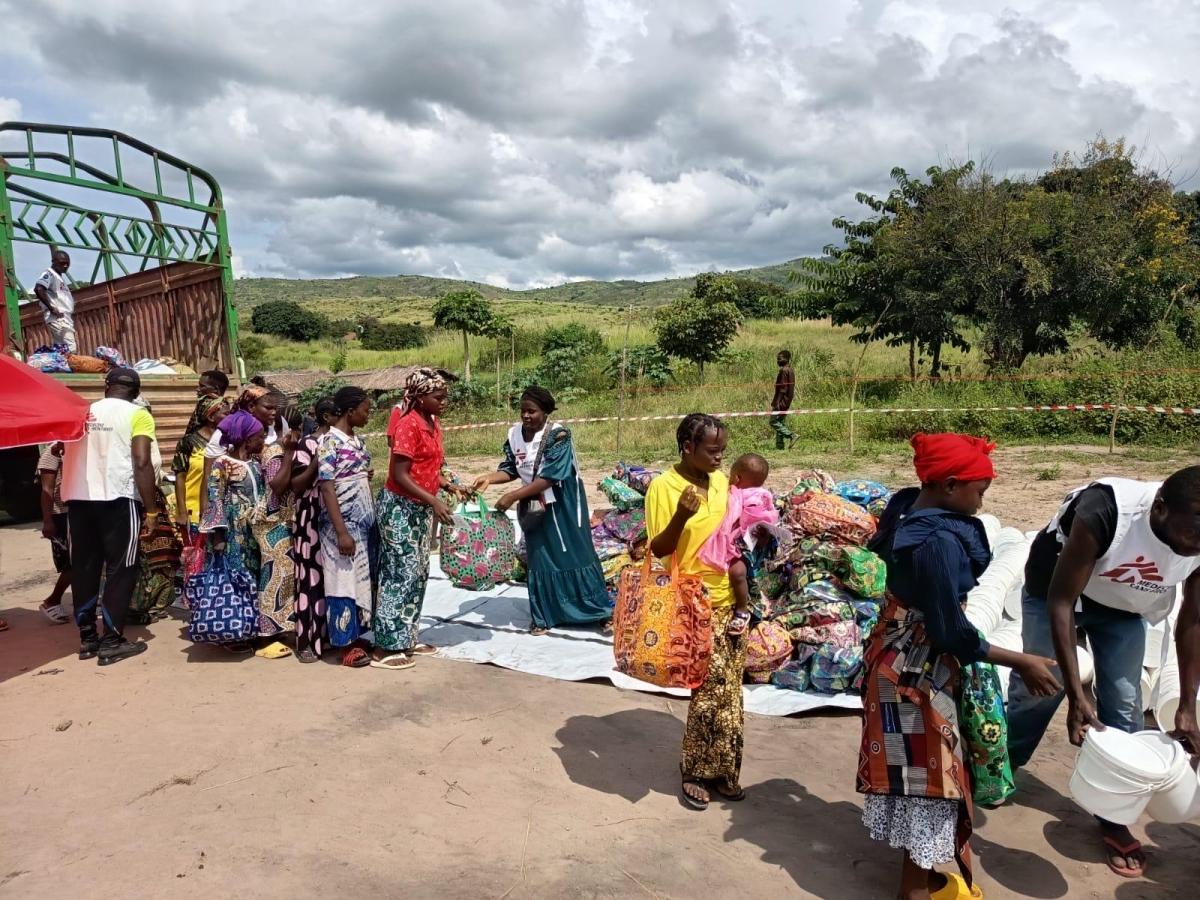
- Furthermore, 488 essential item kits (containing soap, blankets, plates, and mosquito nets) were distributed within the Monge Monge displacement camp, alongside feminine hygiene kits provided to 870 women in the same camp.
Broader mobilization of other actors becomes essential
Presently, our teams are focusing their efforts on reproductive health services and providing care for survivors of sexual violence at the Baraka health center. Concurrently, we are sustaining our water, hygiene, and sanitation initiatives within the Monge Monge displacement camp.
Nevertheless, the overall situation remains deeply concerning. Despite the ongoing interventions, the needs profoundly overshadow the available aid. « While MSF’s presence is essential, it is simply not enough to cover the entirety of the needs. A broader mobilization of other humanitarian actors is critically necessary to assist populations who remain highly vulnerable to health and social challenges », Gianpietro Campedelli emphasized this critical gap.