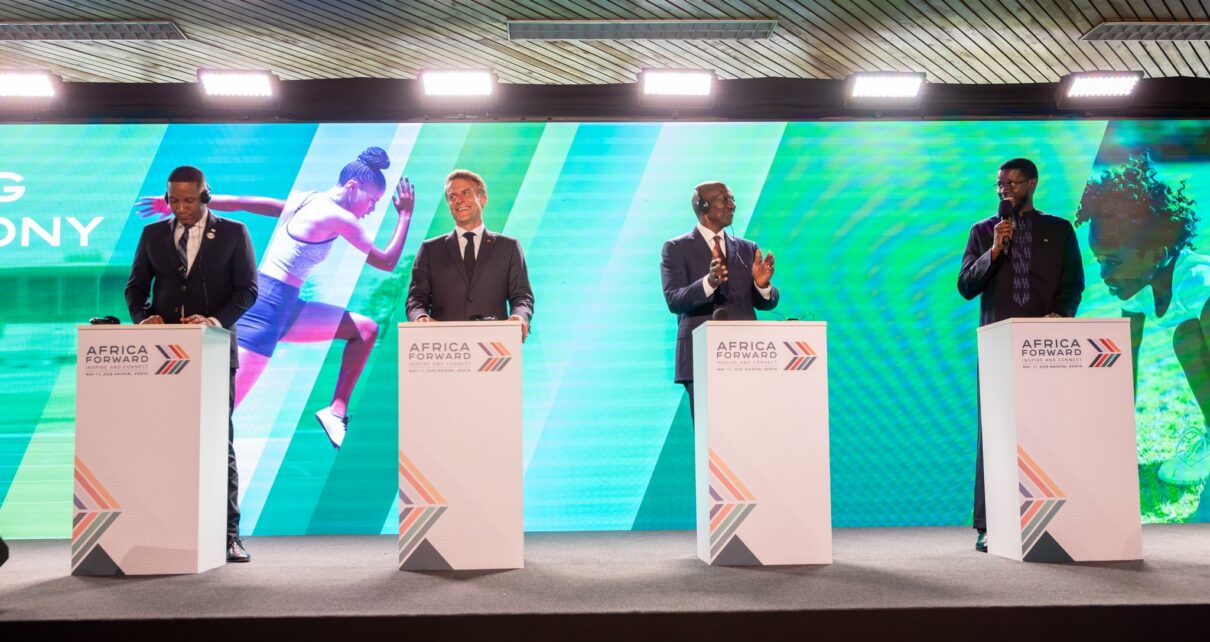
Nairobi — Four months after the disputed Africa Cup of Nations final between Senegal and Morocco, the diplomatic fallout continues to overshadow continental summits. At the recent Africa-France summit in Kenya’s capital, President Bassirou Diomaye Faye of Senegal seized the opportunity to remind the world of his nation’s hard-fought victory, sparking visible discomfort among observers.
During a high-profile panel on sports and development, Faye, seated beside French President Emmanuel Macron and Kenyan counterpart William Ruto, declared 2026 a landmark year for Senegal, citing the African Nations Championship triumph as a point of pride. His remarks drew thunderous applause from the audience, though the satisfaction was not shared by Patrice Motsepe, president of the Confederation of African Football (CAF), who appeared visibly uneasy as Macron chuckled beside him.
The Senegalese head of state’s comments were no accident. They directly referenced the March 17 CAF Appeals Board ruling that overturned the original 1-0 victory Senegal had secured in extra time in Rabat on January 18, awarding the crown to Morocco by a 3-0 forfeit. The Senegalese Football Federation (FSF) branded the decision a « administrative robbery, » and immediately lodged an appeal with the Court of Arbitration for Sport (CAS) in Lausanne. With both sides submitting their defense memos, the legal battle could drag on for months, leaving the continent’s football community in limbo.
Morocco skips sports dialogue at summit
While Morocco sent Prime Minister Aziz Akhannouch to Nairobi to discuss industrial partnerships and renewable energy, no official from the Kingdom participated in the sports-themed sessions. « They chose not to engage, » noted an insider familiar with the dossier. Four months after the chaotic final at Rabat’s Moulay Abdellah Stadium, the avoidance is mutual—discussions at the summit steered clear of the contentious issue entirely.
French junior minister for foreign affairs Eléonore Caroit, questioned after the closing plenary, admitted she had expected the dispute to surface. « I’ve attended numerous round tables over the past two days, but personally, I haven’t heard a single word about it, nor sensed any tension, » she stated. Her senior counterpart, Jean-Noël Barrot, added that while the dispute was not raised in plenary discussions, it remained a recurring topic in bilateral talks. « This isn’t just about football, » he reflected.
The diplomatic rift extends beyond the pitch. A French national, brother of a Senegalese team staff member, was jailed in Morocco for allegedly throwing a water bottle at security forces during stadium unrest. After three months behind bars, he was released on April 18 following an appeal that confirmed his sentence. Three of the eighteen Senegalese supporters convicted of violence and property damage were also freed on the same day. Fifteen others, serving sentences ranging from six months to a year, remain detained pending a possible royal pardon—a prerogative of King Mohammed VI.
diplomatic channels remain open despite tensions
Despite the acrimony, both capitals insist on maintaining appearances. Moroccan officials emphasize that « historical and religious ties should always take precedence over a single football match. » In Dakar, a government spokesperson struck a conciliatory tone: « This is a family quarrel—like the tongue and teeth, we sometimes bite each other. Diplomatic channels will play their role. Senegal respects the sovereignty of every nation and expects the same in return. »
The controversy has already left a regulatory mark on global football. At FIFA’s late-April congress in Vancouver, the International Football Association Board (IFAB) adopted what insiders are calling the « Pape Thiaw Law, » named after Senegal’s coach who encouraged his players to walk off the field in protest over a contentious penalty call. The new rule empowers referees to issue red cards to players who leave the pitch or coaching staff who incite such actions—a direct response to the Senegalese walkout. « We needed to prevent a ‘Senegalization’ of world football, » quipped a CAF delegate in Vancouver.
From courtrooms in Lausanne to prison cells in Rabat and tense negotiations in Nairobi, the disputed CAN final is shaping up to be one of Africa’s most protracted football sagas.