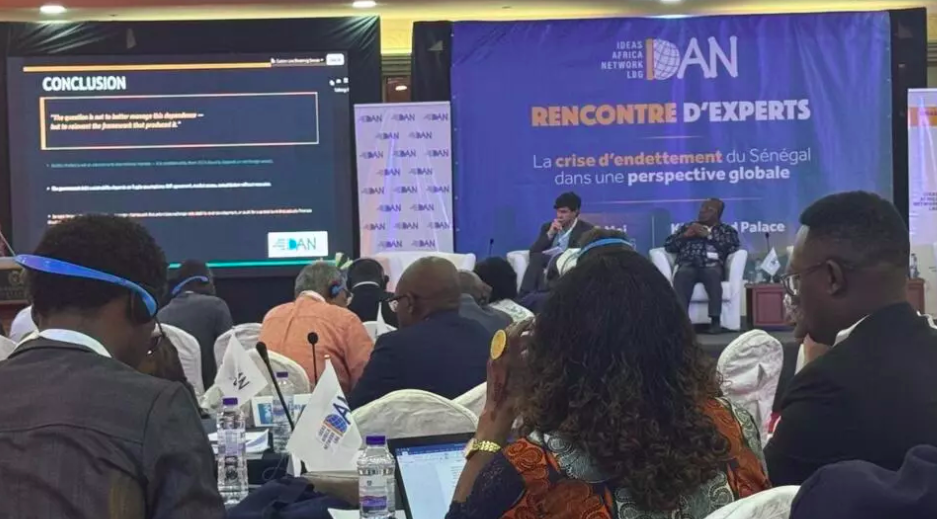
Economists in Dakar have urged Senegal to explore alternative funding sources as the country grapples with a mounting debt crisis. The call came during a high-level forum focused on addressing Senegal’s debt challenges, where experts emphasized the need for a comprehensive debt audit and expanded financial partnerships beyond traditional multilateral institutions.
hidden commitments fuel debt concerns
Senegalese authorities recently revealed that opaque financial commitments made between 2019 and 2024 by previous administrations have significantly contributed to the nation’s debt burden, pushing the debt-to-GDP ratio to 132 percent. While former President Macky Sall denied knowledge of these obligations, the current government maintains they remain unaccounted for in public records.
diversifying partnerships to regain sovereignty
Among the voices advocating for change is economist Demba Moussa Dembélé, who heads the Africaine de Recherche et de Coopération pour l’Appui au Développement Endogène. He argues that Senegal should seek partnerships with countries that prioritize state sovereignty over rigid financial institutions, pointing to China as a viable alternative. “These partners could help us break free from neocolonial financial systems,” Dembélé stated, while also calling for a full debt audit to assess the true extent of the crisis.
Ali Zafar, an economic advisor at the United Nations Development Programme (UNDP), echoed this sentiment, suggesting Senegal could learn from Turkey’s approach. “Turkey diversified its creditors by engaging with Saudi Arabia—why can’t Senegal do the same?” he remarked. Zafar emphasized that the International Monetary Fund (IMF) is not the only source of financing, urging Senegal to negotiate bilaterally with China and other partners to leverage their debt management expertise.
“Countries like Senegal must enter IMF negotiations with strong counterproposals,” Zafar insisted. He warned against allocating all revenue to debt repayment or using international loans to settle private creditors, advocating instead for a reevaluation of the debt structure to identify sustainable solutions. “It’s time African nations present unified opposition to unfair financial impositions,” he added.
One of Zafar’s most radical proposals is the creation of an independent central bank for Senegal, which he believes would give the country greater control over its monetary policy and debt management. “No Asian nation would tolerate the financial strain Senegal faces today,” he asserted. “There are concrete steps Senegal can take independently to escape this crisis and reduce reliance on the IMF.”
ongoing negotiations and future steps
Discussions between Senegal and the IMF are still underway. In late April, Senegalese officials, including Alioune Diouf, Director of Debt at the Ministry of Finance and Budget, met with IMF leaders in Washington to address the nation’s financial strategy. The outcome of these talks remains uncertain as Senegal seeks a path forward that balances debt sustainability with social sector protections, particularly in education and healthcare.