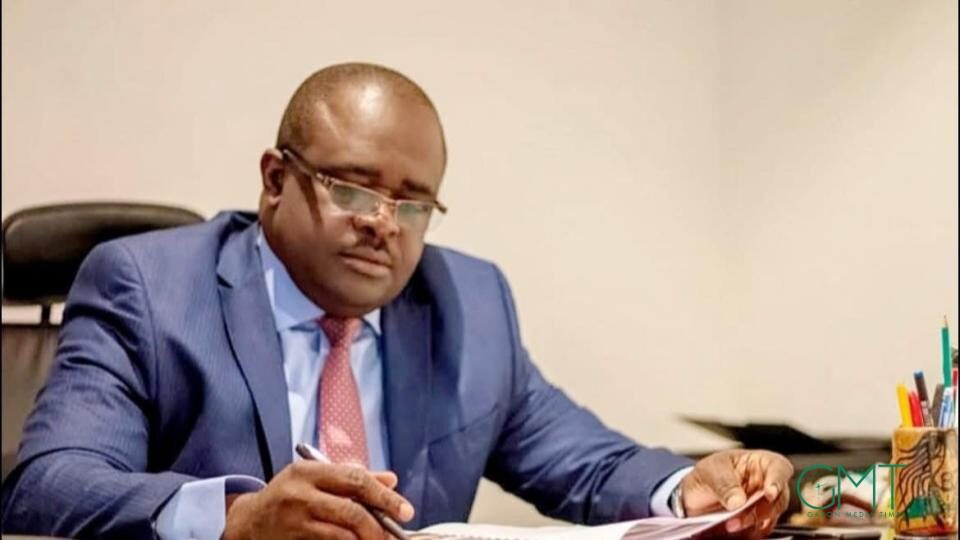
After an extended period of silence, Dieudonné Minlama Mintogo has issued a direct warning to Gabon’s new leadership. For the former presidential contender from 2016, the primary threat currently facing the Fifth Republic is not economic or institutional, but profoundly political: the risk of transforming Brice Clotaire Oligui Nguema’s broad popular mandate into a mere partisan agenda.
Following a period of relative quiet since the April 2025 presidential election, Dieudonné Minlama Mintogo re-enters the public discourse with an analysis poised to ignite discussions within Gabon’s political class. The former opposition figure contends that President Brice Clotaire Oligui Nguema holds an exceptionally expansive mandate, one that significantly transcends the boundaries of any single political party or faction.
With more than 94% of the votes secured in the presidential ballot, the head of state possesses a rare legitimacy in Gabon’s recent political history, according to Minlama. This very legitimacy, he emphasizes, carries unique responsibilities.
A mandate embraced by all Gabonese citizens
Dieudonné Minlama asserts that the overwhelming vote in favor of the President cannot be interpreted as a triumph for a single political entity. Instead, he views it as the manifestation of a profound national hope that emerged on August 30, 2023, and was solidified with the restoration of constitutional order. « The crucial mistake to avoid is transforming the people’s mandate into a partisan one, » he cautions.
Underlying this statement is a growing apprehension: the gradual narrowing of the political arena to a restricted circle of actors, potentially marginalizing numerous citizens, political leaders, civil society members, and prominent figures who actively supported the Transition or contributed to the national rebuilding process.
The danger of a two-tiered republic
The former presidential candidate believes that the true strength of the vision championed by Brice Clotaire Oligui Nguema lay precisely in its capacity to bridge traditional divides. He argues that the Transition garnered support from various sensibilities, all united by a shared objective: to move past the divisions of the past.
From this perspective, any policy of exclusion could undermine the momentum of national unity that characterized the birth of the Fifth Republic. For Dieudonné Minlama, the genuine challenge in the coming years will be to safeguard this spirit of national cohesion by establishing an inclusive governance model, one capable of integrating the diverse talents of the country, irrespective of their political affiliations.
Upholding the spirit of august 30
Ultimately, the message from the former opposition figure serves as a call for heightened vigilance. President Oligui Nguema secured an extraordinary mandate precisely because he was perceived as the candidate for national reconciliation, rather than merely representing a particular faction.
In his view, the success or failure of the Fifth Republic will largely hinge on the authorities’ ability to maintain this inclusive dynamic. This warning resonates as a crucial reminder: the 94% garnered at the polls represents less a political asset to be exploited than a profound historical responsibility to be embraced.