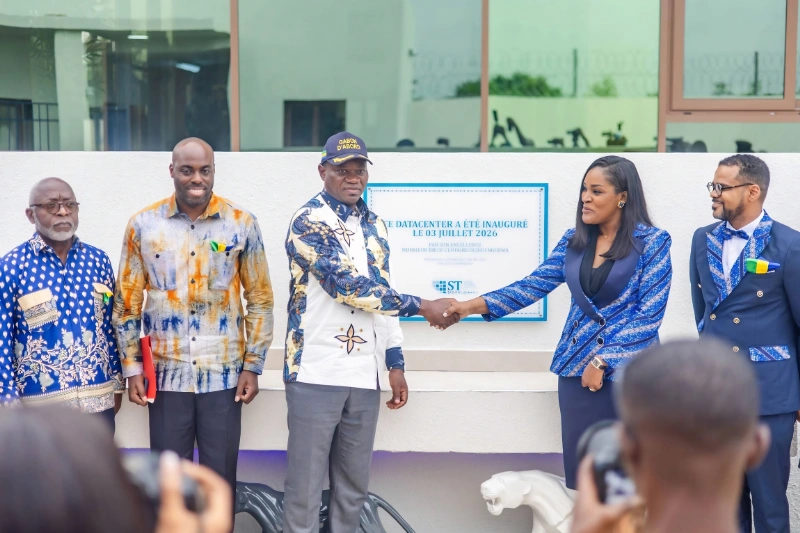
President Brice Clotaire Oligui Nguema officially inaugurated Gabon’s inaugural data center this past Friday, strategically located within the Nkok special economic zone. This state-of-the-art facility, developed by ST Digital Data Center Services, marks a significant stride in bolstering local data hosting capabilities, enhancing national cybersecurity, and accelerating the country’s digital transformation agenda.
Achieving Tier III certification, the data center adheres to stringent international benchmarks. Its implementation is set to dramatically improve Gabon’s national data storage capacity, facilitate robust cloud computing services, and provide crucial support for government agencies and private enterprises. This initiative is a cornerstone in solidifying the nation’s digital sovereignty. Gabon joins a growing number of African nations, including established leaders like South Africa and Morocco, that are actively pursuing complete control over their digital infrastructure, irrespective of their economic scale or geographic size.
This continental push is often supported by global technology giants, known as hyperscalers such as AWS, Microsoft Azure, and Google Cloud, alongside prominent pan-African industry leaders like Teraco, Africa Data Centres, and Raxio.
Currently, five key players largely dominate the African market, collectively housing nearly half of the continent’s physical infrastructure and powering over 80% of its active computing capacity. South Africa, Ethiopia, Nigeria, Kenya, and Morocco stand out as the primary drivers of this growth. Meanwhile, countries such as Mauritius, Ghana, and Senegal, each boasting between 7 and 11 data centers, are working diligently to maintain their competitive edge.
For a long time, the Central African Economic and Monetary Community (CEMAC) region was considered the least equipped in terms of third-party colocation infrastructure, holding less than 5% of Africa’s total capacity. Historically, most data in this region was stored on private company servers or offshore.
The tide is now turning, with the CEMAC region experiencing a rapid catch-up dynamic. Cameroon, through its national operator Camtel, has established a data center in Zamengoé, complemented by private sector initiatives in Douala and Yaoundé. Gabon has now reached a significant milestone with the launch of its national data center in Nkok, designed to host all state data and offer a sovereign local alternative for businesses across the sub-region.
The Republic of the Congo is also expected to launch its own facility later this year, while Chad and the Central African Republic have initiated similar projects, signaling a collective commitment to digital advancement in Central Africa.