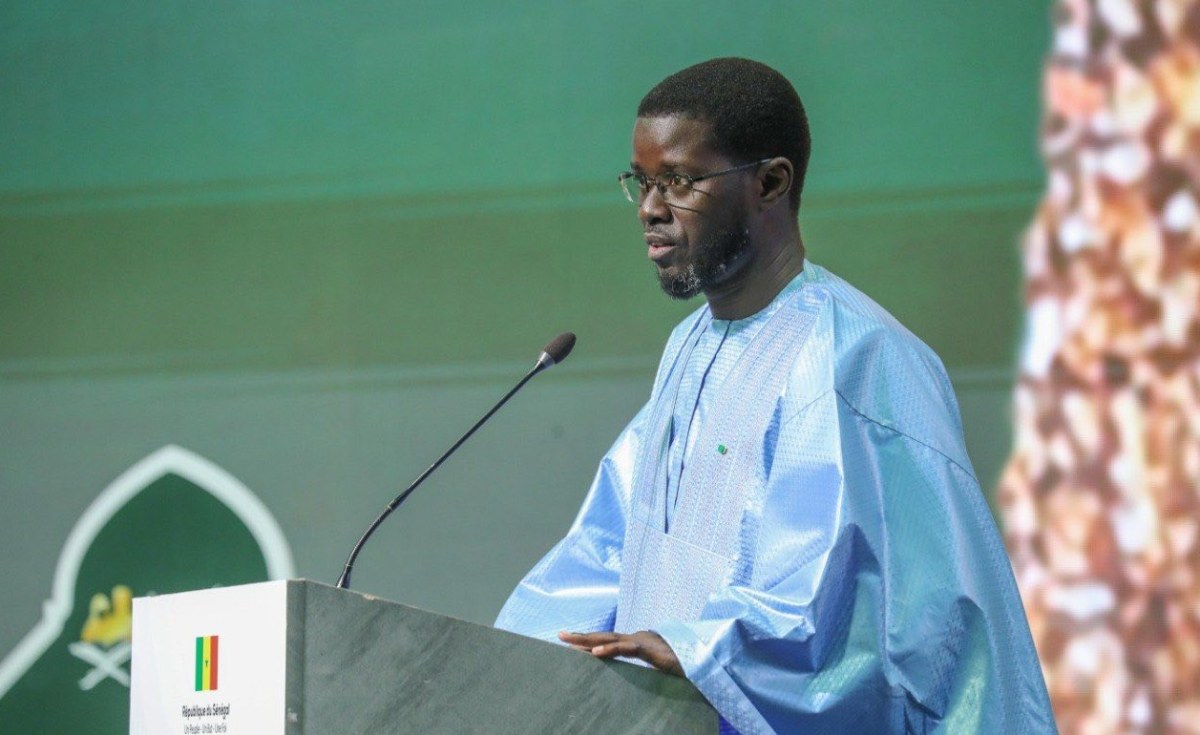
Tensions between Senegalese President Diomaye Faye and former Prime Minister Ousmane Sonko have escalated to an irreversible point, with the president’s recent announcement of a new party set to launch in the coming days. The rift appears unbridgeable, leaving observers questioning whether the two can ever reconcile within the Patriotes africains du Sénégal pour le travail, l’éthique et la fraternité (PASTEF).
Despite his coalition’s strong backing—including over 300 mayors out of Senegal’s nearly 600 municipalities—and full access to state resources to consolidate support, Faye’s ambitions face significant hurdles. The reshuffling of the recent government revealed the limits of his influence within PASTEF, raising doubts about his ability to achieve his goals.
Political maneuvering overshadows governance
Faye’s decision to form a new party likely stems from the political realities in Senegal, where ruling elites typically dominate the parties that propelled them to power. However, in this case, it is Ousmane Sonko, President of the National Assembly, who wields greater control over PASTEF. Recent legislative reforms have further constrained Faye’s options, including a ban on party leadership for the head of state.
The rivalry between the two leaders risks deepening divisions within the party, weakening its structure and alienating supporters. Rather than uniting behind a shared vision, Faye and Sonko are locked in a struggle for dominance, potentially undermining the very movement they helped build. The fallout could extend beyond their personal ambitions, destabilizing Senegal’s political landscape.
Economic and social costs of instability
If the feud persists, the consequences could be severe. The National Assembly may face dissolution, triggering snap elections—a costly process in a nation where economic challenges already loom large. The political gridlock diverts attention from pressing issues, leaving Senegalese priorities unaddressed and eroding public trust.
The strain between Faye and Sonko not only weakens PASTEF but also risks handing opportunities to the opposition. A third political force could emerge, capitalizing on the disillusionment of voters who once backed the duo. Meanwhile, former President Macky Sall may find himself in a position of advantage, having previously clashed with both leaders.
As Senegal’s reputation as a democratic model in West Africa faces scrutiny, the two leaders risk steering the country toward prolonged instability. For a nation often celebrated for its Teranga (hospitality), the current crisis is a stark departure from its democratic ideals. The question remains: will Faye and Sonko recognize the gravity of their divisions before it’s too late?