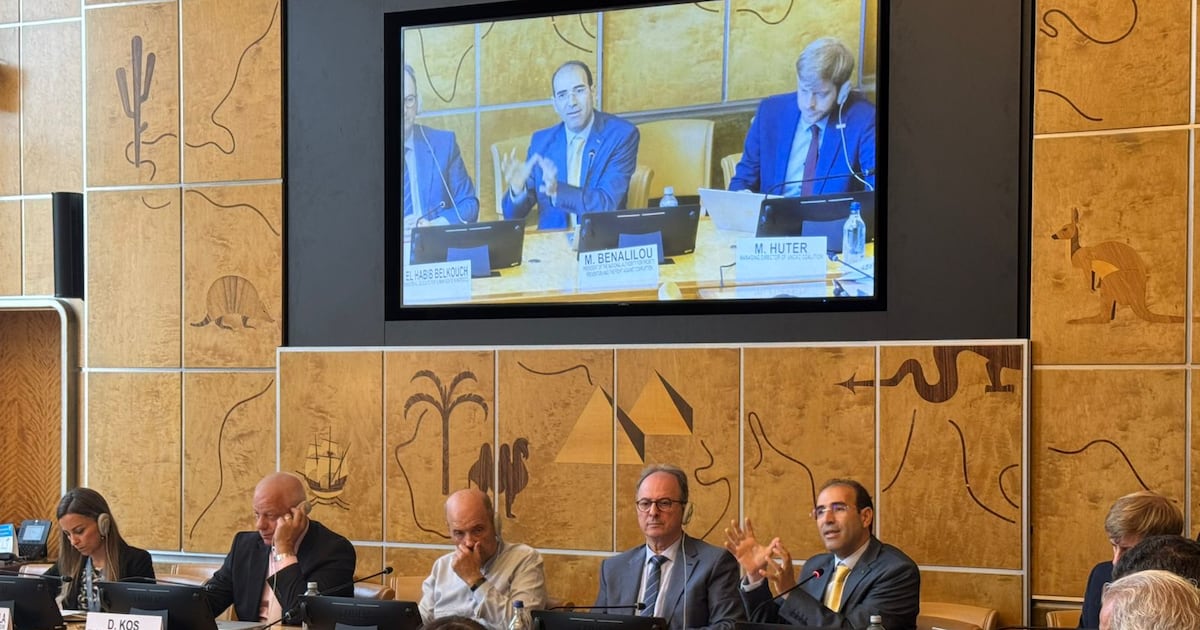
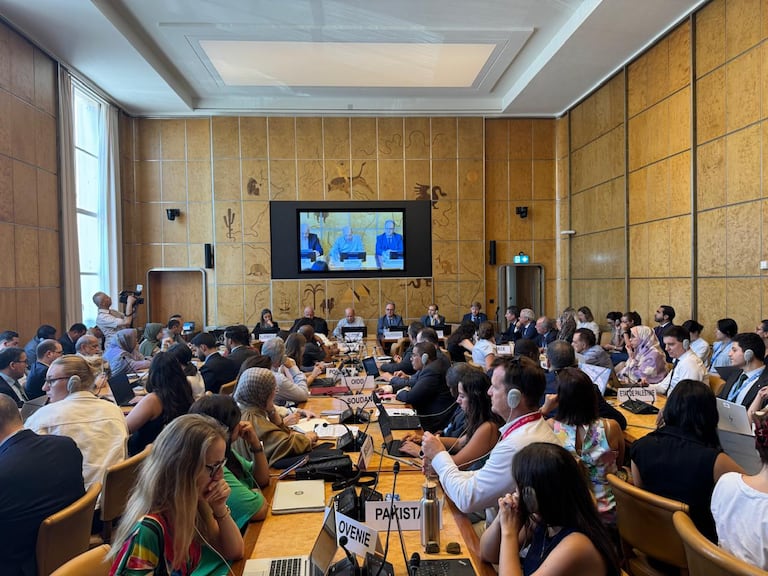
At an international gathering in Geneva, Morocco took center stage to underscore the far-reaching consequences of corruption on fundamental human rights. The event unfolded against a backdrop of growing global recognition of how systemic graft undermines democratic institutions and erodes societal trust. Against the framework of the Human Rights Council‘s evolving resolutions, particularly the landmark 59/6 adopted in mid-2025, the discussion crystallized around a shared conviction: tackling corruption and safeguarding human rights are not isolated objectives but mutually reinforcing pillars of governance.
The United Nations Convention against Corruption, the 2011 Marrakech Declaration, and the 2021 UNGASS political declaration all converge on a critical principle: prevention through adherence to the rule of law, democratic values, and human dignity is the most effective strategy to curb abuses.
Morocco’s integrated strategy under the spotlight
Morocco’s delegation, led by Permanent Representative to the UN Omar Zniber, presented the Kingdom’s holistic approach—one that weaves together national policies, institutional frameworks, and international commitments. Zniber described the initiative as “pivotal” at the multilateral level, highlighting the Kingdom’s leadership and the coordinated efforts of its institutions to align with global transparency and governance standards.
The delegation emphasized the Kingdom’s proactive stance, showcasing how high-level officials have championed reforms and positioned Morocco as a regional advocate for accountability and integrity in public life.
Corruption as a systemic rights violation
El Habib Belkouch, Morocco’s interministerial delegate for human rights, reframed the debate by framing corruption not merely as a governance issue but as a direct assault on human dignity. His remarks cut to the heart of the matter: when corruption infiltrates justice systems, healthcare, education, or employment, it strips individuals of their most basic entitlements.
“Every dirham diverted is a dirham stolen from classrooms, clinics, and social programs,” he stated, underscoring the tangible costs borne by ordinary citizens. He further cautioned that the heaviest burdens fall on marginalized groups—women, rural communities, and low-income households—whose already precarious access to essential services is further eroded by systemic graft.
Belkouch argued that prevention must take precedence, advocating for transparency, access to information, civic participation, and accountability as both fundamental rights and powerful tools to dismantle corruption. “These principles are not optional; they are the bedrock of resilient societies,” he asserted, calling for deeper institutional collaboration to sharpen the impact of public policies.
From governance to gendered justice: redefining the corruption-rights nexus
Mohamed Benalilou, Chair of Morocco’s National Authority for Integrity, Prevention, and Anti-Corruption, expanded the discussion by framing corruption not just as financial misconduct but as a generator of real victims. “We are no longer speaking solely of missing funds; we are speaking of individuals denied their rights,” he declared, urging a shift from reactive enforcement to proactive protection.
Benalilou spotlighted underaddressed dimensions such as “gendered corruption,” which perpetuates inequality by systematically disadvantaging women in access to resources, decision-making, and legal recourse. He argued that this form of corruption is not incidental but structural, deeply embedded in societal norms and institutional biases.
He introduced a paradigm shift: prevention of corruption should no longer be viewed as a policy choice but as a positive obligation for states to uphold human rights and freedoms. In this vision, integrity becomes an active duty—one that demands institutions not only avoid corruption but actively safeguard rights and guarantee equality for all citizens.
Among his recommendations: preserving civic space, recognizing whistleblowers as human rights defenders, and transitioning toward an “institutional integrity model.” In this model, institutions do more than comply with anti-corruption laws—they become guardians of justice, equity, and public trust.
A call for unified global action
On the international stage, Benalilou urged greater alignment between Geneva, Vienna, and New York processes, insisting that the obligations stemming from the UN Convention against Corruption and human rights frameworks must be treated as complementary facets of a single commitment. He advocated for structural bridges between institutions and the adoption of a “human rights-based preventive governance” model—one that prioritizes education, capacity-building, civic engagement, and digital innovation as essential tools for promoting transparency and preventing abuse.
As the discussions progressed, a clear consensus emerged: strengthening collaboration among states, international bodies, and civil society is not optional—it is urgent. Only through unified action can corruption be transformed from a silent rights killer into a preventable menace, and only then can societies lay the foundations for dignity, justice, and sustainable development.