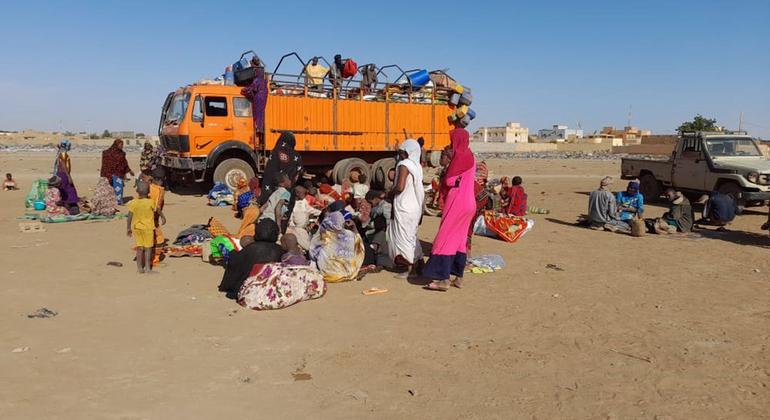
A severe fuel shortage in Mali, triggered by a jihadist blockade on key highways, is worsening an already dire humanitarian crisis. The lack of diesel and gasoline is disrupting daily life for millions and halting critical UN-led aid operations in a nation struggling with hunger and persistent insecurity.
According to the United Nations Office for the Coordination of Humanitarian Affairs (OCHA), fuel supply disruptions have severely limited relief efforts across central and southern Mali, particularly in regions like Ségou, San, Koutiala, Mopti, and Bandiagara. These areas serve as vital links between the capital Bamako and the conflict-ridden north, where extremist violence continues to escalate.
Humanitarian partners have been forced to scale back field missions, restricting mobile clinics to a narrow radius around their bases. Increased roadblocks, armed robberies, and irregular checkpoints have led to the temporary suspension of several life-saving operations.
Since September, the Group for the Support of Islam and Muslims (GSIM), an Al-Qaeda affiliate, has blocked fuel imports from Senegal and Côte d’Ivoire—the primary entry points for goods into this landlocked West African nation. The blockade has now spread to Bamako and most regions, plunging communities into an energy and food crisis.
Léré cut off from aid
In the Tombouctou region, the town of Léré, near the Mauritanian border, has been under armed group-imposed access restrictions since October 27. “This latest measure has forced thousands of people to flee to safer areas,” reports OCHA in its October humanitarian access dashboard. The agency confirms that “outside already present humanitarian actors, no aid workers or organizations can access the area.”
OCHA recorded 50 access incidents in October, a 13% increase from September. Roadside bombs remain the biggest threat, with 28 cases reported. Three direct attacks on aid workers were documented, along with nine kidnappings, primarily in Ségou and Gao. In Douentza, two aid workers died when their boat capsized on the Niger River near Kagnimé. “These attacks endanger staff safety and slow critical operations,” the report states. “The unpredictable environment and logistical hurdles—especially fuel shortages—further impede access to vulnerable populations.”
Political repression deepens the crisis
The fuel crisis unfolds against a backdrop of tightening political control. Since the 2020 military coup led by General Assimi Goïta, democratic processes have stalled. Presidential elections remain indefinitely suspended, and in May 2025, all political parties were dissolved. A July law granted Goïta the power to extend his mandate “as many times as necessary until the country is pacified.”
Volker Türk, UN High Commissioner for Human Rights, has condemned the move, calling it a “closure of the door to democratic elections for the foreseeable future” and “weaponization of the law against dissent.” Arrests of opposition figures and civilians have surged, including the detention of former Prime Minister Moussa Mara in August, sentenced to prison for “undermining state credibility.”
Armed violence has intensified, with GSIM and ISIS-affiliated groups launching attacks across central and northern Mali, especially near the borders with Burkina Faso and Niger. Since April, Volker Türk’s office has documented “hundreds of extrajudicial killings, arbitrary arrests, forced disappearances, and kidnappings by all conflict parties.”
The crisis is taking a devastating toll: 6.4 million Malians—including 3.5 million children—need urgent assistance, according to OCHA. Over 400,000 internally displaced persons and 335,000 refugees have fled to neighboring countries. The UN’s latest global food security report ranks Mali among the world’s six worst food crises, alongside Haiti, Palestine, South Sudan, Sudan, and Yemen. Conditions are deteriorating rapidly in already fragile areas, as international engagement wanes.
Surge of refugees from Burkina Faso
In the Koro circle, near the Burkina Faso border, a massive influx of refugees is straining local resources. Since April, nearly 50,000 Burkinabé have crossed into Mali, doubling the refugee population. The UN Refugee Agency (HCR) has opened a field office in Koro as of October 16 to coordinate and accelerate aid responses.
Mali now hosts over 150,000 refugees from Burkina Faso and Niger, fleeing both jihadist violence and military counter-offensives.